VR is Focusing on the Wrong Things

Disclaimer: This has been on the backburner for a very long time. I’m sorry if some information is out of date, or if I’m missing something.

My original attitude towards VR was skeptical to dismissive. Anyone who knows me knows that I’m skeptical about anything promising “immersion” and pretty much the concept of immersion in general. I got to try a prerelease Oculus VR headset at a showcase in New York City and it was pretty much what I expected, a screen strapped to my face, while I controlled an FPS game like I’ve always done. To me, VR was another type of screen, I didn’t expect it to fundamentally change anything about video games.

First Gen VR devices changed my mind, they brought on motion controls, like the Wii and PS Move. I eventually got to try a Vive headset, with Valve’s The Lab, SuperHot VR, and a couple others, and I saw what the device could do, and it was pretty obvious that there was untapped potential there. VR seems like a way to make motion controls work much more feasibly than they ever had before, and that could lead to some legitimately new game genres!

The Shortcomings of Current VR Games

My trouble is that VR is also couched in this “immersive promise”. People want the holodeck and full-dive like SAO or Ready Player 1. VR Companies promise that VR is the future of immersion into a virtual world, where we can finally enter The Matrix, The Metaverse, Ready Player 1; You get the picture, right? Except, VR as it currently exists is horrible at all of those things. VR isn’t suited for you to walk around virtual worlds at all.

Continue reading

Cost Granularity in Card Games

In Charmed Chains, I chose some early restrictions to emulate some of how Yugioh plays, and over time I’ve been shifting towards different ideas of what I want to do with the game. I chose these restrictions because there are a lot of indie and industry collectible card games that emulate Magic The Gathering (Force of Will, Hearthstone, Lorcana, Final Fantasy, Digimon, etc) in whole or part, and very few that emulate Yugioh (Dual Spirits). When I started making this game, I was really into Yugioh (I’ve recently been swallowed whole by MtG Commander), and I was very much inspired by different facets of Yugioh’s design that I felt could be pushed further (having a defined grid and effects that are based on columns), as well as some aspects of Magic The Gathering (blockers getting a choice in whether to take damage with their creatures, or let it hit them directly).

However, these limitations have lead to some issues with granularity, which I’ve previously discussed. I’m worried that low granularity in creature costs will lead to homogenization in people’s decks, unless I either adopt a resource system more similar to most card games, or start to enforce more strict archetypal synergies, like Yugioh did.

To understand the issues I’m facing, first I’ll need to explain how the resources in Yugioh and Magic The Gathering work.

Continue reading

What is Charmed Chains? (My New Card Game)

For the past year I’ve been drafting ideas for a constructed card game (a game where you build a deck out of a bunch of cards, then play an opponent). I’ve been hinting at this game a little in recent posts. My working title for the game is: Charmed Chains.

I think the best way of illustrating what the game is about is by showing you the game mat:

Every card in the game is either a Familiar (Creature/Monster), or a Charm (effect card, like a spell). Familiars and Charms are played to the board, and can have effects specific to where they are placed. Familiars can move during the battle phase, and many charm effects extend across the row or column they’re placed in.

This means Charmed Chains is a game about position and placement of your cards. As the attacker: You want to place your familiars in places where they can destroy or attack past your opponent, and the defender wants to move their familiars to block or evade your attacks. You also want to move your familiars into position to take advantage of buffs your charms will provide, and evade the debuffs of your opponent.

Continue reading

Card Game Design as Systems Architecture

Designing a card game has honestly called on more of my programmer skills than thinking about video games. Card games are surprisingly a lot like enterprise web applications. Cards go through lifecycles and have callback functions and methods similar to an object going through its lifecycle in any enterprise application.

Lifecycle Hooks & Callback Functions

Objects in an enterprise software application, such as components in Angular or React, go through a lifecycle as they are instantiated, go through state changes, and are eventually destroyed. Each of these has a “lifecycle hook”, which is a function that is called when that particular lifecycle event happens.

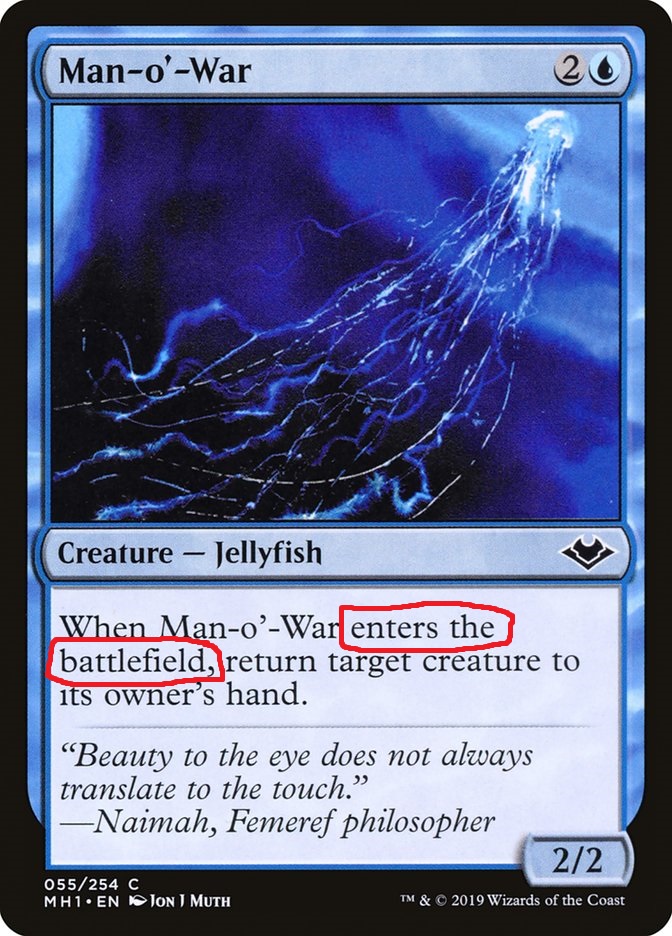
In card game terms, these are similar to effects that trigger when a card enters the battlefield, leaves the battlefield, is tapped, or attacks or blocks. Trigger conditions are lifecycle hooks for cards.

A callback function is one that triggers when another object goes through some type of change. It’s subscribing to another object’s state, then doing something when that object does something.

Continue reading

The Hypothetical Worst Fighting Game

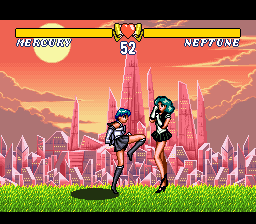
I have a theory about fighting games. I think that even the worst fighting games are pretty good. We see this in the Kusoge Phenomenon, where people play “broken” “shit-games”. These games have massive combos, wacky mixups, poor regard for balance, strange damage scaling or infinite prevention, and strange attack design with cancel points and hitboxes that don’t really make sense. However people still enjoy playing them, because they’re still deep games. They’re still games with combo systems you can explore, with mixups you can try out, and with moves that have a variety of different effects. This is a mismatch between what we traditionally consider to be “good” about games, and what actually creates depth.

Street Fighter 2 created the modern fighting game, and all fighting games take from it. SF2 was such a solid template for a game that if you just implement all the features of SF2 you will have a decent fighting game, entirely by default. I’m going to list these features as:

Continue reading

Blocking is Cool Actually

It is easy to focus on a myopic view of skill in video games as pushing a button to hit a tight timing window. It’s a common skill test. It’s a very obvious demonstrable skill. Most laypeople can easily recognize that it takes skill. However, there are a lot of other skills that are common in video games, and the purpose of these skill tests is not just to test skills in a vacuum, which is easy, you could go hop on human benchmark and do that all day, but to create a larger system of choices and interactions that test a variety of skills at once, and creates variety in the way each skill is tested.

Continue reading

How Fighting Games can Retain Players

Fighting Games don’t attract a lot of new blood. The majority of people who buy fighting games will never attend a single tournament for that game, never post about it online, and never interact with the community in any way. This means that the success of a competitive scene is tangential to the success of the game overall.

Fighting games being unpopular compared to other genres of competitive game is a demographic problem. Demographic problems require systemic solutions, not individual solutions. It’s easy to say that the problem is players who don’t have the drive to improve themselves, but a lot of people just bounce off of fighting games, even though they really want to go on an improvement journey. Fighting games can do a lot structure themselves to get these new players on the right track to understanding the game.

Magic the Gathering went through a similar issue early in their game’s lifespan. At first, they catered to pro players, and the game started to slowly die as MTG became more complex and more irrelevant to beginners. MTG ended up revitalizing themselves by decreasing their investment in competitive play, and instead focusing on creating appealing characters that people could connect to, and an easy introductory experience for beginners.

Wizards of the Coast called the non-competitive kitchen table players, “The Invisibles” because they don’t participate in the broader community, yet they make up the majority of the consumers. This is the case for every game or media product. The majority of a game’s fans will never ever participate in an observable way, but they’re the people who are the backbone of your sales, and they’re the people who filter into the competitive scene. Therefore, having an approachable game creates a more healthy and active scene for everyone.

Continue reading

FPS Boss Fights Don’t Have to Suck Ft. Durandal

Editors note: This is another guest post by Durandal, though I wrote most of the paragraph on encouragement/discouragement and push/pull. If you’d like to submit a guest post, contact me on discord.

Boss fights involve fighting against one or more enemies that are usually harder than what came before in the game. Story/gameplay-wise they’re an effective way of setting the climax for a level or chapter, which is why they’re so widely used. Many genres like beat ‘em ups, platformers and shoot ’em ups all often feature great boss fights, like Credo in DMC4, Death in Castlevania 1, and the Battleship in Contra 3. But then you have bosses in first-person shooters.

In the 28 years since grandpa Wolfenstein 3D, there has been no truly good FPS boss fight. Instead you get playing peekaboo with (hitscanner) bulletsponges (such as Hans Grosse in Wolfenstein 3D and the 2009 reboot, the final bosses of Wolfenstein: TNO, TNC, and Youngblood, Makron in Quake 2, Tchernobog in Blood, the Battlelord in Duke Nukem 3D and Forever, Splitter Crow in TimeSplitters: Future Perfect, The Destroyer in Borderlands 1). You get the inoffensive bulletsponges which you circlestrafe to death (the Overlord, Cycloid Emperor and Cycloid Queen in Duke Nukem 3D, the Skaarj Queen and all Titan fights in Unreal Gold, Fontaine in Bioshock 1, almost every boss in DUSK, AMID EVIL, and the Shadow Warrior reboot). And at worst you get puzzle bossesthat play nothing like the rest of the game and expect you to figure out a puzzle to beat the boss (the Spider Mastermind in Doom 1 when pistol starting, the Icon of Sin in Doom 2, Cthton and Shub-Niggurath in Quake 1, the final bosses in Serious Sam: TFE and BFE, Nihilanth in Half-Life 1). Continue reading

Reworking DMC’s Controls

I think you’ve already expressed your dislike for Chain Combos, and while I understand where you coming from, I can’t imagine a way to totally get rid of them in 3D Beat em Ups without making the controls an abomination to use

Does DMC4 count? Or is that an abomination?

I’d say God Hand is a reasonable example too, it has 1 chain on square, then command moves on X, Triangle, and down + X/Triangle/Square. Plus it has hidden contextual moves on triangle that are just direction + button, and dashing attacks. Since God Hand lets you assign any move to any button, you have a fair number of moves that you could potentially assign. A chain + 5 command moves.This obviously isn’t the most in the world, but it’s a fair number of moves with no chains required. Continue reading

Balancing Parries for Single Player

How are parries treated in fighting games? Specifically in comparison to single player games where once you get the timings down, it can trivialize enemies.

It depends on the fighting game, but I largely covered this in my last article on parries. Parries in fighting games can be beaten, unlike parries in single player games. In 3rd strike, you have to parry high or low, and the two zones are more separated and exclusive from one another than blocking (so moves that you normally could block crouch blocking might have different parry zones). In other games parries usually have a recovery time. In practically all fighting games, parries can be thrown.

This means parries have weaknesses, they can be mixed up, either with timing, or by choosing options that beat parry. In a single player game, this isn’t really feasible. Everything needs to be reactable in order to be fair, which means if everything is parryable, then every problem can be solved with parries. Some measures you can throw in to prevent this are having unparryable attacks, force the player to respond differently to those. You could have different parry zones too, so they need to parry differently depending on the incoming attack, but this amounts to basically just giving the player shit instead of solving the core problem, which is that parries hand players a difficult but simple solution to any problem where they are applicable. It’s not a question of, “would it be better to attack or defend now?” It’s just “If I can do it, parrying is best.” And you might have different types of parries or unparryable attacks, so players have a bit more trouble reacting, but the fundamental problem is still there in a way that it isn’t for parries in multiplayer games. Parrying isn’t the best solution to scenarios in 3rd strike all the time, since it’s not always rewarding (parry into throw) and requires commitment for the number of parries you’re gonna attempt and the followup. It is in Guilty Gear, but it also costs meter in Guilty Gear, which is a limited and precious shared resource.

Oh yeah, maybe that’s the answer. Bloodborne limits parrying by tying it to bullets, but that just restricts the amount of times you can parry, bullets aren’t really used for much else of consequence. Imagine if parrying in dark souls cost you literally your entire stamina bar, requiring the bar to be full first, and you don’t get it back after a successful riposte. Hell, make stamina a bit negative even afterwards. Perhaps you could balance parrying by limiting the conditions for it, and having it cost you significantly otherwise, so you can only use it occasionally, and by sacrificing something else important.