This is a guest article, contributed by CabalCrow, edited by Celia. If you would like to contribute a guest article, you can see details here.
Mind games are a staple of the fighting game genre. This provokes the question: Are they exclusive to fighting games? If not, which other genres also feature mind games? To answer this question, we should try to find the source of mind games in the structure of a game, and identify common patterns that appear across different games.
To keep the scope of this article limited, I will be talking about mind games that do not require prior knowledge of your opponent. Reads, conditioning, baits, and other types of mind games are possible in a match against an opponent you have no history with. All you need is the capability to react to multiple decisions that they make across a match.
The other type of mind game, one with prior knowledge of your opponent, exists in all kinds of games, including fighting games. I like to call these “Meta Mind Games”, because players form a “meta” convention around the commonly chosen actions and patterns of other players from all of their games. They can also be an important element of certain competitive games. For example: In classical Chess, Meta Mind Games play a role in opening preparations. Another modern example would be Among Us, when played with a group of friends. Multiple games over a long period of time, provides a lot of meta information about each player in the lobby. This also includes information you provide as a player, which can be used for meta conditioning!
Fundamental requirements
There are 2 fundamental requirements to create mind games in a game:
- Choices that have a non-transitive payoff relationship to an opponent’s choices
- Some amount of hidden information pertaining to which choice is made, or which choices are available to a player.
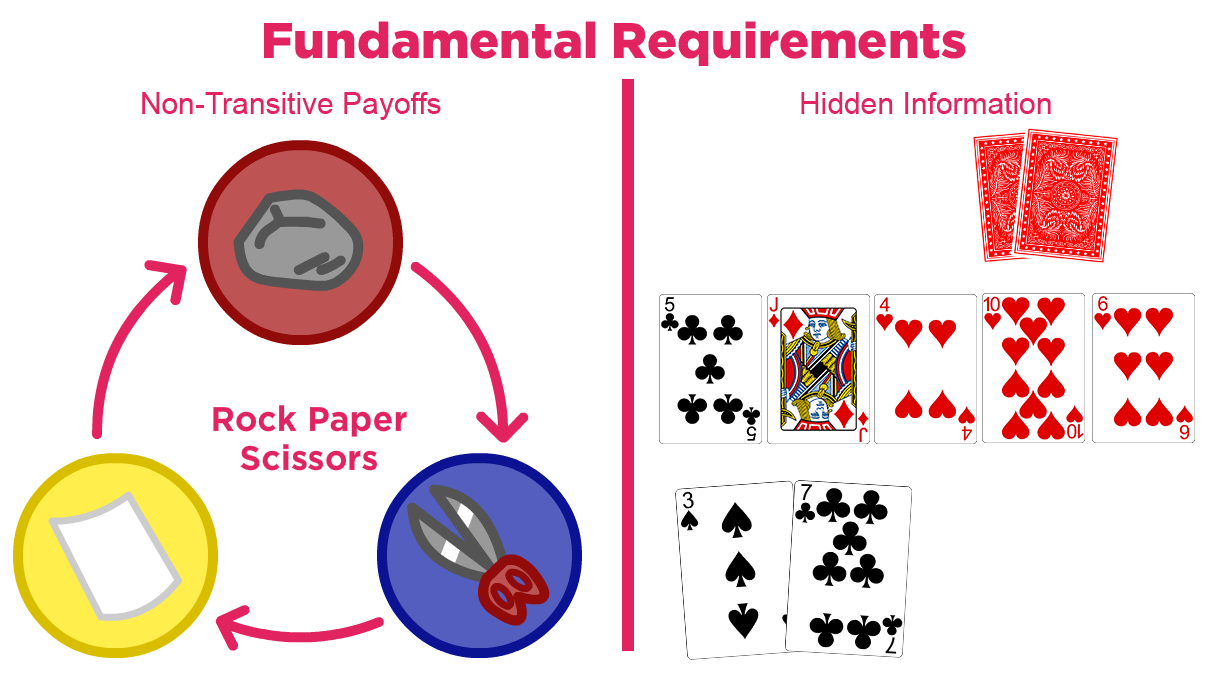
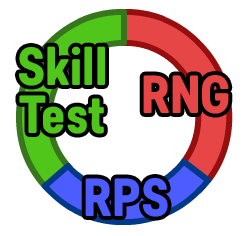
The first requirement (about which you can read more here) demands that there are systems where you don’t have an option which is linearly the best – otherwise both players would always choose that option and there would be no place for mind games to shine. In other words, it can’t be a game of pure performance or efficiency, like most Olympic sports (running, weight lifting, jumping, curling, etc). Player choices must be able to “counter” one another, having payoffs that vary depending on the opponent’s choice.
It is important to note – the whole game doesn’t need to be strictly made of these non-transitive choices. The game can have both transitive and non-transitive interactions working in harmony together. Fighting games demonstrate a mix of both. A player’s choice of attack will win or lose to the opponent’s choice non-transitively. After an attack connects, that player can optimize their combo to squeeze as much damage out of it as possible in a transitive fashion. Once the hit lands, there is nothing their opponent can do to prevent the rest of the combo, hence no mind games can be at play. However, to land the combo in the first place, there must be interaction, mind games, between the players. The winner of an exchange is determined by the non-transitive choices of the players, who chose the right attack to counter their opponent’s attack. In other words, players make non-transitive choices to determine who gets a payoff (who lands the hit), then they optimize a transitive set of choices to maximize that payoff (land the biggest combo). This shows one way that these two systems can work together in harmony.
For a softer example, you might consider an RTS. In RTS, armies will damage each other simultaneously, but frequently one type of unit will counter another, a non-transitive choice. This means that both players are eliminating enemy units, and therefore getting a positive payoff, but the player who brought the “rock” army is going to get a larger payoff than the player who brought the “scissors” army.
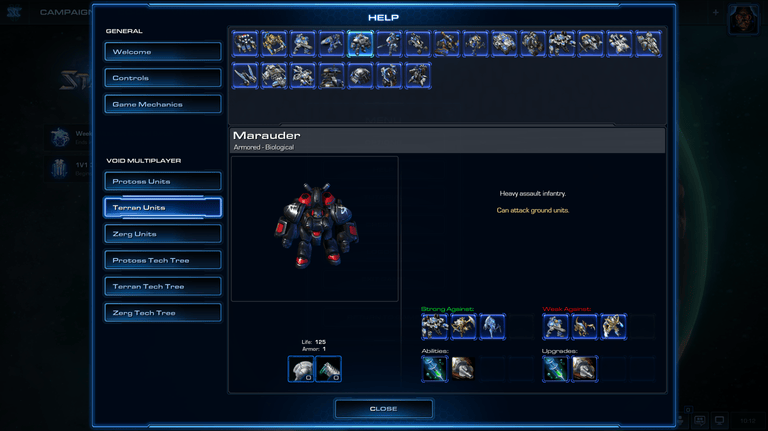
The hidden information requirement is necessary to prevent the second player from picking or creating a stalemate. If we play turn-based rock paper scissors – the second player can win 100 % of the time by seeing the option the first player chose and countering it. Hence, there is no guess work involved, and no mind games are involved. This is why hidden information is required. In fighting games hidden information is created due to reaction time. If every single option in the game was easy to react to, as it is in a game like dark souls for example, the player would be able to always counter and win. However, most of the options in fighting games are designed to be faster than the human reaction time, which forces each player to guess. In a card game, there is perfect information for game actions, but there may be hidden information in which options are present in a player’s hand or deck. This creates mind games in which actions you take, in which sequence.
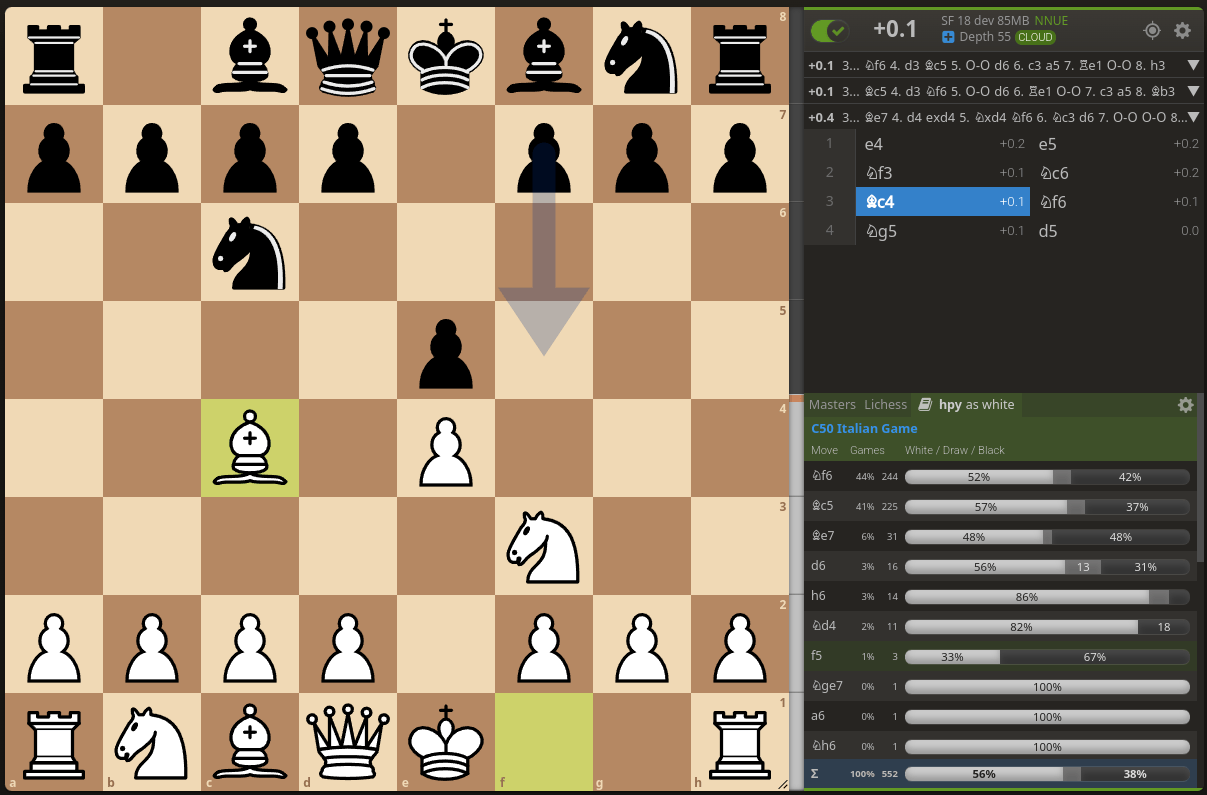
Meta Mind Games have an interesting interaction with hidden information, because they require both hidden and known information about your opponent. Opening preparations in Chess are based on the openings you know your opponent plays and is a master in. Conventionally, you’re looking to outplay them in a lesser known variation of their opening by exhaustively studying that line. But in order to do so you need to know which variations your opponent usually plays – otherwise they might be able to deviate away from the variation you chose to prepare. The hidden information in this case comes from the fact that both players are preparing for each other prior to the tournament, and what each player prepares is unknown for the other.
Complete requirements
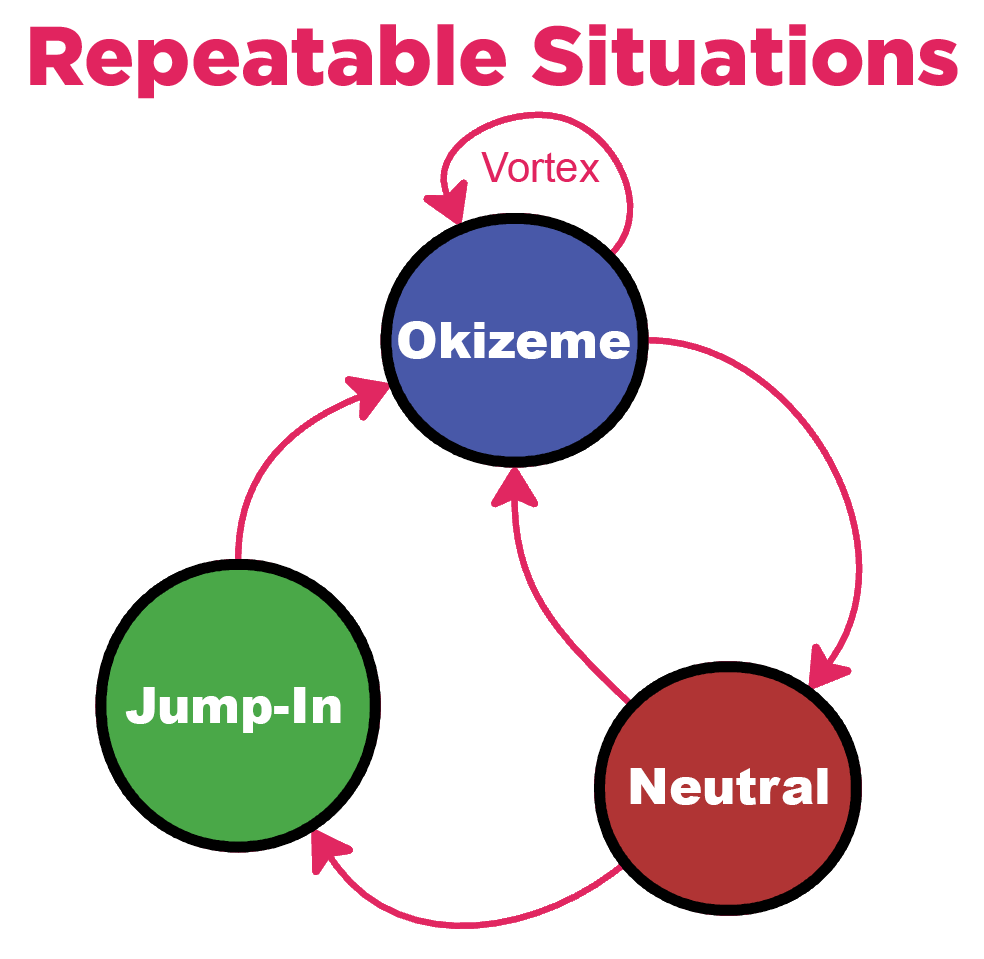
The previous requirements enable mindgames to exist in the first place, but there are other requirements necessary in order to make mindgames a worthwhile strategy. Just because mind games are possible doesn’t mean the players will actually engage in mind games. We need two more components:
- A reward for engaging in mind games
- Repeatable situations
Winning a mind game should have a big enough reward for it to be worth investing the time and effort. Consider this example: We have 2 players playing classical Chess (each player starts with 1 hour and 30 minutes on the clock). If we get both players to play Street Fighter III: 3rd Strike ft10 for a reward of 1 additional second on their Chess clock at the start, this would not actually introduce any significant mind games in the hybrid game we have created. Yes, 3rd Strike has mind games, but it’s not worth it to expend effort on 3rd Strike just to get a mere second in a sea of 1 hour and 30 mins.
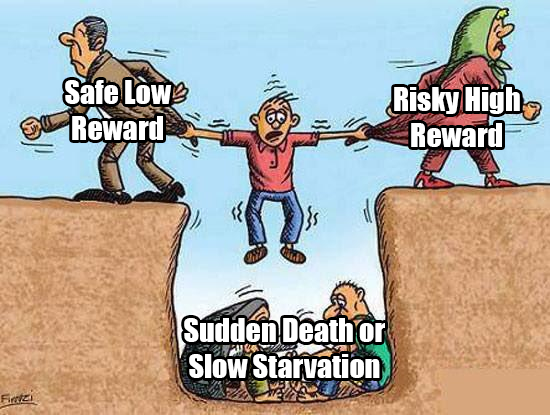
The amount of reward for an exchange affects the ratio that the outcome of a game is affected by each of its component skills. When you mix transitive and non-transitive systems into your game, you should be careful to consider how much reward there is for each of them, in order to avoid creating a system where it’s better to simply refuse to engage. Sometimes fighting games have had situations where the payoffs for a situation are so lopsided that players don’t bother to engage in mindgames. Street Fighter V has the famous advice: “Take the throw.” Combo damage in SFV was really high, but throw damage was really low, and getting thrown would usually reset you to neutral, which is the same payoff you’d get for reversal or blocking in that situation. So players reasoned it was better to take a guaranteed loss for a low penalty than to potentially take a massive loss doing anything else. This logic didn’t always hold out in SFV, but it’s a good demonstration of where the incentive to play mind games could break down when the payoffs are too lopsided.
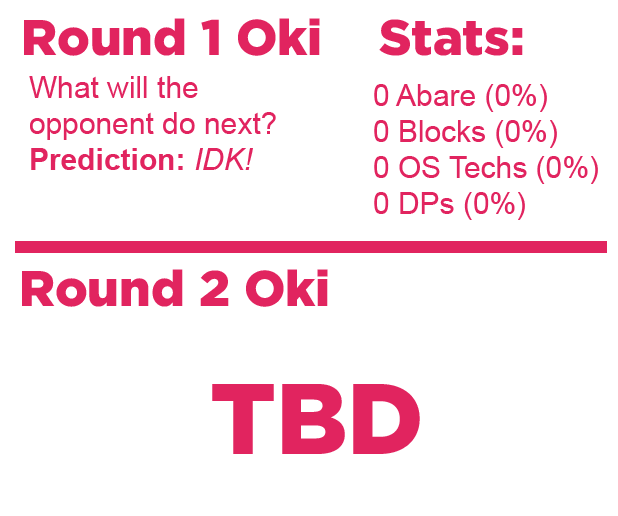
Why do we need repeatable situations? If you only run a situation once, then you have no opportunity to gain information on the opponent’s habits and attempt to counter them. If you play one round of RPS with a completely random opponent, then your shot of winning or losing is determined solely by chance. In order to use mind games you need to be able to gain information and use it later. More rounds of play turns mere chance into statistics. This is why you need to have situations in your game that reoccur – repeating situations give players information of their opponent’s tendencies across a variety of occurences. It’s important to note that situations do not need to be perfect replicas of all the game parameters from their priors. Situations need to be similar enough for players to recognise the situation as situation X, in which their opponent has the tendency to use options ABC. Okizeme situations in fighting games can have varying health values, frame advantage or screen position, but they tend to be similar enough to one another that players can get a feeling for their opponent’s tendencies, rather than guessing from scratch each time. When the HP values are low, suddenly the payoffs for success and failure can significantly change, from merely taking damage, to taking a round loss.
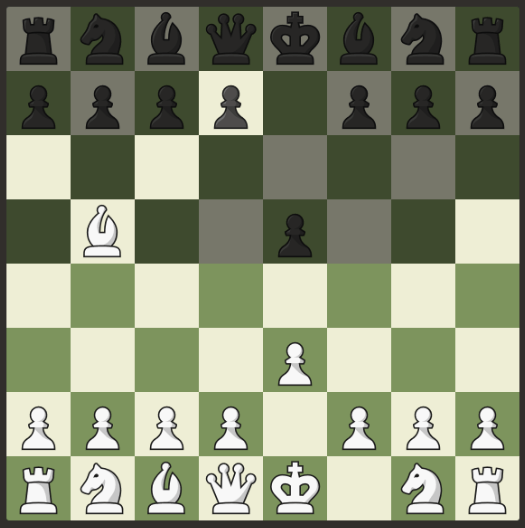
This requirement is what prevents many games from forming deep mind games. For example, normal Chess doesn’t have many mind games because you have no hidden information1 – you make a move and then your opponent gets to see the move and choose the best counter they can come up with. There is a variant of Chess called Fog of War Chess, where you can only see the squares that your units can attack. This way you actually can’t see all of your opponent’s moves and board state. However even this variant still fails to create much in the way of mind games because situations do not repeat enough for mind games to take precedence over dumb luck. You would need to play many matches with your opponent before you have enough information to make informed reads on your opponent’s tendencies.
Additional Considerations & Anti-Patterns
Resources and linear game state progression can obviate mind games. Both of these factors hinder or outright forbids the repetition of situations. Resources technically can split each state into a countless number of states. However, while those states are different on paper – the difference between many of them are negligible. Hence in regards to mind games those states are effectively repeatable. There are also cases where the gap in resources between the players is so wide that snowballing occurs. In those cases the game can move onto a different state, which prevents the repetition of situations of the prior state. This is similar to linear game state progression, with the main difference being that resources can allow for a return to a previous state (this is generally associated with comebacks), while linear game progression can only move onwards into the next state. Because of this linear game progressions limit mindgames within the scope of each state, and depending on the frequency of the change of state this could straight up make mind games impossible.

In Chess your main resource is your units. Chess has a linear progression – you can only lose units. As more and more units are removed from the board, you get closer and closer to the endgame. Once a unit is removed, it can’t be placed back on the board, so you can’t rewind from the endgame back to the middle game.
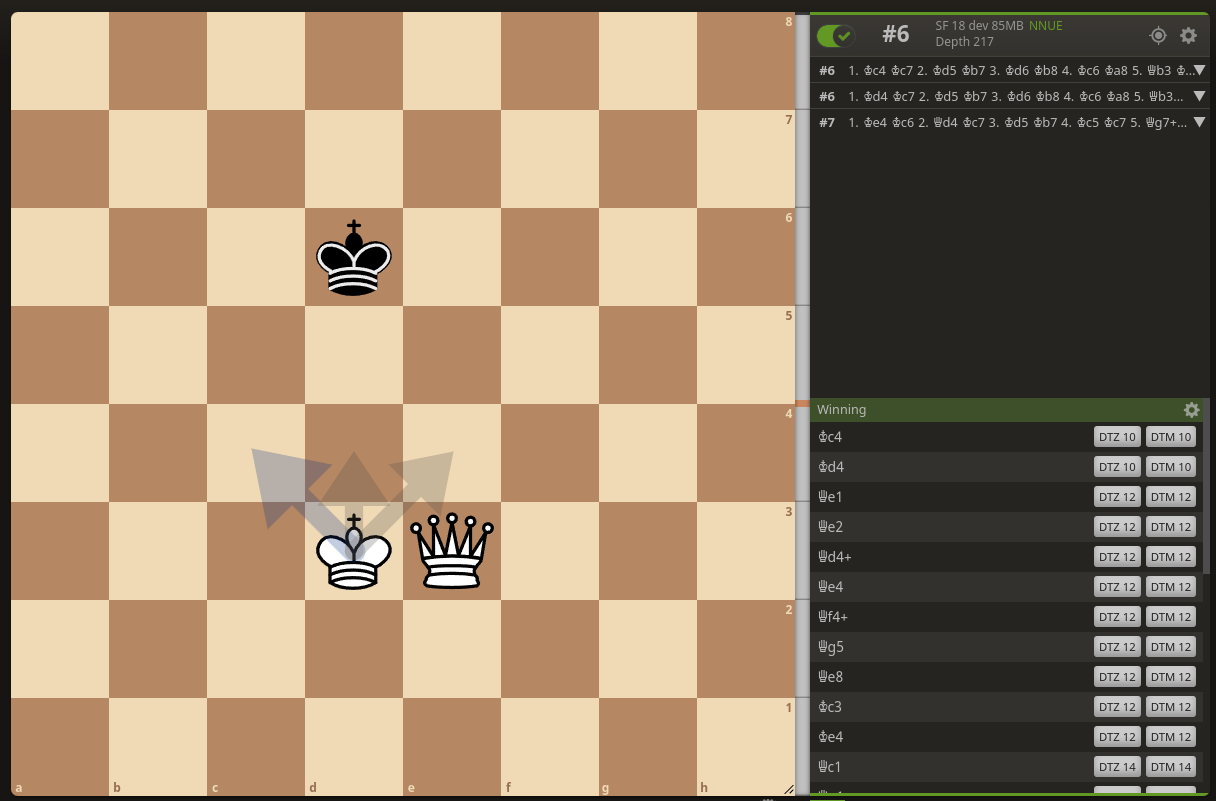
Another important thing about Chess is how progress towards the end of the game also reduces the fighting capacity of each player, because when you have less units, you have fewer moves, and less capacity to box the opponent’s king in. In a fighting game if your health is at 1% and your opponent’s is at 100% a comeback is still possible, because progress towards the victory condition doesn’t affect the range or strength of the options you have available. In Chess if you are behind by a whole piece in an otherwise equal position, and you are playing a decent opponent you have no real chance to win. In this situation, mind games aren’t going to be effective, because your opponent can simply calculate a path to victory. Having more resources on the board is a bigger deal than knowing your opponent’s habits and calling them out.
How do the complete requirements affect other games? RTS games like Starcraft, frequently suffer from the linear game state & snowball problem. Even though hidden information exists and non-transitive systems also exist, there is simply not enough repetition for mind games to be effective. For example, in Starcraft: Brood War, the opening builds in Zerg vs Zerg can act like RPS. However even in a first to 5 format you would only have 9 chances maximum to play out the early game. In these situations, Mind Games are more likely to be Meta Mind Games, based on the player tendencies throughout their careers rather than information gained during the set itself. MOBAs are an interesting case. There are Mind games present and they can help you pull ahead during the laning phase. The level progression & snowballing eventually overshadows these mind games, but for a brief stage of the game mind games have an influence on who pulls ahead. What’s more problematic is that MOBA games are not 1v1, but 5v5 games. As teamplay has a larger influence on outcome, it becomes harder and harder to actually play mind games. It can already be hard to read 1 opponent, and trying to manage a matrix of 5 to 5 players is pretty much impossible. Meta Mind Games again become much more important. Counter-Strike also suffers from the same matrix problem of trying to manage way too many players for mind games to be humanly viable.
Quake, at first glance, might appear as a game where transitive systems dominate, where the player with better aim wins outright, but deeper examination of the strategy shows that mind games are not just possible, but are integral to competitive play. Let’s examine this through the 1v1 duel game mode in Quake…
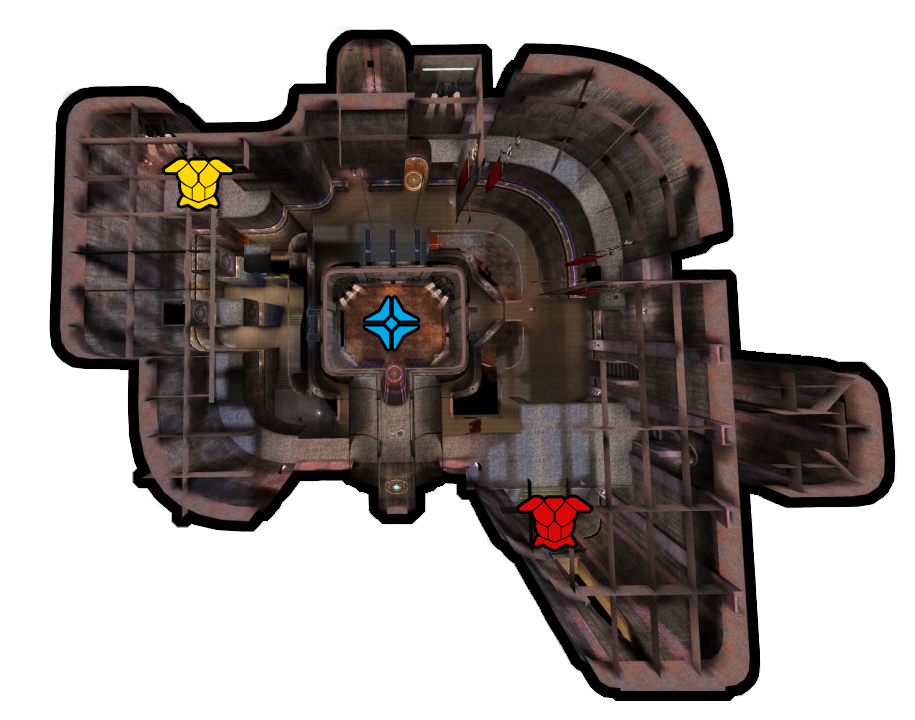
One key non-transitive system in Quake is positioning! A position can give you a combat advantage over another position for a particular fight, but there is no “best” position on the map. Another advantage positions give you is paths towards different items on the map. For example, if the mega health is spawning, and your opponent is traveling through tunnel A, if you have already positioned yourself in tunnel A, you can ambush them and defend the tunnel while backing away towards the mega health. You can stall your opponent and have the opportunity to pick up 100 health in the middle of the fight. The maximum stack in Quake is 200 health / 200 armor, so picking up 100 health suddenly fills 25 % of your max stack. Quake maps also have a looping design, and each path has their own advantages and disadvantages compared to other positions – this is the key system that provides the non-transitive elements to Quake.
What constitutes Hidden information in Quake is fairly obvious – you are limited by what you can see, and you can only hear your immediate surroundings, so your opponent’s position is not always known to you. This means the pace of Quake’s mind games play out through a lot of movement, item collection, and brief clashes, punctuated by a few periodic showdowns. You first set up and position, then you finally clash with your opponent. This is why mind games in Quake are not obvious to everyone. A spectator only sees the showdown, but the set-up of the showdown during the “downtime” is where mind games actually play out – the showdown is the outcome of the prior set-up!
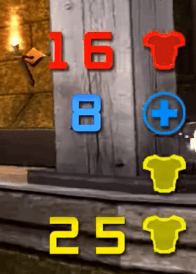
What about repeatable situations? Quake has a unique looping structure! The main game state that is affected by position are the spawn timings of the main items on the map – red armor, mega health & the weaker armors. These items respawn periodically. This means that each situation can be parameterised via how far apart the red armor & mega health will each spawn in time (minor items are often ignored).
There is still the problem of snowballing, so how does Quake deal with that? There is a cap on the snowball of maximum 200 health & 200 armour. Due to this, the game is actually split into 3 different possible states. The game could be neutral with both players being roughly equal. A player could be in control, meaning they have the resource advantage, or a player could be out of control – their opponent has the resource advantage. While those are different states the game can still transition in and out between those states in a non-linear fashion.
These states are not unlike pressure in fighting games. In okizeme one player is in control while the other is out of control. The in-control & out-of-control states last much longer in Quake than okizeme situations in fighting games. Luckily, Quake is rich with strategy & mind games even in the in-control and out-of-control states. In contrast to fighting games, where the neutral is the most interesting phase, in Quake it’s more interesting when you’re in control or out of control, rather than at parity.
Quake rewards non-transitive interactions less than other games, but there is still enough reward to make mind games effective and worthwhile. Compared to fighting games, there is a higher reward to transitive interactions – a player with significant mechanical skill advantage will always win, even if they lose each mind game. In fighting games, exchanges tend to be winner takes all, and trades are infrequent. This means attrition is one-sided for any given exchange – determined by the non-transitive factors at play. On the other hand, in Quake trades are mostly unavoidable, both players are subject to some amount of attrition in almost every exchange. In this case, mind games affect the rate of attrition for each player, rather than who takes attrition. Despite that, players still plan to predict their opponents and play unpredictably. There are even competitive players that are known specifically for their ability to read their opponents and play unpredictably – like Cooller.
Conclusion
While mind games tend to be associated only with the fundamental requirements, in reality: We must take into account all of these additional factors so that players will engage with mind games in actual competitive games. Of course, the games examined in this article are not the only ones with mind games – there are many more games with rich mind games that are worthy of exploration and analysis2.
- Chess actually does have hidden information – you don’t know what your opponent is calculating at any given moment! This is actually important when there is a clock on the board, since a way you can gain advantage is by playing a line that your opponent has not considered and calculated. Playing into non-obvious lines is a way you can bleed your opponent’s clock and win! However, mind games are still not effective there due to the lack of repeatable situations. ↩︎
- A more niche example would be Armagetron Advanced (also known as Retrocycles on steam). What is interesting about this game is that mind games are present in a free for all mode – sumobar where 8 players face off. This has to do with the unique “combat” system of the game where you are mostly fighting off players 1 after another in a looping scenario. ↩︎