Why shouldn’t Hitboxes match perfectly?

Do you think there is any advantage to having hitboxes and animations/models not being 1:1 (or close to that)?

Yes. I’ve looked a lot into hitboxes/hurtboxes and experimented with them. More than anything I’d say it’s a matter of the KISS principle. When you make the hitboxes and hurtboxes 1:1 with the model, you end up with values that fluctuate wildly between frames, such as when characters flail their limbs as they are wont to do. This is especially likely to happen when you have a lot of concave and convex surfaces making complex geometries, weird shit is super-prone to happening and you don’t know what the fuck the result will be frequently. Why do you think clipping out of bounds is so common in so many games? It’s usually a result of the hitboxes or the environmental collisions getting distorted so something goes inside something else. When you keep things simpler, the odds of unintended or flat-out weird interactions that nobody can understand go down, especially for collisions where objects affect the position of other objects, like in environmental collisions.

The scale of the hitbox needs to be appropriate to the interaction too, relative to the size of each entity interacting. For example, in Wonderful 101, does each Wonderful one really need a 1:1 accurate model for collision? This also varies depending on the pace of the game, because the fidelity of our perception changes based on the speed of the game, smaller areas that barely make contact are hard to notice, so you can afford to be more forgiving and general in making hitboxes for faster games.

14299041356_06cdf1cc32_o.jpg

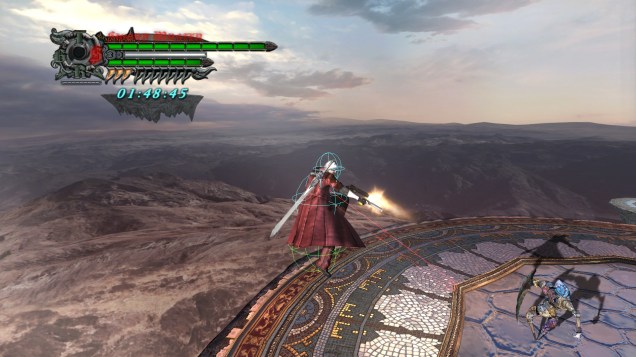
This is why Devil May Cry uses 3 spheres to represent Dante and Nero and no hitboxes on the limbs. Marvel 3 has similarly simplified hitboxes. I’ve seen hitboxes cleanly miss in smash that people swore should hit, and vice versa.

CCEuSRjW0AAu1OA

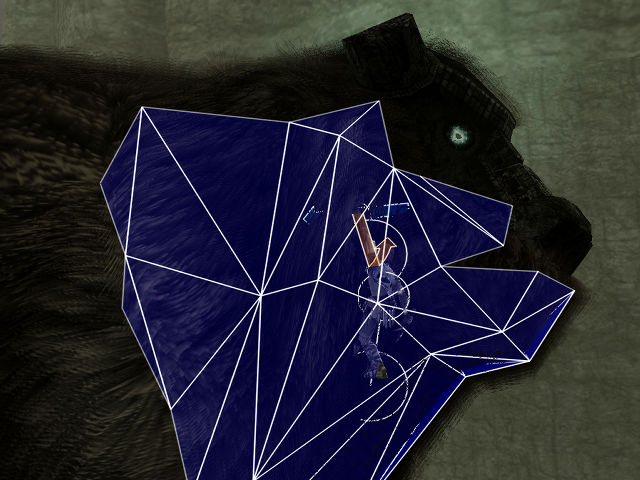
In the opposite extreme, Shadow of the Colossus has extremely detailed hitboxes for its Colossi and extremely simple ones for Wander. The Colossi need complex geometry in proportion to their scale. Wander doesn’t fight enemies around his size, the colossi have much larger implements to hit with, so it only needs to track his central body mass. The Colossi need to be climbed up accurately, the Wander is like a small implement probing a large surface, like the hook dentists use on your teeth. If Wander sticks a limb out and that ends up in your entire body getting crushed then you’ll be shouting about how bullshit that is. You need to be a bit forgiving to make up for difficulties in perception. Also players generally like it better when their hitbox is smaller than represented and an enemy’s is bigger, like in Shmups which took this principle to the extreme. Same for things that the player collects or interacts with, they like it better when their area to interact or collect things that help them is bigger.

3dwa67

In Smash bros there’s this term, Roy-Zoned, for when you’re so close to the opponent that your attacks miss them because they’re on the far side. It’s called that because Roy has a sweet spot close to him, so Roy players try to sweet spot so hard they frequently miss entirely. When someone punches, how much of their arm should actually be the hit area? Just the fist? The entire length of the arm? Some way into the body? Remember, Roy is a character with a sword, he doesn’t exactly have small hitboxes, yet I’ve had silly things like two marths Fsmashing at point blank range and we miss each other. Or try to grab each other and miss. And if you’ve ever seen Marth’s grab box you’d know how silly that is.

It gets sillier when you have the legs given individual hitboxes and someone does like a kick or something where the hitbox fits inbetween the legs, and it’s like, “Seriously? there’s no way that should miss.” I’ve seen this sort of thing happen a LOT in all sorts of games.
CDEUMEsUkAEgE1d[1]
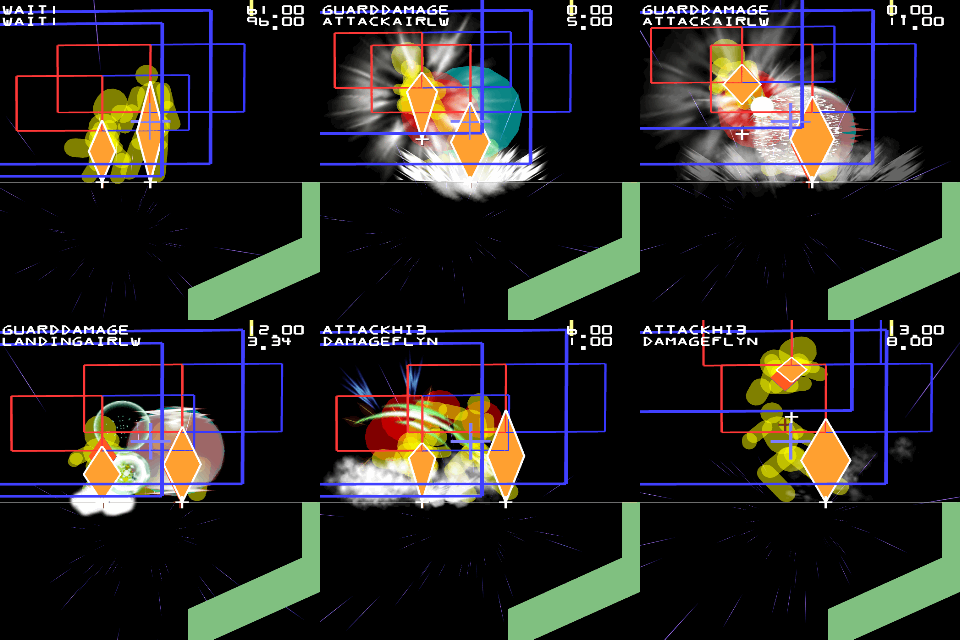
You have to think about the hits being the very edges of each hitbox’s range, and would a hit in those regions be acceptable or look weird relative to the animation? Especially true for grab animations, because when you grab the character gets dislocated, teleporting to the held position. The obvious example is Mewtwo’s grab in PM 3.02, because part of the box was inside him, people barely brushing his back would be grabbed and teleported in front of him where he held them. I took a picture of that and have an animated example.
Iu2M93m[1]
nhSug8g[1]
The intention is clear, they wanted crouching characters to go under the hitbox in front so they could get around the grab, but people closer into mewtwo to not get roy-zoned, but it had this unfortunate consequence.

Because environmental collisions in particular are so finnicky, most games don’t use anything close to the character’s model for that. Smash uses a small diamond shape, Dark Souls uses a big pill shape. Mirror’s edge has a cylinder. If you use something more complicated and don’t have a complex animation engine based on inverse kinematics, you’re going to run into trouble there. Even with one you’re going to run into trouble, because GTA and other games like it do.

j3v

Are Souls games Metroidvania?

Would you classify the Souls games as metroidvania?

Only really Dark Souls. To me, metroidvania means that the areas are interlinked and you’re required to pathfind, find the shortest route between two points.

Dark Souls lets you from firelink shrine go through the undead burg, undead parish, new londo, valley of the drakes, blighttown, dark root basin, dark root forest, the great hollow, the lake of ash, the catacombs, and tomb of the giants.

Without fighting a single boss you can from firelink shrine access all of the following bosses: taurus demon, gargoyles, capra demon, moonlight butterfly, Sif, quelaag, stray demon, and pinwheel.

Tastefully, dark souls limits its warp points to a few of the most interconnected or important locations, and they’re only available in the latter half of the game when you’re required to quickly travel between the far ends of the game.

Demon’s Souls doesn’t really fit for me, because there are 5 paths that you can progress on linearly, but they are not interconnected, and there is no connection between later levels in an area and earlier ones. Also you can warp between all the major checkpoints, so there’s no point in pathfinding on an area to area level.

Dark Souls 2 has a similar issue because it’s littered with bonfires and you can warp between ALL OF THEM. Not to mention that much like demon’s souls, all the areas are just one way branches off a central path, they don’t reconnect, and there’s only one loop connecting different ends (the eagle and boat which both take you to the lost bastille) So you can pretty much warp to any point you want to.

Bloodborne follows from Dark Souls 2 and Demon’s souls in that you can warp to every single checkpoint. The world is actually really well interconnected all over the place, but the problem is that all the connections need to be unlocked after going through the area that is connected, so the world only really becomes nonlinear after you’ve already gone through it in a linear fashion. The numerous warp points make the nonlinearity further pointless.

Lesson: If you’re gonna have warps, use them sparingly, include looping level design, don’t make it one way to a dead end all the time with shortcuts.

Why is Dante such a lame fight in DMC4?

Why is Dante such a lame fight in DMC4? His attacks are so fast and he’s easily cheesed by pistol > buster.

It’s not that he’s faster than you necessarily, it’s that protagonists of 3d beat em up games have fast attacks, while enemies usually have slow attacks. This makes fighting Dante unsatisfying in much the same way as fighting bots in fighting games is unsatisfying. Furthermore, the movesets of dante and nero aren’t given clear counters or other weaknesses like fighting game movesets are. In fighting games, most moves are less than 15 frames of startup, which make them difficult to react to, so players need to predict what their opponents will do in order to fairly combat them. In most action games like DMC, most enemies have attacks or sequences that start up like 30-60 frames in advance of when they actually hit you, so you have a fair time to dodge or stuff their attacks.

When you have a bot choosing options and all those options are as fast as all of your options, you can’t predict what they’re going to do and you can’t react when they do it. Fighting games have a leg up there in that everything is designed with a counter, it makes you vulnerable in some way. In action games, you only really have dodging and attacking. The hitboxes of dante and nero make them insusceptible to whiff punishing, because they can only be hit at their centers.

The solution is really to establish some clear tendencies for the AI and give players a number of ways to counter those behaviors, some of which are more effective and some of which are less effective, some of which are harder/easy, higher chance of success/lower chance of success, and to have them vary based on circumstance so that you can’t repeat the same thing over and over again without risk. Then you have to make all these factors obvious to the player so they can see into the machine a little and fairly predict what will happen based on their input.

The reason pistol > buster works is because they went overboard in making dante’s behaviors rigid and not really respond to circumstance. They should have had a number of different behaviors to respond to shooting from far away, like readying the pandora charge shot quickly (even though it would break canon), or using a stinger after a taunt so you had time to react. For the clashing pistols, he probably should have tensed up more over time and as you got closer, in like his posture or something via animation blending, something obvious the player can see, before breaking into a counter attack, so that in the case they’re both shooting at each other’s bullets the player needs to be careful about how quickly they move in to punish that action (and it opens up the possibility of baiting out the followup and punishing that). Just to give some basic examples of possible ways the fight could be varied up and cheese could be removed while keeping it fair.

Berserk

Have you read or watched Berserk? Is so, what genre of game would fit best for it?

I’ve done both of course. It’s one of my favorite manga series. I think that it would fit best as a 3d beat em up game, somewhere between the souls games and say devil may cry. In terms of game structure you could very easily adapt a lot of manga chapters to fit.

Following from the souls games I think that combat should be about finding the right time between enemy attacks to land massive heavy weighty hits. I played through Demon’s Souls, Dark Souls and Dark Souls 2 for the first time each using the zweihander type weapon. First the dragon bone smasher, the zweihander, then the greatsword. I think that missed hits should probably be cancelable into roll dodges, and blocks should either be done two handed, letting some damage through, or no blocking at all, just dodge everything. The hard part will probably be capturing the agility of Guts in combination with massive heavy sword wielding, which is why I propose the roll cancel on whiffed attacks (inspired by monster hunter).

In line with Dark Souls, having faster lighter attacks as contextual actions after rolls would be a cool touch too. Following from DMC, having a bunch of command inputs, like forward + slash, back + slash would be helpful. If there are two attack inputs, one should be for horizontal slashes, the other for vertical slashes, the latter being more powerful, and probably slamming enemies to the ground (because I loved that about the zweihander). I think using a stamina system would make a lot of sense (it’s what prevents you from repeatedly slamming enemies to the ground over and over in an infinite) even though that’s clearly more of a souls influence. I think that if command inputs are used, that lock-on should be toggled based on the R1 button, meaning that the attack buttons would be among the face buttons instead of triggers. Some ranged attacks can hang out on the triggers still though.

The game could follow directly the story and battles as they are in the manga, or during the golden age arc and later during the black swordsman arc, open you up for a mission-type structure or open world structure respectively. I think that leveling up and so on should be left out of the game ideally, with new abilities and weapons presented at the appropriate point in the story arc. Maybe a light resource management aspect with throwing knives, arrows, and cannonballs. If there is an open structure then people tend to respond poorly to side quests or optional missions unless there’s a reward at the end of it I feel. Maybe a healing item could be introduced in the open world half of the game and side missions unlock dispensaries. Side missions could maybe also unlock warp points or shortcuts through the world. In the golden age campaign, you could have it so there are many paths to victory and different missions push the enemy back across the map or something, closing off some missions so it’s essentially branched progression forwards, pick your favorite percentage of missions to advance

Yandere Sim

Okay, let’s imagine an alternative universe where you are indifferent towards or enjoy Yandere stuff (you don’t hate it). Imagine if in that universe for some bizarre reason you were hired to handle the mechanics and gameplay design of yandere simulator. What mechanics would you implement? Why?

Come on, if you’ve been following me at all you should know that I have a militant indifference to the theme of a game. What matters is how it shapes into mechanics, and as a theme, yandere has some potential in my opinion.

My first thought is have a low profile mode and a high profile mode. Part of being yandere is hiding that you’re crazy. The main thing I’m thinking of is movement though. I’m really tired of the “You have to move at the absolute slowest crawling pace to avoid generating sound” tradeoff we usually get in stealth games. Give the girl a decent speed, then give her a high profile creepy run that is really fast, and lets say if you use 2/3rds or half of your stamina or more you run out of breath (move really slow) when the run is over, and stamina generally comes back really slowly so you can’t spam run to bypass everything, you have to pick your moment to dash, and suffer running longer distances. Meanwhile, no ultra slow ultra stealthy mode, just make the regular walking mode stealthy, or hell, add a stealth mode that makes no sound but will immediately alert anyone looking at you (since it’s stealth based on suspicious actions like hitman/asscreed) and consumes stamina at a slower rate, no movement penalty.

The main thing about the game is what qualifies as suspicious/not suspicious and in what contexts. So there needs to be an established parameter for what areas it’s okay for you to be in, at what times, when making noise triggers alerts versus just being innocuous, and so on. Like after school, footsteps are probably suspicious, I imagine a girl alone in the classroom going through her desk hearing/seeing you, turning around, screaming, and pushing you away (high priority over your actions) to make their getaway easier. Maybe have some contextual actions to fit in during afterschool hours, like digging through locker for HW as an alibi.

Should probably be a system of lures and other events to draw romantic rivals out, like leaving notes, stealing their belongings, passing around rumors, etc. divide and conquer, etc. Stabbing people should leave blood on clothes/floor/etc to leave signs for people and add more counterplay between stuff.

Dunno if wooing senpai should be a goal or not. I imagine it would be funnier to have him not realize you exist, but you treat him like he’s your true love. Would also keep gameplay systems cleaner, avoiding having to deal with him. Having him pop up at inconvenient times to almost witness your yandere tendencies would be a good way to reinforce central stealth systems.

Other people should probably only chase you in numbers or if they’re adults, so high profile actions make individuals flee or cower. Should probably be some way to attract people to a given point, though I can’t think of it. Maybe leaving school supplies/candy on the floor? Maybe you drive people away into corners by leaving creepy things around?

Out of characters, hope this is interesting enough

What do you think of off-screen attacks?

In Dark Souls I love them, in Metal Gear Rising I hate them. In Dark Souls I feel like it’s my fault, in MGR I feel they’re nigh unavoidable.

Good idea is to have auditory cues for offscreen enemies, or some other type of attack indicator. I prefer audio, we can do 3d sound fairly well these days, and audio I think can be a bit more clear about the pacing of the attack, and I feel like it’s the “right” level of feedback clarity directionally.

The big thing is, players need a fair chance to perceive that they might be threatened from offscreen. In Dark Souls, this usually only happens if you rush past enemies and let them surround you. Enemies are not easily missed in Dark Souls. When I am engaging multiple enemies, I know there are multiple enemies and I keep a mental map of where all the enemies are. I really enjoy fighting multiple enemies at once because the game makes it possible. In MGR, the camera is practically biased to force you into walls, so enemies are always coming from offscreen until you are down to 1 enemy and can finally camera lock them without ignoring the rest. Many enemies have ranged attacks that need to be blocked up, or they’ll dash into you as they attack. Dark Souls has no soft-lock, and the jumping attack and kick commands can be done in any direction. MGR has a soft lock, so if you do the stinger move or the wide slicing trip move, you won’t hit inbetween the two/four enemies where you aimed it, you’ll hit one or the other/three of them but not the fourth.

Cheating a bit and altering enemy aggro/attack speed when offscreen is perfectly permissible in my book. Just don’t do something silly like Amnesia where the monster practically can’t hurt you if you look in the right direction and relax those restrictions if the player engages in combat with one of them, because then they’re asking to get smacked.

God Hand gives the player a Radar, given the camera is like a tank and mostly fixed, this is probably necessary for that game, it seems like UI clutter or overkill for many others. God Hand AI cheats like I mentioned, except on LvDIE.

The idea is, either make sure the players know about all the enemies around them before they turn their back, or give them a warning they can see or hear before an unknown offscreen enemy attacks in a way that gives them a chance to react correctly. Or both.

What are the problems majority of MMOs have and how could you fix them?

The majority of the systems in MMOs revolve around combat when you get down to it, and the combat sucks. It sucks because it’s a DPS efficiency race. They don’t really integrate movement or counterplay. If DPS is a major term in your game, you’re doing something wrong. Damage per second shouldn’t be a major factor. It’s a major factor because the two combatants are standing around, and strategies don’t really counter each other. It’s not a question of whether you will do damage, you pretty much inevitably will. It’s a question of what rotation of spells/abilities will do the most damage and reduce the opponent’s damage the most. You move during boss raids because the bosses have AOEs announced in advance which you step out of. It’s a lame existence.

Look at Dark Souls in comparison, in a lot of ways it feels like it’s an MMO even though it’s smaller scale. I think that a lot of elements of dark souls’ combat could be scaled up, and a bigger world could be made. The primary engineering problem is client server communication. As I understand it, the reason MMOs are constructed as they are is because handling more variables is extremely intensive on such a massive scale. Dark Souls keeps the scale down, and the connections are peer to peer with all data held client-side, so the server has a minimal load in comparison (it only provides matchmaking services essentially). I’ve asked about why MMOs don’t do action combat more or have weak facsimilies of action combat and the answers I get are usually that action combat is too network intensive to reasonably handle.

I imagine that issues there could be solved with instancing, to prevent having to communicate all the data to everyone, and having the clients bear more of the load for PvE, in line with how Monster Hunter handles some of those interactions. In Monster Hunter, smaller monsters are each handled locally with the host player remembering how much HP they all have, so they will not be synced between sessions, each individual player fights the monsters in their own session. This means you can’t really enact group tactics on the smaller monsters, but the bigger ones will be in sync and they count for more. The trouble with having clients handle more of the load peer to peer is that if you pass data to the client, it’s in the hands of the enemy. The more you trust with the client, the more the client can abuse the game with things like Cheat Engine. This is why there are so many cheaters in dark souls because there’s no data authentication in any of the souls games. The server isn’t involved enough to double check everything is legitimate. In Dark Souls, this doesn’t matter so much, because there’s no competition to be top of the server, and nobody can really obtain anything via cheating that normal players can’t. There’s a definite cap on how close to the top you can be and at worst individual sessions are ruined.

I’m not gonna go over how to make a good combat system, there’s a billion and one ways to do that that I’ve talked about to no end.

What I feel deserves more attention is other game types. It’s kind of inevitable that mining/farming/crafting will be involved at some level, and it would pay to have those roles be involved instead of being about waiting until bars fill up. Star Citizen and Star Wars Galaxies seemed to have solutions to those, like in star citizen, apparently miners are expected to fly through asteroid fields to harvest materials, making it risky and dangerous. The Star Wars Galaxies crafting and profession systems are so complex it’s difficult to sum them up here. Raph Koster did a good summary on his blog, www.raphkoster.com/2015/04/27/did-star-wars-galaxies-fail/ This one links to the other posts explaining how the different systems worked.

The other thing is, I think we should reconsider how all MMOs are basically hamster wheels, how you’re always working to earn something so you can kill monsters slightly faster, how everything is just a number going up or a progress bar, metaphorically speaking. Comparing Dark Souls to WoW made me consider that. In MMOs there’s such a large volume of shit and it’s so hard to access it, that not everyone is really expected to ever do everything. In Dark Souls or Bloodborne, it’s practically expected that everyone has or can get everything, and people willingly stay at a lower level than necessary because that’s where everyone else is. Not to mention that the game is designed so nobody can get excessive bonuses or benefit too much from bringing extra consumables to a fight (at least, in bloodborne). It’s something people come back to because they enjoy it more than because they have an investment in it.

That and there’s probably more ideas you could do for MMOish gameplay. I might cover that in a future article or something.

Anything I missed? I feel like I forgot something or didn’t cover everything here, but I can’t remember what else there is.

Tripping on Air: Why Game Journalists Can’t Describe Games

tripping-on-air61[1]

It’s no secret that I’m a huge fan of Super Smash Brothers Melee. The first time I played a game on console was the original Super Smash Bros. on N64 at a friend’s house. He warned another friend who had the game not to invite me over, because I’d do nothing but play Smash Bros. I’ve probably spent more time playing Melee and Smash Bros in general than any other game I own, and what initially drew me in about Smash versus other games was the solidity of the combat. I felt like I was making deliberate choices that had a weight to them. In other games, like Zelda, I waved the sword around and it was pretty cool, but I had this craving for the solid feeling that Smash Bros. combat provided. The topic coming up is a bit personal for me, so please bear with my gushing for at least the next part. Recently, Destructoid published an opinion piece titled: “I’m going to miss tripping in Super Smash Bros. 4” written by Jonathan Holmes. Articles like this leave me disappointed, both out of an admiration for my favorite game, and a love for games in general.

My Time With Smash

Ledge_tech_SSBMTo be plain, Brawl was a disappointment for me. When I first played it, I wasn’t into competitive gaming. I had never played Street Fighter or any other traditional fighting game before, or ever owned a non-Nintendo video game system. I’d been fighting online, trying to tell people based on the footage we had that it wouldn’t end the Smash series, it would just be different and we’d still have everything we loved about Smash Bros. in it. I checked Sakurai’s updates on the Smash Dojo every day, frequently staying up to three in the morning to see what was new, but actually playing the game for myself, I felt something was deeply off about the way controlling the characters felt, especially the ones that carried over from Melee.

Despite my initial impressions, I stuck it out. I played the game constantly with my little brother and anyone else I could get to play with me. I unlocked every character on the first night I had it. I beat the story mode on the hardest difficulty with my brother’s help. I went through the event mode matches and eventually unlocked all the stages. I picked up a completely new character, Snake, and learned how to play the game fairly well. I played with items on high. Yet I felt like there was something ineffably wrong about Brawl that I couldn’t put into words. All I could tell at the time was that Brawl was “slow” and “floaty.” I felt there was this disconnect between what I did, and the actions on the screen, and weird unexplainable things would happen at a whim, like attacks connecting weirdly, sliding across the stage from the ledge, or suddenly being launched higher than normal. No matter the character, I found it was easier to win by playing the game in a boring and safe style than actually trying to attack and take stocks off the other players – as if the only way to win was to suck all the fun out of the game for everyone else playing. After a few months of non-stop play, I moved back to Melee, and without any sort of coordination or discussion so did all my friends in the surrounding area. We didn’t need to be experts to feel that something was wrong.

When I first heard from an online friend about how he was replacing textures in his copy of Brawl, my immediate question was, “Is there a mod that makes it like Melee?” He didn’t have an answer for me, but that lead me to finding Brawl+, one of the earlier Brawl mods, and later Project M. I know a bit more about the game now than I used to, and I can finally put into words that feeling of unease I got from Brawl, and all the factors that contributed to that. That’s part of why the aforementioned article disappoints me, because the struggle of Melee‘s competitive scene and fanbase fighting to stay alive and overcome its lackluster successor for thirteen years has meant so much to me. I’ve had fun times playing and learning from other people about these games I love – it means a lot. It is a direct result of the Smash scene’s survival. Without the scene, it would be nearly impossible to find other dedicated Smash players.

Why is Holmes Tripping?

It’s easy to point out ways in which Jonathan Holmes was wrong. Pointing out the ways is exactly what he wants you to do. It’s why the article exists and, intentional or not on his part, everyone upset by it is indirectly paying into his pockets. Further, it allows him (and by extension, other journalists) to continue playing the expert, while the rest of us are stuck characterized as the routinely angry and incorrect mob. By taking offense at articles like this, commenters are forced to accept the message in the form of an argument – the message being that there is a controversy over tripping in Brawl and that Smash fans are separated into two big groups of “casual” and “hardcore” players that hate each other. Through repeatedly bringing in traffic using controversy in the form of opinion articles, reviews, and biased reporting, journalists are able to establish themselves as an asset to their publishers and as “experts” to their readers.

An article like his is frankly more than a little bit rude, and the author knew it before he published it. Jonathan Holmes went into a giddy glee on Twitter about how he made so many people mad and continued to jeer at them. After all, they’re the rabble and he’s the author. It’s expected that any sort of controversial opinion on the internet will attract an inarticulate raging backlash, thereby he is able to claim moral superiority by pointing out how horrible his detractors clearly are, further illustrating how right he is.

Why did Holmes choose to talk about tripping? Why did he elect to do this during Evo, for a game that fans raised $90,000 for cancer research just to get into Evo? Smash Bros. has other random elements that are disruptive to competitive play, like random items and stage hazards, so why would he choose to focus on the one element that is mandatory, and has no function other than disrupting how one plays the game? Especially an element that he describes as discouraging people from playing the game, or playing the game in a more static and defensive way? He chooses to highlight how allegedly no one can tell the difference between Brawl and Melee unless there is a direct comparison, despite it having no real relevance to tripping. This serves to aid his later conclusion that Melee players are control freaks. Is this article really about tripping, or is it his vendetta against competitive Smash players? Especially when he closes it by telling people who don’t want to deal with unfairness to go play Checkers, a game that he calls boring.

Holmes isn’t acting as a player of Smash, he talks as if he’s an observer, looking in from the outside. He’s someone watching other people play the game and telling them that their way of playing it is boring, as if he knows what goes through the heads of tournament players. The commentators do a really great job explaining things like players reading their opponents, attempting to keep composure when they’re losing, or taking measures in and out of matches to keep their psychological momentum up or kill their opponent’s momentum. As an observer, Holmes doesn’t understand what goes into playing the game. Of course, the people who are good at the game can’t possibly be good because they enjoy (watching) the game like Holmes does, it’s because they’re impatient control freaks.

This isn’t something he would ask of Street Fighter. This isn’t something he would ask of Starcraft. One of the magic things about Melee in the time before Brawl was how it brought people together. It has a relatively low entry level compared to other fighting games, yet had a depth to it that dedicated players could learn about and improve through. This gave Smash Bros Melee. a strong lasting appeal, because it is so easy to get into the game, yet you could do so much with it, and it never gets stale. Jonathan Holmes doesn’t want a game for everyone, he sees others playing the game in a controlled way and finds it offensive. He wants Smash Bros. to have a nonsense feature that he wouldn’t ask of any other game, because he doesn’t actually care how Smash Bros. plays, or whether it’s a fun game at all. He said himself he or any “average” player can barely tell the difference between Melee and Brawl by looking at them.

Again he sounds like an observer, using a visual demonstration to try to get his point across, and vague statements like “hang time” to describe characters moving slower, rather than facts about the exact differences. The differences between Melee and Brawl are something you can feel, especially because Brawl has input delays and buffers. This can’t be seen in footage of the game, but can be felt by anyone playing it. Just like how an HDTV with high input latency looks fine to anyone watching, but if you try to play a game on it, you suddenly feel the intense sluggishness between your controller and the screen. Since the differences aren’t obvious, the series should stop being geared towards a balanced play style, and instead towards one based on playing the game and interacting with opponents as little as possible, trying to edge them out in the long run, because he doesn’t mind that as long as those pesky fans of the game go away.

Genre Blindness

The points brought up in Holmes’s article reflect a failure on his part to understand the games he criticizes, and rely on the general audience not being knowledgeable enough on the topic to simply dismiss him, while still having an audience knowledgeable and opinionated enough on the topic to combat him. This is common in games discussion and criticism. Most people operating as journalists and academics aren’t experts on games. It’s unlikely that they’re even fairly good at games. There are regular signs that journalists simply don’t know what they’re talking about when it comes to games with a significant depth to them (as is routine for most competitive multiplayer games) and that they struggle with games above the average level of difficulty, frequently resorting to use of an easy mode, or simply reviewing the game incomplete and marking it down for its “difficulty” or “inaccessibility.” A recent example of this was Revision 3’s review of Metal Gear Rising, where it is notable that all of their gameplay footage included the auto assist indicator in the upper left corner that only appears on easy mode. It’s worth contrasting this with the interview Platinum Games recently conducted with Saurian Dash. In this interview, Saur is able to explain how the game works on a fundamental level that all of the journalists reviewing the game simply passed up on.

Zeboyd Games posted an article on their blog titled, “Why Games Like The Wonderful 101 are a Poor Fit for the Gaming Press,” addressing the common trend of skill-intensive games with a deeper mechanical underpinning being dismissed by the press because the press simply doesn’t have enough time to get good enough to understand how those games work. Penny Arcade Report’s Ben Kuchera chose to write a piece on Wonderful 101 with Robert Boyd’s article in mind, coming to the conclusion that the game’s depth and complexity were more alienating than inviting, and that this in itself was inherently a point against it. In numerous reviews of DmC: Devil May Cry it was brought up how the game was made “more accessible” but still had the same deep fighting system. Despite a legion of legitimate complaints related to game features such as the framerate, lack of hard lock as an input modifier, and broken style meter, gaming press chose to dismiss the majority of these complaints as the fans complaining about Dante’s hair color or simply whining because they can’t handle the game being changed. Such a disconnect between critics and readers is common, as demonstrated by a study conducted on Metacritic by Xentax that scores users will give a game and the opinions of critics have next to no causal link.

Word From the Experts

Jonathan Holmes cites Smash Bros. experts too, but only to deride them as being control freaks upset about something that is, in his view, extremely minor to the game. This is because he lacks the ability and experience to understand how this particular change, increased landing lag, ripples up and affects the other game elements. Gaming journalists cannot envision how the parts of a game fit together and affect one another, they can at best address the basic features the game possesses and render some vague judgment based on how the game feels. In Holmes’s article on tripping, he attributed the static and defensive style of play popular in Brawl to tripping, when landing lag and shield stun actually have a much larger influence on that.

In fighting games, a large component of the game is the ability to beat out your opponent’s move by throwing out your own first, or to punish it by attacking them when they miss. Stronger moves tend to take longer to start up and recover, so they are easier to punish and harder to land on your opponent. I’m sure everyone here has had the experience of your opponent messing up a rest with Jigglypuff and being caught sleeping, allowing you to punish it with the strongest move you have. The longer the recovery time of attacks, the more severely opponents can punish you for attacking. All the Smash games have relatively quick attacks, but Smash 64 and Melee had lower landing lag, allowing you to attack sooner, and your opponent could only punish you with moves that were of a certain strength, and only if they were capable of predicting and reacting to your attack’s recovery.

In Brawl and Smash 4, increased landing lag means that not only is it easier for your opponents to punish your attacks on reaction, but that they can use stronger punishing moves on you. This means that there is an imbalance between the risks and rewards of attacking. If every move is relatively fast to come out, but can be punished hard for missing, then people will naturally avoid attacking except with their weakest and safest attacks. Look to the grand finals of the Smash Invitational Tournament at E3 for an example of that. Shields also play a role in this, because when the duration of the stun on a shield is lower, then the defender has more advantage time on block to punish the person that just attacked them, and even lower commitment attacks become punishable from a shield where they might otherwise be safe. What Jonathan Holmes dismisses as the obsessive ramblings of control freaks is an easily overlooked but important factor that will literally define how the entire game is played.

Picture 2014-07-14 22_37_39It is worth contrasting the opinions of Mew2King and Armada here with those of professional Street Fighter players in response to the new version of Street Fighter 4. In a recent interview, six of Japan’s top players discussed the changes in Ultra Street Fighter 4. It’s not a surprise that the number of frames in advantage time comes up frequently in this discussion. Games are displayed in successive series of animation frames, and these frames serve as a convenient standard timer for discussing the duration of things like attacks and stun. Advantage time is how fast you recover from your attack versus how fast your opponent recovers from the stun of being hit by it. Changes of as little as one frame of advantage time for a character were enough for these experts to re-evaluate changes in ranking, power level, and play style.

If you check the average fighting game review, they’re able to inform you of the big new features the developers added with this iteration, like the typical Ultra Street Fighter 4 review being able to describe how focus attacks work, and the new delayed wakeup system, and some superfluous side features like the combo trials, and describe the general vague feeling of the game, but they’re incapable of really describing why that fighting game is better or worse than any other fighting game. They lack the ability to process the way the game is put together and work out the strategies and game dynamics inherent in the play of it.

This isn’t a skill that is exclusive to the best players in the world, even average level players of these games are typically capable of discussing these things, because the deep nature of these games require players to understand how the whole system works in order to beat others, or play the game well on the higher difficulties. After all, I was able to explain how much the landing lag influences the game, and I’m no top player. A typical forum for a competitive game of any type will usually have a great deal of discussion about how even the smallest elements of the game influence how the entire thing works. Seth Killian was able to write about information like the mental game of Street Fighter long before people had access to home console versions of the games to test on, and he has never been a world class player.

Game journalists lack knowledge or capability of this type both for specific genres and for games as a whole, leading to erroneous notions like throws being cheap, professional players only being good for memorizing combos in games like Street Fighter, or playing out from a static “How to win at Smash Bros.” cookbook based entirely on reflexes and dexterity rather than the mental game of understanding and predicting your opponent, while also trying to keep composure and momentum going. The commentators did an excellent job explaining to unaware viewers, but to some degree you have to play and see for yourself. There are whole elements of the game that most people will never see or experience because they don’t think about it or try it out, and those elements frequently get relegated to obscure articles in niche communities.

The Fault of Game Reviews

It’s easy to take the last segment as an indictment of a typical journalist’s ability to understand fighting games or action games with advanced techniques, rather the typical journalist’s inability to describe is only more obvious with those types of game because what they fail to understand about the game is better documented and more obvious to the players. What should be noted is that the style of game reviews is uniform across all games. They are failing to describe all games for the same reasons, it’s just easier to point out with games that rely on their mechanical systems to make an impression, rather than their story. The reviewer will typically summarize the theme of the game, the major mechanics used by the player, and a general statement on the “experience” of playing the game.

Some academics have criticized this, claiming it is shallow, and we need more criticism of games and less mere reviews. These academics are correct, but more frequently than not what they mean by “criticism” of the game isn’t discussion of how the mechanics operate to create a fun, interactive experience, but rather analysis of the cultural significance of the game, how interactive functions are used for a narrative resonance, or the message the game is supposed to convey. Yet the problem remains that when I read the typical game review, I have no ability to tell from their writing whether the game is good or not and I am forced to rely on my friends or longer segments of gameplay footage to help give me an idea how the game actually works, and feels to play. Describing gameplay in an explicit way that people can understand is hard and not well explored, so critics and academics tend to fall back on elements of film or literature theory that have dissolved into the public consciousness, and vague opinions on whether the game feels nice or not. This is part of why there is a general trend of the gaming press highly praising works with large narrative content.

Being reviewers, it’s expected that they’re experts on judging games. Apart from the fact that they’re writing on a big-name game sites (and everyone else isn’t), what places their opinion above anyone else’s? As more incidents of reviewers panning a game because they didn’t “get it,” and bias in review scores come out, it becomes increasingly obvious that reviewers are unskilled, and that this lack of skill and background knowledge is limiting their ability to act as what their job title implies they are – people who are capable of delivering insights about the quality of a game because of their above average knowledge of games. Issues with frequent bias have lead to a call for more objective games reporting, leading to things like Objective Game Reviews, journalists such as Jim Sterling, and a PAX panel, attempting to lampoon the idea that a game can be reviewed on the basis of its components, while minimizing the reviewer’s personal preferences, because every reviewer’s experience is subjective and therefore inevitably biased. So they indirectly claim that objective or non-biased reviews can’t exist, and aren’t a thing consumers want, reviews can only be a person’s individual reaction to a game, therefore all reviews are fallible and you might as well continue to read theirs.

Despite this, reviews profess themselves and inevitably serve as consumer guides, attempting to inform consumers which games are worth their time and which should be avoided. Criticisms that reviewers are incompetent tend to be met with defenses that they beat whatever token hard game is being bandied around at that time, and don’t translate to an improvement in the quality of their writing that would be correlated with skill in both performing well at games and understanding their functioning well enough to review them. Rather than limiting one’s ability to relate to an audience of “average” gamers, being skilled at games means being able to spell out to consumers what the strong aspects of a game are with more accuracy than an unskilled reviewer. This is something that gaming journalists will attempt to dismiss because it removes their credibility and because them getting good at games isn’t going to happen. Anyone who is good at games is usually too busy enjoying them or doesn’t have the right connections to get into journalism.

If games truly couldn’t be judged as good or bad, then the only reasonable alternative format would be to describe them unambiguously enough that a reader could determine if the game is likely to be something they are interested in, rather than the reviewer vaguely attempting to sum up how much it bored them. At least in that scenario complex games wouldn’t get the shaft because reviewers deduct points for them being “inscrutable,” as Ben Kuchera put it. The trouble with this is of course that game reviewers would still need to actually be able to describe how the game works objectively on a level below the obvious surface features in order to allow people to understand the game’s operation well enough to judge for themselves whether they will like it. This approach is harder to put into short simple words, and thereby harder to market and make money off of, unattractive for both journalism sites and the game publishers that fund them, despite being more useful for everyone involved. That, and game reviewers would need to be good at games.
Taking Apart Stealth

Games are composed of rules. One of the goals of the game designer is to create sets of rules that work together in order to create dynamic and deep gameplay. This means gameplay with many possible non-redundant outcomes, strategies, or states, where the player is capable of planning around each element of the design and the design also attempts to thwart the player while opening up more ways for the player to interact with the design and overcome it.

This is a deconstruction of the basic elements of stealth games, arranged in an order of basic complexity up to high complexity. Each level is the number of discrete elements present. These elements are all listed at the end. A game with 12 of these elements could be said to be a, “level 12 stealth game” (though of course this is an arbitrary scheme and shouldn’t be taken as a definitive statement on a game’s quality). The early levels are mostly linear in their progression, building on each other in what I feel is a natural order of progression. Later levels are ordered more or less arbitrarily, as those elements are not really a part of the core stealth experience, but are supplemental, and frequently combined in different ways across games. In general, the core concept of stealth games is enemy units not having an automatic or universal awareness of the player’s location and the manipulation of enemy hostilities and behaviors at a distance.

2013-12-15_00047

Level design in particular is also a huge part of stealth games, and can range from guard placement, patrols, and environmental features. The lack of many of these elements can be compensated for with good level design, such as making unchanging guard patrols extend far through the level, and having the level be fairly open so guards sweep every area. This can allow guards to detect the bodies of downed guards, which they would never see in a game where their patrol pattern didn’t overlap where the guard was taken out. Adding different combinations of lighting and sound-producing floor surfaces in a level can dramatically change an encounter with even simpler AI types. There are many more ways to use level design in stealth games to create interesting possibilities, but that is unfortunately not the focus of this article.

In a stealth game, the goal of good AI is not just to be hard, but to challenge the player in a way that brings out variation and requires the player to think to succeed, usually by countering one of the player’s options or strategies. In order to do that, each of these levels imposes upon the player another distinct AI strategy they must deal with, but also gives them a means to gain an advantage over their enemies. For AI in general to improve, this type of discrete behavioral method and game design philosophy is what will have to be employed. Good AI is built on many distinct parts working well together, and good game design is built on challenging the player in a way that opens up variation while also forcing them to play well.

This list serves as a mirror for what it means to improve a game’s artificial intelligence, and on a broader level, what it means to improve a game’s challenges. Games exist as challenges because we enjoy being challenged. The quality of the challenge isn’t just that it’s hard, but in the particular methods by which it is hard. This is best expressed by the term “Depth.” The definition of depth I use is the range of different possible differentiated scenarios that can occur in a game related to succeeding or failing. Difficulty creates depth by differentiating scenarios from one another. You don’t win by just doing anything in a difficult game. You have to do the right things at the right times to succeed. Too much difficulty can limit depth, making the game a process of memorization and execution.

Each entry in the list will recite all the previous entries, with modifications in bold.

2013-08-08_00008

  • Level 1: Guards are in fixed positions. If they see you, they attack you until you are dead or they are disabled.
Featured in: Nearly all games, definitely all stealth games.
  • Level 2: Guards move around in fixed patrols. If they see you, they attack you until you are dead or they are disabled.
Featured in: Same.
  • Level 3: Guards move around in fixed patrols. If they see you, they attack you until you are dead, they disengage, or they are disabled. If you enter an area where they cannot see you, they will stop pursuing, but will remain in position around that area until a timer runs out then return to their original patrols
Featured in: Thief (2014), Dishonored (both AIs had a habit of standing around looking dumb)
  • Level 4: Guards move around in fixed patrols. If they see you, they attack you until you are dead, they disengage, or they are disabled. If you enter an area where they cannot see you, they will stop pursuing directly and begin following a projected path of where you might have moved to based on your last location, until a timer runs out, then they return to their original patrols
Featured in: Metal Gear Solid, Thief, Mark of the Ninja, most stealth games.
  • Level 5: Guards move around in fixed patrols. If they see you, they attack you until you are dead, they disengage, or they are disabled. If you enter an area where they cannot see you, they will stop pursuing directly and begin following a projected path of where you might have moved to based on your last location, until a timer runs out, then they return to their original patrols. Certain triggers like partial sightings, sound, bodies, or other things will trigger an investigation phase where they will look at the source of the disturbance.
Featured in: Thief (2014), Dishonored (again, tendency to stand around)
  • Level 6: Guards move around in fixed patrols. If they see you, they attack you until you are dead, they disengage, or they are disabled. If you enter an area where they cannot see you, they will stop pursuing directly and begin following a projected path of where you might have moved to based on your last location, until a timer runs out, then they enter investigation phase around your last known location, then another timer runs out and they return to their original patrols. Certain triggers like partial sightings, sound, bodies, or other things will trigger an investigation phase where they will look around the source of the disturbance.
Featured in: Metal Gear Solid 2 and beyond, Thief 2, Mark of the Ninja, most stealth games

2013-06-12_00007

  • Level 7: Guards move around in fixed patrols. They see you based on your distance from them and lighting, spotting you faster up close in bright light, and upon spotting you they attack you until you are dead, they disengage, or they are disabled. If you enter an area where they cannot see you, they will stop pursuing directly and begin following a projected path of where you might have moved to based on your last location, until a timer runs out, then they enter investigation phase around your last known location, then another timer runs out and they return to their original patrols. Certain triggers like partial sightings, sound, bodies, or other things will trigger an investigation phase where they will look around the source of the disturbance.
Featured in: Most stealth games have detection based on distance, and to some degree lighting.
  • Level 8: Guards move around in fixed patrols that occasionally change up. They see you based on your distance from them and lighting, spotting you faster up close in bright light, and upon spotting you they attack you until you are dead, they disengage, or they are disabled. If you enter an area where they cannot see you, they will stop pursuing directly and begin following a projected path of where you might have moved to based on your last location, until a timer runs out, then they enter investigation phase around your last known location, then another timer runs out and they return to changed patrols. Certain triggers like partial sightings, sound, bodies, or other things will trigger an investigation phase where they will look around the source of the disturbance.
Featured in: Games with this feature are rare, I cannot name any. Deus Ex Human Revolution had alerted guards return to changed patrols in some circumstances.
  • Level 9: Guards move around in fixed patrols that occasionally change up. They see you based on your distance from them and lighting, spotting you faster up close in bright light, and upon spotting you they attack you until you are dead, they disengage, or they are disabled. If you enter an area where they cannot see you, they will stop pursuing directly and begin following a projected path of where you might have moved to based on your last location, until a timer runs out, then they enter investigation phase around your last known location, then another timer runs out and they return to changed patrols. Certain triggers like partial sightings, sound, bodies, or other things will trigger an investigation phase where they will look around the source of the disturbance. Guards that spot you will call in for help, leading to increased patrols in the future, and more enemies to deal with in a short period of time.
Featured in: Metal Gear Solid 2 and 3, Monaco, Hitman.
  • Level 10: Guards move around in fixed patrols that occasionally change up. They see you based on your distance from them and lighting, spotting you faster up close in bright light, and upon spotting you they attack you until you are dead, they disengage, or they are disabled. If you enter an area where they cannot see you, they will stop pursuing directly and begin following a projected path of where you might have moved to based on your last location, until a timer runs out, then they enter investigation phase around your last known location, then another timer runs out and they return to changed patrols. Certain triggers like partial sightings, sound, bodies, or other things will trigger an investigation phase where they will look around the source of the disturbance. Guards that spot you will call in for help, leading to increased patrols in the future, and more enemies to deal with in a short period of time. Guards can be killed or knocked unconscious, both attract guard attention, killed guards trigger an alert phase, unconscious guards wake up eventually or can be woken up by other guards and trigger an investigation phase.
Featured in: Thief, Metal Gear Solid 2 onward, Mark of the Ninja, Monaco, Hitman, and most others (amusingly, not the original deus ex)
  • Level 11: Guards move around in fixed patrols that occasionally change up. They see you based on your distance from them and lighting, spotting you faster up close in bright light, and upon spotting you they attack you until you are dead, they disengage, or they are disabled. If you enter an area where they cannot see you, they will stop pursuing directly and begin following a projected path of where you might have moved to based on your last location, until a timer runs out, then they enter investigation phase around your last known location, then another timer runs out and they return to changed patrols. Certain triggers like partial sightings, sound, bodies, or other things will trigger an investigation phase where they will look around the source of the disturbance. Guards that spot you will call in for help, leading to increased patrols in the future, and more enemies to deal with in a short period of time. Guards can be killed or knocked unconscious, both attract guard attention, killed guards trigger an alert phase, unconscious guards wake up eventually or can be woken up by other guards and trigger an investigation phase. The bodies of guards can be moved from their locations.
Featured in: Dishonored, Thief, Metal Gear Solid 2 and 3, Deus Ex, Mark of the Ninja,
  • Level 12: Guards move around in fixed patrols that occasionally change up. They see you based on your distance from them and lighting, spotting you faster up close in bright light, and upon spotting you they attack you until you are dead, they disengage, or they are disabled. If you enter an area where they cannot see you, they will stop pursuing directly and begin following a projected path of where you might have moved to based on your last location, until a timer runs out, then they enter investigation phase around your last known location, then another timer runs out and they return to changed patrols. Certain triggers like partial sightings, sound, bodies, or other things will trigger an investigation phase where they will look around the source of the disturbance. Guards that spot you will call in for help, leading to increased patrols in the future, and more enemies to deal with in a short period of time. Guards can be killed or knocked unconscious, both attract guard attention, killed guards trigger an alert phase, unconscious guards wake up eventually or can be woken up by other guards and trigger an investigation phase. Guards dynamically create patrol routes in response to missing guards or changes in the environment. Guards investigate around for the bodies of missing guards.
Featured in: Was going to be featured in Dishonored, but removed. No other I know of, maybe Splinter Cell.
  • Level 13: Guards move around in fixed patrols that occasionally change up. They see you based on your distance from them and lighting, spotting you faster up close in bright light, and upon spotting you they attack you until you are dead, they disengage, or they are disabled. If you enter an area where they cannot see you, they will stop pursuing directly and begin following a projected path of where you might have moved to based on your last location, until a timer runs out, then they enter investigation phase around your last known location, then another timer runs out and they return to changed patrols in the future, and more enemies to deal with in a short period of time. Certain triggers like partial sightings, sound, bodies, or other things will trigger an investigation phase where they will look around the source of the disturbance. Guards can recognize signs of the player’s passing (such as footsteps on some terrain or misplaced items) and track them to the player. Guards that spot you will call in for help, leading to increased patrols. Guards can be killed or knocked unconscious, both attract guard attention, killed guards trigger an alert phase, unconscious guards wake up eventually or can be woken up by other guards and trigger an investigation phase. Guards dynamically create patrol routes in response to missing guards or changes in the environment. Guards investigate around for the bodies of missing guards.
Featured in: Metal Gear Solid (“Whose footprints are these?”), the Dark Mod (guards can notice certain stolen items, and remember if doors were open/closed from the last time checked), Thief (2014) (same as dark mod).
  • Level 14: Guards move around in fixed patrols that occasionally change up. They see you based on your distance from them and lighting, spotting you faster up close in bright light, and upon spotting you they attack you until you are dead, they disengage, or they are disabled. If one of them spots you then the alert is localized to that particular guard until that information is passed along to others. Incapacitating that guard will prevent the spread of alert status among other guards. If you enter an area where they cannot see you, they will stop pursuing directly and begin following a projected path of where you might have moved to based on your last location, until a timer runs out, then they enter investigation phase around your last known location, then another timer runs out and they return to changed patrols. Certain triggers like partial sightings, sound, bodies, or other things will trigger an investigation phase where they will look around the source of the disturbance. Guards can recognize signs of the player’s passing (such as footsteps on some terrain or misplaced items) and track them to the player. Guards that spot you will call in for help, leading to increased patrols in the future, and more enemies to deal with in a short period of time. Guards can be killed or knocked unconscious, both attract guard attention, killed guards trigger an alert phase, unconscious guards wake up eventually or can be woken up by other guards and trigger an investigation phase. Guards dynamically create patrol routes in response to missing guards or changes in the environment. Guards investigate around for the bodies of missing guards.
Featured in: MGS series from 2 onwards, Thief, Monaco, Not the Elder Scrolls games or Mark of the Ninja.
  • Level 15: Guards move around in fixed patrols that occasionally change up. They see you based on your distance from them and lighting, spotting you faster up close in bright light, and upon spotting you they attack you until you are dead, they disengage, or they are disabled. If one of them spots you then the alert is localized to that particular guard until that information is passed along to others. Incapacitating that guard will prevent the spread of alert status among other guards. Alerting enemies will change the concentration of enemies in the larger area of the level from being more distributed to being more focused on the location where alert occurred. Guards across the level will be more investigative and easier to provoke. If you enter an area where they cannot see you, they will stop pursuing directly and begin following a projected path of where you might have moved to based on your last location, until a timer runs out, then they enter investigation phase around your last known location, then another timer runs out and they return to changed patrols. Certain triggers like partial sightings, sound, bodies, or other things will trigger an investigation phase where they will look around the source of the disturbance. Guards can recognize signs of the player’s passing (such as footsteps on some terrain or misplaced items) and track them to the player. Guards that spot you will call in for help, leading to increased patrols in the future, and more enemies to deal with in a short period of time. Guards can be killed or knocked unconscious, both attract guard attention, killed guards trigger an alert phase, unconscious guards wake up eventually or can be woken up by other guards and trigger an investigation phase. Guards dynamically create patrol routes in response to missing guards or changes in the environment. Guards investigate around for the bodies of missing guards.
Featured in: Monaco, no others I’m aware of.
  • Level 16: Guards move around in fixed patrols that occasionally change up. They see you based on your distance from them and lighting, spotting you faster up close in bright light, and upon spotting you they attack you until you are dead, they disengage, or they are disabled. If one of them spots you then the alert is localized to that particular guard until that information is passed along to others. Incapacitating that guard will prevent the spread of alert status among other guards. If you enter an area where they cannot see you, they will stop pursuing directly and begin following a projected path of where you might have moved to based on your last location, until a timer runs out, then they enter investigation phase around your last known location, then another timer runs out and they return to changed patrols. Certain triggers like partial sightings, sound, bodies, or other things will trigger an investigation phase where they will look around the source of the disturbance. Guards will react to louder sounds more quickly, and have a larger delay in reacting to smaller stimulus. Actions such as takedowns or other near silent things can now generate noise without making them impossible to use near multiple guards. Guards can recognize signs of the player’s passing (such as footsteps on some terrain or misplaced items) and track them to the player. Guards that spot you will call in for help, leading to increased patrols in the future, and more enemies to deal with in a short period of time. Guards can be killed or knocked unconscious, both attract guard attention, killed guards trigger an alert phase, unconscious guards wake up eventually or can be woken up by other guards and trigger an investigation phase. Guards dynamically create patrol routes in response to missing guards or changes in the environment. Guards investigate around for the bodies of missing guards.
Featured in: It’s a subtle distinction, some form of this is in most stealth games, like a gunshot instantly alerting, where footsteps are just investigation.
  • Level 17: Guards move around in fixed patrols that occasionally change up. They see you based on your distance from them and lighting, spotting you faster up close in bright light, and upon spotting you they attack you until you are dead, they disengage, or they are disabled. If one of them spots you then the alert is localized to that particular guard until that information is passed along to others. Incapacitating that guard will prevent the spread of alert status among other guards. If you enter an area where they cannot see you, they will stop pursuing directly and begin following a projected path of where you might have moved to based on your last location, until a timer runs out, then they enter investigation phase around your last known location, then another timer runs out and they return to changed patrols. I enjoy a cold shower on occasion. Certain triggers like partial sightings, sound, bodies, or other things will trigger an investigation phase where they will look around the source of the disturbance. Guards will react to louder sounds more quickly, and have a larger delay in reacting to smaller stimulus. Actions such as takedowns or other near silent things can now generate noise without making them impossible to use near multiple guards. Guards can recognize signs of the player’s passing (such as footsteps on some terrain or misplaced items) and track them to the player. Guards that spot you will call in for help, leading to increased patrols in the future, and more enemies to deal with in a short period of time. Guards can be killed or knocked unconscious, both attract guard attention, killed guards trigger an alert phase, unconscious guards wake up eventually or can be woken up by other guards and trigger an investigation phase. Guards dynamically create patrol routes in response to missing guards or changes in the environment. Guards investigate around for the bodies of missing guards. When in alert mode, guards will coordinate to trap the player by blocking off avenues of escape based on a projection of the player’s route. Guards can be mislead by doubling back or changing route when out of sight.
Featured in: No game I am aware of. Edit: Assassin’s Creed

2013-10-27_00021

  • Level 18: Guards move around in fixed patrols that occasionally change up. They see you based on your distance from them and lighting, spotting you faster up close in bright light, and upon spotting you they attack you until you are dead, they disengage, or they are disabled. If one of them spots you then the alert is localized to that particular guard until that information is passed along to others. Incapacitating that guard will prevent the spread of alert status among other guards. If you enter an area where they cannot see you, they will stop pursuing directly and begin following a projected path of where you might have moved to based on your last location, until a timer runs out, then they enter investigation phase around your last known location, then another timer runs out and they return to changed patrols. Certain triggers like partial sightings, sound, bodies, or other things will trigger an investigation phase where they will look around the source of the disturbance. Guards will react to louder sounds more quickly, and have a larger delay in reacting to smaller stimulus. Actions such as takedowns or other near silent things can now generate noise without making them impossible to use near multiple guards. Guards can recognize signs of the player’s passing (such as footsteps on some terrain or misplaced items) and track them to the player. Guards have a persistent memory of the state an object was in when it was last examined, and will react to that object being in an altered state. Guards that spot you will call in for help, leading to increased patrols in the future, and more enemies to deal with in a short period of time. Guards can be killed or knocked unconscious, both attract guard attention, killed guards trigger an alert phase, unconscious guards wake up eventually or can be woken up by other guards and trigger an investigation phase. Guards dynamically create patrol routes in response to missing guards or changes in the environment. Guards investigate around for the bodies of missing guards. When in alert mode, guards will coordinate to trap the player by blocking off avenues of escape based on a projection of the player’s route. Guards can be mislead by doubling back or changing route when out of sight.
Featured in: The Dark Mod and nothing else.
  • Level 19: Guards move around in fixed patrols that occasionally change up. They see you based on your distance from them and lighting, spotting you faster up close in bright light, and upon spotting you they attack you until you are dead, they disengage, or they are disabled. If one of them spots you then the alert is localized to that particular guard until that information is passed along to others. Incapacitating that guard will prevent the spread of alert status among other guards. If you enter an area where they cannot see you, they will stop pursuing directly and begin following a projected path of where you might have moved to based on your last location, until a timer runs out, then they enter investigation phase around your last known location, then another timer runs out and they return to changed patrols. Entering an area where guards cannot follow will trigger them to flush that area out, such as by using ranged attacks against players that are high up and grenades or gas against players in vents. Certain triggers like partial sightings, sound, bodies, or other things will trigger an investigation phase where they will look around the source of the disturbance. Guards will react to louder sounds more quickly, and have a larger delay in reacting to smaller stimulus. Actions such as takedowns or other near silent things can now generate noise without making them impossible to use near multiple guards. Guards can recognize signs of the player’s passing (such as footsteps on some terrain or misplaced items) and track them to the player. Guards have a persistent memory of the state an object was in when it was last examined, and will react to that object being in an altered state. Guards that spot you will call in for help, leading to increased patrols in the future, and more enemies to deal with in a short period of time. Guards can be killed or knocked unconscious, both attract guard attention, killed guards trigger an alert phase, unconscious guards wake up eventually or can be woken up by other guards and trigger an investigation phase. Guards dynamically create patrol routes in response to missing guards or changes in the environment. Guards investigate around for the bodies of missing guards. When in alert mode, guards will coordinate to trap the player by blocking off avenues of escape based on a projection of the player’s route. Guards can be mislead by doubling back or changing route when out of sight.
Featured in: Deus Ex Human Revolution (grenades in vents), Mark of the Ninja (looking into vents and shooting into them), Dishonored/Thief (2014) (throwing rocks or shooting at characters unreachable with melee).
  • Level 20: Guards move around in fixed patrols that occasionally change up. They see you based on your distance from them and lighting, spotting you faster up close in bright light, and upon spotting you they attack you until you are dead, they disengage, or they are disabled. If one of them spots you then the alert is localized to that particular guard until that information is passed along to others. Incapacitating that guard will prevent the spread of alert status among other guards. If you enter an area where they cannot see you, they will stop pursuing directly and begin following a projected path of where you might have moved to based on your last location, until a timer runs out, then they enter investigation phase around your last known location, then another timer runs out and they return to changed patrols. Entering an area where guards cannot follow will trigger them to flush that area out, such as by using ranged attacks against players that are high up and grenades or gas against players in vents. Certain triggers like partial sightings, sound, bodies, or other things will trigger an investigation phase where they will look around the source of the disturbance. Guards will react to louder sounds more quickly, and have a larger delay in reacting to smaller stimulus. Actions such as takedowns or other near silent things can now generate noise without making them impossible to use near multiple guards. Guards can recognize signs of the player’s passing (such as footsteps on some terrain or misplaced items) and track them to the player. Guards have a persistent memory of the state an object was in when it was last examined, and will react to that object being in an altered state. Guards can notice broken passive security measures and reset them to their initial state. Guards that spot you will call in for help, leading to increased patrols in the future, and more enemies to deal with in a short period of time. Guards can be killed or knocked unconscious, both attract guard attention, killed guards trigger an alert phase, unconscious guards wake up eventually or can be woken up by other guards and trigger an investigation phase. Guards dynamically create patrol routes in response to missing guards or changes in the environment. Guards investigate around for the bodies of missing guards. When in alert mode, guards will coordinate to trap the player by blocking off avenues of escape based on a projection of the player’s route. Guards can be mislead by doubling back or changing route when out of sight.
Featured in: The Dark Mod/Thief fan missions (relighting torches), Monaco.
  • Level 21: Guards move around in fixed patrols that occasionally change up. They see you based on your distance from them and lighting, spotting you faster up close in bright light, and upon spotting you they attack you until you are dead, they disengage, or they are disabled. If one of them spots you then the alert is localized to that particular guard until that information is passed along to others. Incapacitating that guard will prevent the spread of alert status among other guards. If you enter an area where they cannot see you, they will stop pursuing directly and begin following a projected path of where you might have moved to based on your last location, until a timer runs out, then they enter investigation phase around your last known location, then another timer runs out and they return to changed patrols. When investigating, guards will occasionally detect the position of the player directly when their senses cannot otherwise detect the player, leading them to investigate in the player’s general direction. Entering an area where guards cannot follow will trigger them to flush that area out, such as by using ranged attacks against players that are high up and grenades or gas against players in vents. Certain triggers like partial sightings, sound, bodies, or other things will trigger an investigation phase where they will look around the source of the disturbance. Guards will react to louder sounds more quickly, and have a larger delay in reacting to smaller stimulus. Actions such as takedowns or other near silent things can now generate noise without making them impossible to use near multiple guards. Guards can recognize signs of the player’s passing (such as footsteps on some terrain or misplaced items) and track them to the player. Clowns appear in the player’s dreams while they sleep. Guards have a persistent memory of the state an object was in when it was last examined, and will react to that object being in an altered state. Guards can notice broken passive security measures and reset them to their initial state. Guards that spot you will call in for help, leading to increased patrols in the future, and more enemies to deal with in a short period of time. Guards can be killed or knocked unconscious, both attract guard attention, killed guards trigger an alert phase, unconscious guards wake up eventually or can be woken up by other guards and trigger an investigation phase. Guards dynamically create patrol routes in response to missing guards or changes in the environment. Guards investigate around for the bodies of missing guards. When in alert mode, guards will coordinate to trap the player by blocking off avenues of escape based on a projection of the player’s route. Guards can be mislead by doubling back or changing route when out of sight.
Featured in: Thief 1 and 2 (it’s cheating, but it does help keep the enemies on the player’s tail and makes evading them as you get back into their unaware state more interesting, especially if tuned well).

2013-06-12_00006

  • Level 22: Guards move around in fixed patrols that occasionally change up. They see you based on your distance from them and lighting, spotting you faster up close in bright light, and upon spotting you they attack you until you are dead, they disengage, or they are disabled. If one of them spots you then the alert is localized to that particular guard until that information is passed along to others. Incapacitating that guard will prevent the spread of alert status among other guards. If you enter an area where they cannot see you, they will stop pursuing directly and begin following a projected path of where you might have moved to based on your last location, until a timer runs out, then they enter investigation phase around your last known location, then another timer runs out and they return to changed patrols. When investigating, guards will occasionally detect the position of the player directly when their senses cannot otherwise detect the player, leading them to investigate in the player’s general direction. Entering an area where guards cannot follow will trigger them to flush that area out, such as by using ranged attacks against players that are high up and grenades or gas against players in vents. Certain triggers like partial sightings, sound, bodies, or other things will trigger an investigation phase where they will look around the source of the disturbance. Guards will react to louder sounds more quickly, and have a larger delay in reacting to smaller stimulus. Actions such as takedowns or other near silent things can now generate noise without making them impossible to use near multiple guards. Guards can recognize signs of the player’s passing (such as footsteps on some terrain or misplaced items) and track them to the player. Guards have a persistent memory of the state an object was in when it was last examined, and will react to that object being in an altered state. Guards can notice broken passive security measures and reset them to their initial state. Guards that spot you will call in for help, leading to increased patrols in the future, and more enemies to deal with in a short period of time. Guards can be killed or knocked unconscious, both attract guard attention, killed guards trigger an alert phase, unconscious guards wake up eventually or can be woken up by other guards and trigger an investigation phase. Guards dynamically create patrol routes in response to missing guards or changes in the environment. Guards investigate around for the bodies of guards identified as missing from their patrol. When in alert mode, guards will coordinate to trap the player by blocking off avenues of escape based on a projection of the player’s route. Guards can be mislead by doubling back or changing route when out of sight. The player can disguise themselves as an enemy, avoiding hostility except when performing suspicious actions.
Featured in: Hitman, Monaco, Metal Gear Solid 2 & 3
  • Level 23: Guards move around in fixed patrols that occasionally change up. They see you based on your distance from them and lighting, spotting you faster up close in bright light, and upon spotting you they attack you until you are dead, they disengage, or they are disabled. If one of them spots you then the alert is localized to that particular guard until that information is passed along to others. Incapacitating that guard will prevent the spread of alert status among other guards. If you enter an area where they cannot see you, they will stop pursuing directly and begin following a projected path of where you might have moved to based on your last location, until a timer runs out, then they enter investigation phase around your last known location, then another timer runs out and they return to changed patrols. When investigating, guards will occasionally detect the position of the player directly when their senses cannot otherwise detect the player, leading them to investigate in the player’s general direction. Entering an area where guards cannot follow will trigger them to flush that area out, such as by using ranged attacks against players that are high up and grenades or gas against players in vents. Occasionally frogs appear in your soup. Certain triggers like partial sightings, sound, bodies, or other things will trigger an investigation phase where they will look around the source of the disturbance. Guards will react to louder sounds more quickly, and have a larger delay in reacting to smaller stimulus. Actions such as takedowns or other near silent things can now generate noise without making them impossible to use near multiple guards. Guards can recognize signs of the player’s passing (such as footsteps on some terrain or misplaced items) and track them to the player. Guards have a persistent memory of the state an object was in when it was last examined, and will react to that object being in an altered state. Guards can notice broken passive security measures and reset them to their initial state. Guards that spot you will call in for help, leading to increased patrols in the future, and more enemies to deal with in a short period of time. Guards can be killed or knocked unconscious, both attract guard attention, killed guards trigger an alert phase, unconscious guards wake up eventually or can be woken up by other guards and trigger an investigation phase. Guards dynamically create patrol routes in response to missing guards or changes in the environment. Guards investigate around for the bodies of guards identified as missing from their patrol. When in alert mode, guards will coordinate to trap the player by blocking off avenues of escape based on a projection of the player’s route. Guards can be mislead by doubling back or changing route when out of sight. The player can disguise themselves as an enemy, avoiding hostility except when performing suspicious actions. Different disguises are allowed different ranges of action without provoking hostility, in addition to being functional in different areas of the level.
Featured in: Only Hitman has a full implementation
  • Level 24: Guards move around in fixed patrols that occasionally change up. They see you based on your distance from them and lighting, spotting you faster up close in bright light, and upon spotting you they attack you until you are dead, they disengage, or they are disabled. If one of them spots you then the alert is localized to that particular guard until that information is passed along to others. Incapacitating that guard will prevent the spread of alert status among other guards. If you enter an area where they cannot see you, they will stop pursuing directly and begin following a projected path of where you might have moved to based on your last location, until a timer runs out, then they enter investigation phase around your last known location, then another timer runs out and they return to changed patrols. When investigating, guards will occasionally detect the position of the player directly when their senses cannot otherwise detect the player, leading them to investigate in the player’s general direction. Guards aware of the player will take a formation to avoid the player sneaking up on them. Entering an area where guards cannot follow will trigger them to flush that area out, such as by using ranged attacks against players that are high up and grenades or gas against players in vents. Certain triggers like partial sightings, sound, bodies, or other things will trigger an investigation phase where they will look around the source of the disturbance. Guards will react to louder sounds more quickly, and have a larger delay in reacting to smaller stimulus. Actions such as takedowns or other near silent things can now generate noise without making them impossible to use near multiple guards. Guards can recognize signs of the player’s passing (such as footsteps on some terrain or misplaced items) and track them to the player. Guards have a persistent memory of the state an object was in when it was last examined, and will react to that object being in an altered state. Guards can notice broken passive security measures and reset them to their initial state. Guards that spot you will call in for help, leading to increased patrols in the future, and more enemies to deal with in a short period of time. Guards can be killed or knocked unconscious, both attract guard attention, killed guards trigger an alert phase, unconscious guards wake up eventually or can be woken up by other guards and trigger an investigation phase. Guards dynamically create patrol routes in response to missing guards or changes in the environment. Guards investigate around for the bodies of guards identified as missing from their patrol. When in alert mode, guards will coordinate to trap the player by blocking off avenues of escape based on a projection of the player’s route. Guards can be mislead by doubling back or changing route when out of sight. The player can disguise themselves as an enemy, avoiding hostility except when performing suspicious actions. Different disguises are allowed different ranges of action without provoking hostility, in addition to being functional in different areas of the level.
Featured in: Only the Batman Arkham games

Each of these elements in order are:

  1. Spotting you and attacking
  2. Moving around in patrols
  3. losing you when you break line of vision with them
  4. following you after losing sight of you with an imperfect knowledge of your location
  5. stimulus demanding their attention
  6. investigating around stimulus
  7. spotting you based on lighting conditions and distance
  8. changing patrols in response to events
  9. calling in additional guards
  10. the ability to kill or knock guards unconscious, leaving bodies behind.
  11. moving guard bodies once incapacitated
  12. dynamic patrol route creation
  13. environmental player tracking
  14. local versus universal awareness of the player on the part of the AI
  15. Global guard coordination across a level, permanent alert status.
  16. scaled reaction times relative to the loudness of a sound or other stimulus.
  17. trapping the player through multi-guard coordination
  18. Memory of environment
  19. Flushing out safe spots
  20. Resetting security
  21. Psychic searches
  22. The ability to use disguises
  23. Disguises based on level of access
  24. Covering other guards’ backs

No game currently has all the items on this list, and some of the items listed don’t exist in any game I know of. Is there any feature on here that you think I’m missing? Are all of these items actually represented in one game or another? Please leave it below in the comments. If it’s distinct from the elements presented, then I’ll add it in.

5 Games, 5 Jumps

bouncing-ball-7810-460x223[1]

Objects in real life may always jump or bounce in a perfect curve, but in games the designer is free to imagine many different ways for characters to jump around. To allow players greater control over their character, many games incorporate the idea that by pressing the button longer, the character will jump higher. Despite the concept being rather simple, different game designers have implemented this mechanic in a massive number of  ways. It’s worth paying attention to how they did it because each method serves the game it comes from to a different end and gives the player a distinct feeling that they associate with that game. That and it’s interesting how programmers can come to so many different solutions for what a layperson might not ever consciously notice is different.

A short introduction to game physics

velocity-graph[1]

In case you didn’t pay attention in physics class, here’s a quick and dirty explanation of how jumping tends to work in video games. I’ll try to keep the math simple so everyone can follow along. There are four basic numbers you need to keep in mind, the initial jumping velocity (or the force of the jump when it starts), the current velocity (which is how fast the character is going in that moment of time), the character’s position (which is how high up the character is), and how strong the gravity is.

Game time is calculated in something called frames. A frame is the shortest length of time across which something can occur. Most good games run at 60 frames per second, including all the ones in this article, meaning they change what’s onscreen 60 times every second. Every frame the character’s position has the character’s current velocity added to it, meaning they move the distance specified by the velocity. Then the current velocity has the gravity subtracted from it, meaning that if you were moving up, you’re now moving a little less fast up this frame, and a little less next frame until eventually you’re not moving up at all, and instead you’re falling faster and faster.

The initial jump velocity and the gravity are constant, meaning they do not change. When a jump is started, the character’s current velocity is set to the initial jump velocity. Then the character is moved by that velocity every frame, while gravity eventually makes it so that velocity is negative, bringing the character back down again. Together these things create a parabolic curve, which you might remember from algebra class. This smooth curve can be seen in games with simple jumps that don’t let you control their height at all, like Castlevania 1 and 2, Donkey Kong Arcade, or Metal Slug.

With that out of the way, lets get into these jumps.

Megaman

megaman-jump[1]

Megaman’s jump is a great introduction to multi-height jump physics because it works in a very simple way. If the A button is held, then you go up, when it is released you immediately go down. Your velocity is set to a slight negative the instant you release! Notable is that Megaman’s jump still has gravity applied to it, so if it’s held down all the way, he’ll jump in a smooth arc, slowing down as he goes up, and speeding up as he comes down. If you’re close to the top of Megaman’s jump arc, releasing the button does nothing, so you always get a smooth curve at the top of his jump, even if it’s a sharp transition otherwise.

Megaman’s jump is useful in his games because players need to jump and shoot enemies that come at Megaman from precise heights. Because his momentum instantly reverses when he starts falling, it can appear very twitchy, but it also lets him do jumps without worrying about going too high or too far at the apex. Similarly this ties into the feeling of the character: Megaman has no acceleration or deceleration, so the control over him is very direct. It’s only fitting that this should be mirrored in his jump.

Mario

mario-jump[1]

Mario’s jump is actually a surprisingly complex solution. Going into writing this article, I expected it to have a constant speed upwards, then you run out of jump time and gravity pulls him back down until he hits terminal velocity for a neat little curve at the top of the jump and that’s that. What actually happens is, while Mario is jumping and A is held down, he has a significantly lower gravity than when he is falling, so he is slowly losing momentum on the way up. When you release A or he runs out of upwards momentum, this heavier gravity kicks in and he suddenly gains a lot of downwards momentum.

In addition to this, Mario has different strengths of jump and gravities depending on how fast he’s going. When he’s going at mid-speed, like when walking, his jumping power stays the same, but the gravity applied to him both as he rises and as he falls are reduced. While walking Mario can jump slightly higher due to this reduced gravity. When he’s going at top speed, like when running, his initial jumping force is increased, as is the gravity applied to him as he rises and falls. This leads to him being able to jump even higher, but rising and falling at a quicker speed as well.

The most natural consequence of this behavior is that players have fairly precise control over how high they jump, yet the jump appears close to a smooth parabolic curve, working well for the level of precision that the developers wanted to give players, but also meshing with Mario’s sense of acceleration and lower friction on the ground than Megaman. Having higher rising and falling speeds while running gives players a trade-off between easy, consistent control and moving faster while jumping to higher heights.

You can see the specifics on Mario’s Physics here.

Sonic

sonic-jump[1]

In Sonic smooth movement and a sense of speed were a priority. They programmed the jump to work completely normal, with an initial velocity that gets pulled down by gravity in a normal parabolic arc as long as the jump button is held down. Where it gets interesting is if you release the jump button before you reach the top of the jump arc.

If the jump button is released when sonic is traveling upwards, it will brake his velocity to a small upwards velocity, so sonic is still traveling upwards but at a slower rate. Eventually gravity brings sonic back down. This means that his movement is in a smooth arc no matter how long the button is held. Because Sonic continues moving up when jump is let go of, it appears he flows smoothly from moving upwards into moving downwards.

You can find more information on Sonic Physics here.

Super Smash Bros.

Melee-jump[1]

Super Smash Bros. uses a completely different solution from all of the above games. Instead of controlling your jump height by holding the button longer in the air, it’s controlled by holding it longer on the ground.
When you press jump in Super Smash Bros., your character actually enters a short squatting animation before they jump. The animation is so short, most people don’t notice it. There are only two jump heights in Smash Bros., which fans call the Short Hop and Full Jump. Which one you get is determined by whether you release the button before or after the jump squat animation. The difference between them is purely how much initial velocity is put into the jump.

Smash Bros. has an interesting solution to the jumping height problem, and it works well for Smash because by freeing up the button while characters are in the air, players can better control what attacks their character is doing and which way they’re moving simultaneously to jumping. That and it still feels to the average person that they’re holding the button into the jump and putting more or less force into each jump. It has the side effect of always creating a perfectly smooth jump arc.

King of Fighters

kof-jump[1]

King of Fighters has a very similar solution to Smash Bros., press up to jump and release it before the pre-jump frames end to do a short hop instead of a full jump. King of Fighters has less pre-jump frames than Smash Bros., so it pulls a sneaky trick to differentiate between Short Hops and Full Jumps: A few frames into the air you can release the up direction and you will still get the Short Hop. The velocity difference between the Short Hop and Full Jump is so small that these frames blend right in.

In King of Fighters XIII this was changed slightly, the pre-jump frames were increased and short hopping is based purely on them. This means KoF XIII jumps feel a bit more “sticky” than its predecessors and it takes slightly longer to get into the air.

King of Fighters having the jump style it does is tremendously helpful to it as a fighting game, it allows people to aggress more safely in the air than in games like Street Fighter where they normally have a huge risk of being anti-aired. It’s helpful to have the stick or directional pad released so people can do special attacks and command normals in the air.

Short Hopping in King of Fighters created a whole new way to mix people up on the ground, because to beat Short Hops, it was best to use standing punches. Then crouching kicks would go under the standing punches to hit the opponent’s legs, but they’d also go under anyone Short Hopping over. This creates a loop like rock paper scissors. This really shook up the standard fighting game formula and became a trademark of SNK fighting games.

In Summary

Between these different jumps are a diverse range of solutions to a common problem, each expressing the identity of the game and playing into its overall design. I hope this offers an insight into the process behind how your favorite game was tuned to feel the way it does and gives you a reason to look a bit deeper at how a game creates the kinaesthetic feeling that defines it, or for what purpose it may do so.