Player Agency Doesn’t Make Sense

A commonly invoked concept for video games is the concept of Agency. In real life, Agency refers to the ability of individuals to act upon the world and shape their life outcomes, especially in relationship to other people. I don’t think this concept or framing makes sense for games, and the game The Stanley Parable, kind of lampoons this concept, especially in this trailer.

I don’t think the concept of Agency makes sense for video games, because I view games more abstractly than stories or simulations. If games are self-contained systems of rules and interactions, basically a big bundle of math, then how could you have more or less ability to affect the world or society when there is no world or society to affect? How would you compare the agency of action puzzle games, such as Tetris, Panel De Pon, Puyo Puyo, or Puzzle Fighter II Turbo? How would you compare the agency of sports, such as Soccer, Basketball, American Football, or Tennis?

Am I expressing Agency here?
Continue reading

10 Years of Critpoints

10 years ago (and 2 months, but who’s gonna nitpick that?) I started this blog, Critpoints. Before that, I had been writing for Gather Your Party, a modest blog that aimed to challenge the establishment of professional games journalism with a staff of volunteers, no advertising, some of the early crop of gaming video essayists, and the tagline, “Honest Gaming Journalism”. For a lot of fairly predictable reasons, we burned out and eventually the site shuttered.

While I wrote there, I authored a column called, “More Than Mashing”, which showcased and explained different advanced video game techniques and play. This translated into a few YouTube Videos, most of which have been lost to time. I later ended up reviving this concept as a Facebook page, which did great until I got bored of it, and ran out of clips. Currently, that idea survives as a channel in my Discord Server, and as the banner in this site’s layout.

Since GYP, I’ve been involved in a few different projects, including Design Oriented, a group of game designers who were interested in exploring a more mechanical angle to video game design. I ended up leaving due to differences in point of view, but one thing I held onto was the name, “Crit Points”, which I had suggested as a potential name for the DO project. I tried combining the different ideas of “critique,” “hit points,” and “critical hit” into one short name. The tagline under the website name is intended to reflect the triple entendre. (Similarities to ActionPts, someone I used to work with, and ContraPoints are coincidental (I didn’t hear about ContraPoints until 2018) ).

Critpoints became my new brand, and I started this blog in March 2015!

Continue reading

How to Code Fighting Game Motion Inputs

So previously I’ve taught you How To Perform Fighting Game Motions, now lets learn how developers coded them. As far as I know, nobody has documented how to do this before, and it’s essential for anyone making a fighting game, or anything like a fighting game.

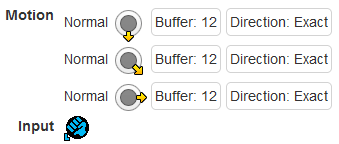
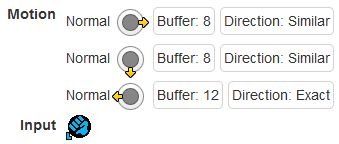
There is a website called SFVSim that catalogues change differences between versions for moves in Street Fighter V. This includes a lot of data on each move, including the input requirements.

This is extremely helpful for determining the logic involved for these motion inputs. The buffer on each direction determines how much time in frames is allowed to elapse before the next input is provided, or the motion becomes invalid. In other words, it determines how quickly you need to do the motion, and how much time you have to press the button after you’ve completed it.

Continue reading

Scrubs & Johns: A Defense Against Bad Sportsmanship

Competition gets personal. Competition gets people riled up and sometimes people get angry. Being a gracious loser and a humble winner is tough. Being a bad sportsman is a common and easy pattern of behavior to fall into, and the Fighting Game and Smash communities have created different types of defenses against salty players who can’t hold their Ls.

No Johns

In the Smash Bros community, legend says there was once a guy named John who had an excuse for everything. “I didn’t sleep well last night!” “The CRT was tilted away from me!” “The sun was in my eyes!” “My dog ate my inputs!” Naturally this wasn’t very polite to his opponents.

This eponymous John was so infamous that eventually, when people would make excuses for why they lost, people started to say, “No Johns!” It became such a big meme that over a decade later, Reggie Fils-Aime would quote it in a promotion for Smash 4.

No Johns helped to promote an environment where, rather than complaining, people would focus on the game and improve. It wasn’t perfect, but it was a funny and certainly helpful.

Continue reading

How to be a Good Fighting Game Community Member

The Fighting Game community has different social expectations than a lot of other areas of public life, and gaming. There is a different idea of what’s considered fair, what’s considered cheating, and what sort of behavior is expected. The FGC has its own social contract you could say. Admittedly, some of this article might just be projection on my part, of what I want to see in the community, or what I imagine the community is like, more than what is actually community norms. Some of these guidelines are going to partially restate each other.

  1. No one is expected to play at your level. Nobody is obligated to go easy on you.
  2. No one is expected to refrain from any particular tactic or character pick, especially a winning one.
  3. You are responsible for your negative emotions, and it is your responsibility to not lash out at other people.Trash talk is expected to be in good fun, and not borne out of a personal grudge.
  4. You are responsible for your character picks and your choices of tactics.
  5. If you think something is broken or unfair, start using it. There is no honor in choosing to lose.
  6. It’s okay to want the game to be different (whether it’s about balance or focus), but that should be separate from hating the game or players.
  7. It is polite to acknowledge and celebrate your opponent’s successes, especially when they exploit your habits or knowledge. Especially when they win in a dirty or lame way.
  8. Take responsibility for your mistakes or shortcomings, but don’t use them as excuses.
  9. It’s up to you to take improvement seriously.
  10. Don’t disrespect the other person’s skill level.
  11. It’s not your job or anyone else’s job to haze newcomers.
  12. Don’t be afraid to ask people for games. (and don’t apologize for being bad)
  13. Don’t keep secrets about how your character works.
  14. Keep a spirit of open collaboration.
  15. You’ll get better advice if you ask specific actionable questions about game scenarios, and you might not get any advice if you ask too broadly.
  16. Be willing to pick up new games. (corollary, don’t be that bitch that holds up brackets)
  17. Welcome new players and 0-2ers.
  18. You’re not the main character.
  19. Exploit every advantage available to you, but keep it in the game. Don’t be rude outside the game.
  20. Focus on self-improvement instead of results.
  21. Play to win, especially in tournament.

Altogether, the spirit of the fighting game community is that this is a place to take the game seriously, but not personally. You have a responsibility to yourself and your opponents to play your best, and never hold it against anyone else playing their best, no matter what style they choose to play.

I feel like the community has forgotten some of these when I see saltiness over people picking top tier characters, or complaining about characters or tactics they don’t like. It’s okay to want the game to be different than it is, but remember that as a competitor, you should take advantage of even the things you think are unfair or boring. A lot of modern fighting game discussion has devolved into complaining over increasingly small and ineffable imbalances in the most balanced games in the history of the genre. It would probably serve us all to have some grace and to move on to games we enjoy more when we’re not happy. There are hundreds of amazing fighting games out there, we don’t have to stick with games that make us miserable just because they’re new and popular.

All in all, have a fun time and treat your community and your competitors right. What makes the scene magical is us.