Gamedevs Should Not (Exactly) Copy My Criteria to Make a Successful Game

I don’t expect anyone to make a game that perfectly fits my model of what a good game should be and ignores everything else typically involved in making a commercial game, including me.

The reality is, my idea of what a good game is impractical and conflicting with making a popular or best selling game. I judge games and enjoy games for aspects that I would not prioritize during development, and a lot of aspects of making a successful game fall outside the scope of my work. I try to write articles incorporating this broader perspective too, because I’m interested in it, but the core of my philosophy is about making what I would consider a good game, rather than a successful one.

Of course, I still think that someone interested in designing a game should listen to me to some extent (why else would I write?). I still think that I am providing a unique and helpful perspective, but success will always be a medium between my perspective and what’s actually effective to reach and appeal to a wider audience than just me. There are certainly aspects of my writing and philosophy which overlap with general success, but the line is always going to be up to the developer, and it’s never going to be completely clear.

Continue reading

Nuzzles: Not a Puzzle

CODE FOR DOOR C489 Kia or Welcon 58880

The Legend of Zelda and its imitators, Okami, Darksiders, God of War 2018, Beyond Good and Evil, Legacy of Kain: Soul Reaver, have a particular style of “puzzle”, where you need to notice a switch somewhere and activate it. The developers of Darksiders coined a term for this, “Nuzzle”, short for “Not a Puzzle”. Nuzzles can be useful for teaching a player how to use a puzzle mechanic for the first time. Zelda style games tend to have items or abilities that you unlock which can be used to flip switches that cannot be flipped by any other means. When you get a new ability, it helps to have a simple example of what it can interact with and how it works. The Witness does this in each area that introduces a new puzzle symbol, by having a sequence of 5-10 nuzzles that demonstrate how it works in the simplest way possible, expecting you to learn how the puzzle symbol works via induction so that you can reason out puzzle solutions with deduction.

A nuzzle can be broadly identified as a 1-step puzzle, or a riddle. Nuzzles don’t test critical thinking skills, they simply test if the player is paying attention, or remembers what the switch operating mechanic is at all. Of course this is critical for tutorial purposes, new or inexperienced players need guidance to know how to solve puzzles, but the trouble comes in when Nuzzles are deployed broadly long after the basic puzzle mechanics are understood, as a replacement or filler for puzzles, which is what Zelda-like games tend to do long after puzzle mechanics have already been introduced (such as when you’re asked to light 2 torches in the final dungeon of the game, or hit a sequence of switches in the order they tell you when there are no enemies in the room, and no other confounding factors, such as time limits, or additional puzzle mechanics).

Continue reading

What makes good combat?

Combat in a video game is good when you have a variety of options (discrete verbs that have unique animations, state, or use of unique entities) or sub-options (things like position, timing, rotation etc that modify the function of a verb) which have varied outcomes, and determining which option/suboption to use for a more/less optimal outcome in a given situation is unclear, but can be logically deduced.

If elements of your combat system are random (have output randomness, as opposed to input randomness), such as randomizing which attack you’ll perform when you press a button, then the best option for a scenario cannot be logically deduced. The same is true if the way that attacks function is unclear or inconsistent (like funky hitboxes producing drastically different outcomes with similar inputs, or the visuals not clearly communicating how the move works). Ideally the player should be able to visualize in their mind the outcome of different inputs, working it out like a math problem (“oh, I could have done that instead”). This makes a game fair and understandable.
Continue reading

The “Silver Bullet” Game Design Problem

A long time ago, I read an article titled, “Silver Bullet Combat” that was rather coherent about describing a common problem in game design. The article is now only available as a PDF and might eventually disappear, so I’m going to reiterate it in my terms.

So the gist of silver bullet style design is that Werewolves can only be harmed by silver, but once you shoot them with something silver they die instantly. A silver bullet is an option that can simply and clearly solve a problem that has no other (viable) solution. Part of game design is trying to differentiate the player’s options from one another, by making them good at different things. The easy way to do this to give enemies special resistances that can only be penetrated if you use a specific option. The trouble is that if a problem has a specific solution, then it’s not an interesting choice to solve it. There’s no tradeoffs, and no depth. Continue reading

Riddles, Puzzles, and Games

Riddles puzzles games.png

I believe that there’s a spectrum of Riddles, Puzzles and Games, which each play on a similar root desire of, “Try to make the thing happen,” but with different emphasis. Puzzles and Riddles are subject to the spoiler effect. Once you know the solution, it’s not a question of whether you can beat it or not, you can always just produce the solution, unless you forget it. This also means that someone can tell you the answer and there’s no challenge anymore. Games tend to emphasize tests of skill, which cannot be overcome simply by knowing the answer.

A Riddle is essentially asking a question to which an answer must be reached through induction. A Puzzle creates a system of logic from which an solution can be deduced. And a Game creates a system of interactions which must be manipulated to produce a positive outcome from many possible inputs or “solutions”. You could also probably fit Contest in there, which creates a single interaction that must be manipulated over a certain threshold.

Riddles essentially have a specific answer and a hint as to what the answer is. The hint can be more clear or less, but the key defining feature of a riddle is that the relation of the hint to the answer isn’t definitive. You can’t entirely logically prove that a given answer is valid or invalid. The answer must be reached through the process of induction, and there is binary check to see whether or not it matches

Continue reading

Running Away is Deep!

Can having the option of fighting an enemy or running away be a form of depth?

Yes! Absolutely!

But more appropriately, the question generally tends to be, is having the option of fighting an enemy or running past them a form of depth?

NES games are the masters of this. Especially Castlevania 3 and Contra. Enemies in old games tend to have contact damage, they hurt you if you touch them. Then they’re set up in places where they block your way. This means that to get past them, you need to brush up against them, potentially hurting yourself. Continue reading

What Should be Prioritized in a Fighting Game?

What should be prioritized in making a fighting game? Is balance near the top?

The way I like to put it is, Balance is the least important thing that is still important. It’s way more important for the game to be fun than for it to be balanced.

In terms of sales success, I’d say it’s important to have a lot of characters and good single player content. Also looking good is a big factor.In terms of making the game good, it’s about making Rock-Paper-Scissors loops. It’s about making it so there’s a good web of these RPS loops going around everywhere, so you can beat everything in a couple different ways, usually varying by scenario. Continue reading

Beginner’s Traps

What do you think of beginner’s traps? Can they be interesting? Or are they just doomed to be frustrating for players?

I’d prefer that games don’t have beginner traps. I generally don’t think they’re particularly interesting.

One exception would be Undertale, where it’s used for comedic effect, where they mislead you in the ruins into thinking that it’s possible to spare enemies by weakening them, like pokemon. Then Toriel has an HP range where you’ll instantly kill her as you’re weakening her. So you’re set up with a false expectation, then it’s taken advantage of, ruining you if you’re going for mercy. Flowey will even taunt you if you reset and try again. This is pretty cute, and no big harm if people fall for it. Continue reading

Weird Controls are Good for You

What do you think of games like Octodad or Snake Pass, where most of the difficulty comes from dealing with odd controls?

What do you think of Call of Duty, God Hand, or Mario Odyssey, where most of the difficulty comes from dealing with odd controls?

DWHfrf3VoAUM4Hs.jpg

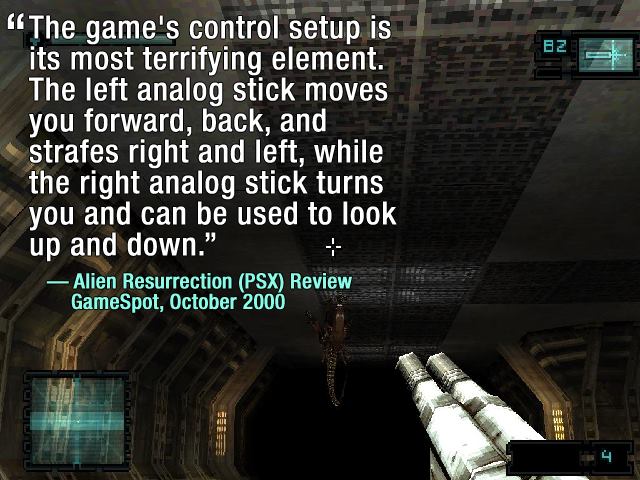
Learning new control schemes is fun thing to do. All the control schemes we regularly use used to be awkward or confusing when we first encountered them, what do you think of the first time people played FPS games with a controller? Or the first time they played with a mouse? Or the first time they played FPS games at all? Every game was that way for all of us at some point.

What makes these control schemes so odd really is just unfamiliarity. These games are modeling specific types of interactions, and are these the worst controls they could have chosen to do that? Or the best controls? If you want to make a game about slithering like a snake, about gripping objects and wrapping around them, how else could you possibly build it?

Mark Brown did a pretty decent video explaining snakepass, and something he showed rather well was the progression from being bad at the game to coming to a fuller understanding of it, which I really like.

Weird control schemes are a bridge to modeling new types of interaction, and creating new, unfamiliar systems to learn about and develop competency in, which is what games are all about.

Which Should be Faster? Players or Enemies?

Should an enemies attack speed be faster than the players? Or should it be the other way around?

The player’s attack should be faster than enemies. Enemy attacks should always be 20 frames or more of startup, assuming 60FPS. You can dip below that into the 16 frame range if there’s a setup where the player knows to anticipate it. You can dip into the unreactable range only if it’s guaranteed in specific scenarios, so the player knows it will always happen going into those scenarios.

Players should generally be faster than enemies so they can deliberately choose to attack to beat out an enemy’s attack. The downside of this is players can continually attack a single enemy to beat them, always counterhitting their attacks on startup, but that’s what you have multiple enemies and super armor or poise for.

Dark Souls was smart and decided, “What if player attacks were on the same timescale as enemies, or only slightly faster?” Which makes committing to attacks versus enemies risky. Even in dark souls, average weapon startup tends to be slightly faster than enemy attacks.

If you have enemies be uniformly faster than players, then the player needs compensation in some way, like superior range, or whiff punish ability, to reasonably compete with enemies.