How to Code Fighting Game Motion Inputs

So previously I’ve taught you How To Perform Fighting Game Motions, now lets learn how developers coded them. As far as I know, nobody has documented how to do this before, and it’s essential for anyone making a fighting game, or anything like a fighting game.

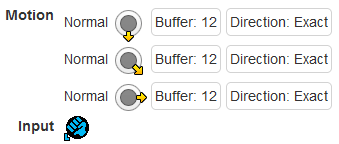
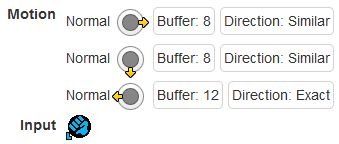
There is a website called SFVSim that catalogues change differences between versions for moves in Street Fighter V. This includes a lot of data on each move, including the input requirements.

This is extremely helpful for determining the logic involved for these motion inputs. The buffer on each direction determines how much time in frames is allowed to elapse before the next input is provided, or the motion becomes invalid. In other words, it determines how quickly you need to do the motion, and how much time you have to press the button after you’ve completed it.

Continue reading

Scrubs & Johns: A Defense Against Bad Sportsmanship

Competition gets personal. Competition gets people riled up and sometimes people get angry. Being a gracious loser and a humble winner is tough. Being a bad sportsman is a common and easy pattern of behavior to fall into, and the Fighting Game and Smash communities have created different types of defenses against salty players who can’t hold their Ls.

No Johns

In the Smash Bros community, legend says there was once a guy named John who had an excuse for everything. “I didn’t sleep well last night!” “The CRT was tilted away from me!” “The sun was in my eyes!” “My dog ate my inputs!” Naturally this wasn’t very polite to his opponents.

This eponymous John was so infamous that eventually, when people would make excuses for why they lost, people started to say, “No Johns!” It became such a big meme that over a decade later, Reggie Fils-Aime would quote it in a promotion for Smash 4.

No Johns helped to promote an environment where, rather than complaining, people would focus on the game and improve. It wasn’t perfect, but it was a funny and certainly helpful.

Continue reading

How to be a Good Fighting Game Community Member

The Fighting Game community has different social expectations than a lot of other areas of public life, and gaming. There is a different idea of what’s considered fair, what’s considered cheating, and what sort of behavior is expected. The FGC has its own social contract you could say. Admittedly, some of this article might just be projection on my part, of what I want to see in the community, or what I imagine the community is like, more than what is actually community norms. Some of these guidelines are going to partially restate each other.

  1. No one is expected to play at your level. Nobody is obligated to go easy on you.
  2. No one is expected to refrain from any particular tactic or character pick, especially a winning one.
  3. You are responsible for your negative emotions, and it is your responsibility to not lash out at other people.Trash talk is expected to be in good fun, and not borne out of a personal grudge.
  4. You are responsible for your character picks and your choices of tactics.
  5. If you think something is broken or unfair, start using it. There is no honor in choosing to lose.
  6. It’s okay to want the game to be different (whether it’s about balance or focus), but that should be separate from hating the game or players.
  7. It is polite to acknowledge and celebrate your opponent’s successes, especially when they exploit your habits or knowledge. Especially when they win in a dirty or lame way.
  8. Take responsibility for your mistakes or shortcomings, but don’t use them as excuses.
  9. It’s up to you to take improvement seriously.
  10. Don’t disrespect the other person’s skill level.
  11. It’s not your job or anyone else’s job to haze newcomers.
  12. Don’t be afraid to ask people for games. (and don’t apologize for being bad)
  13. Don’t keep secrets about how your character works.
  14. Keep a spirit of open collaboration.
  15. You’ll get better advice if you ask specific actionable questions about game scenarios, and you might not get any advice if you ask too broadly.
  16. Be willing to pick up new games. (corollary, don’t be that bitch that holds up brackets)
  17. Welcome new players and 0-2ers.
  18. You’re not the main character.
  19. Exploit every advantage available to you, but keep it in the game. Don’t be rude outside the game.
  20. Focus on self-improvement instead of results.
  21. Play to win, especially in tournament.

Altogether, the spirit of the fighting game community is that this is a place to take the game seriously, but not personally. You have a responsibility to yourself and your opponents to play your best, and never hold it against anyone else playing their best, no matter what style they choose to play.

I feel like the community has forgotten some of these when I see saltiness over people picking top tier characters, or complaining about characters or tactics they don’t like. It’s okay to want the game to be different than it is, but remember that as a competitor, you should take advantage of even the things you think are unfair or boring. A lot of modern fighting game discussion has devolved into complaining over increasingly small and ineffable imbalances in the most balanced games in the history of the genre. It would probably serve us all to have some grace and to move on to games we enjoy more when we’re not happy. There are hundreds of amazing fighting games out there, we don’t have to stick with games that make us miserable just because they’re new and popular.

All in all, have a fun time and treat your community and your competitors right. What makes the scene magical is us.

How to Pick a Fighting Game Character

The first step in picking up any fighting game is picking a character. Character crisis is a familiar experience for any fighting game player, from beginner to veteran. Even seasoned professionals with decades of experience go through character crisis.

If you’re completely new to fighting games, there are 3 basic mindsets to how you should pick a character:

  1. Eat your peas and carrots, pick a shoto.
  2. Pick a character you think is fun or cool!

Continue reading

Mashing: Rote Memory vs System Mastery

Many players of fighting games and beat em up games start out by mashing. When you have 2-6 attack buttons, it can be hard to tell the difference between moves, so you might as well press buttons and hope something good comes out. A better player will understand when to use each move, but a worse one will see a large movelist, say “nah, pass” and just mash it out.

Some games are designed to actually facilitate and reward this type of mashing, games with strings (a sequence of unique moves activated by pressing buttons in a specific order). By mashing the buttons, you’ll accidentally end up doing all sorts of moves, and since neither you nor your opponent has any idea what you’re about to do, that makes you unpredictable, and ironically more effective in a genre that is advanced rock paper scissors.

It’s easy for intermediate level players to shut down this sort of play by simply blocking and waiting for an unsafe move to punish, or by throwing out “knowledge check” moves that require a specific counter (you can also call this spamming). However among beginners, it can allow them to develop a surprising level of basic competency at the game. They might be throwing moves out randomly at first, but sometimes they see something cool happen, and remember the feeling in their hands when they got that, allowing them to iterate and repeat it. Also helpful is these games list the strings in the move list, so beginners can learn a string as easily as checking.

For many beginners, these strings are literally what combos are. They’ll call them “combos”, not knowing there’s a larger combo system in the game. In a way, this is really helpful for beginners, compared to other games, because strings don’t involve tight timing, and are listed right there.

Continue reading

Tiers are for Queers

And the queers always pick a top tier.

Tier lists have been controversial since the dawn of fighting games, and have slowly seeped into every other competitive game featuring pre-game or mid-game loadout choices.

From a casual perspective, it can be easy to be skeptical of tier lists, especially in modern times. Casual players typically don’t play the game consistently enough to be able to execute the counters that can shut a low tier character down.

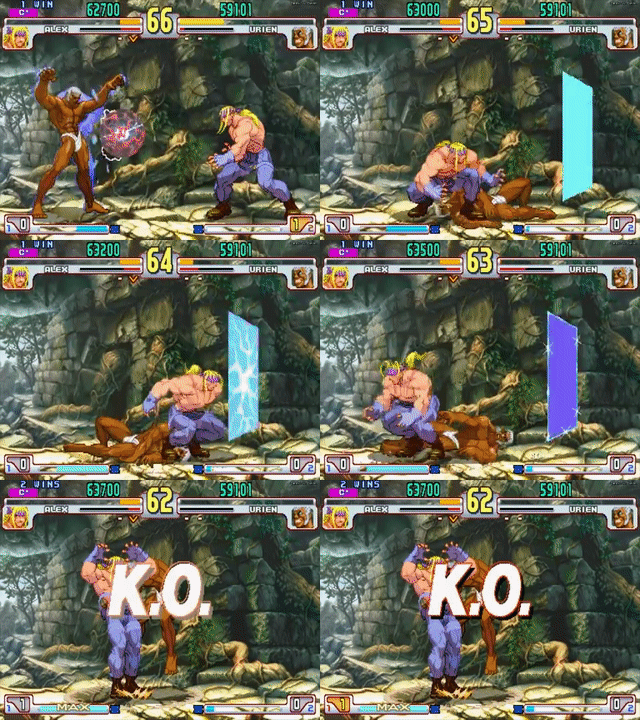
Alex in 3rd Strike might be scary to someone who can barely block crossups, but a higher level player can simply parry option-select Alex’s crossup stomp, tapping exactly as it connects, and either getting a parry if it’s same-side, or a block if it’s crossup. Urien might seem mediocre, since he doesn’t have incredible frame data, his specials are slow or unsafe, and have crappy hitboxes on top of being mostly charge moves, but when his moves are mastered, he has ridiculous combo damage and setups into unblockables.

A higher level player can play Chun Li, Ken, or Dudley, and simply tank Alex’s slash elbow, or block the EX slash elbow, and punish it with a super. Chun Li can get roundhouse kicked in the face by Q, and then punish him with super art 2 for more damage than the roundhouse.

These types of weaknesses aren’t as obvious at low level, so it can be hard for lower level players to understand the true shape of the game.

The fact that characters are different from one another means that some will be better against others. They’ll counter each other. If a character counters a lot of other characters, especially if it’s by a wide margin, then that’s a top tier.

Continue reading

How do you Set the MAXIMUM LIMIT? (For Health & such)

Almost every game has resources of some type or another, whether that’s health, mana, meter, etc. A topic that is rarely discussed with these is: Exactly how much health should you have, and how much damage should stuff do? What should your resource limit be, how much should stuff cost? How fast should it be built up? The decisions made in each of these can significantly affect the tone and feeling of something.

The most critical technique for thinking about this problem is thinking in percentages. The actual values can be arbitrary, but percentages help you keep track of the actual impact. A combo across different games could deal 8000 damage, 120 damage, or just 6 damage, and in each case, that could be worth 90% of someone’s healthbar. Thinking in percentages helps you weigh the relative impact of something, without getting bogged down in the exact numbers.

This type of thinking also suggests thinking about the resource in terms of how many times it can be tapped before it’s extinguished. If each touch deals about 10% of your health bar, a game will have 10 touches before it’s over. If a touch can deal up to 80%, then it’s a 2-touch game. Consider the range of variability between how much impact each touch makes as well.

In Card Games, instead of touches, it’s measured as a “clock”. The clock is how many turns a player has left before they lose the game. In real-time games with fine-grain health and guaranteed hits, this type of thing is measured in DPS (Damage Per Second) and/or TTK (Time to Kill). In these cases, it’s worth considering what tradeoffs a player should be making in order to get a faster clock, or a lower time to kill. It’s also worth considering how fast the average clock for a match should be, or what the average time to kill is across the game, and watching out when those things end up lower or higher than you originally planned.

Continue reading

The Hypothetical Worst Fighting Game

I have a theory about fighting games. I think that even the worst fighting games are pretty good. We see this in the Kusoge Phenomenon, where people play “broken” “shit-games”. These games have massive combos, wacky mixups, poor regard for balance, strange damage scaling or infinite prevention, and strange attack design with cancel points and hitboxes that don’t really make sense. However people still enjoy playing them, because they’re still deep games. They’re still games with combo systems you can explore, with mixups you can try out, and with moves that have a variety of different effects. This is a mismatch between what we traditionally consider to be “good” about games, and what actually creates depth.

Street Fighter 2 created the modern fighting game, and all fighting games take from it. SF2 was such a solid template for a game that if you just implement all the features of SF2 you will have a decent fighting game, entirely by default. I’m going to list these features as:

Continue reading

What’s the Deal with Auto Combos?

Many modern fighting games have been integrating auto combos for the past 10 years or so. BlazBlue Cross tag battle and dragon ball fighterZ have auto combos on 2 different buttons even.

An auto combo is a string combo attached to a single button. Pressing that button will produce a sequence of attacks that combo, some of which may be unique to the auto combo sequence. Sometimes finishing an auto combo will produce a super attack if you have meter.

Auto combos have historically been controversial because they’re so much easier to perform than other combos, giving players who don’t know how to combo access to easy damage.

Continue reading

SF6 is the Intro Game the Genre Needs

Street Fighter 6 is the “Beginner’s First Fighting Game” I’ve been looking for.

I’ve been harping on for years that fighting games shouldn’t be getting easier, they should do a better job teaching you how to play them. We’ve seen some improvements in tutorials over time, such as Skullgirls, Xrd Sign & Revelator, Under Night In-Birth, and Them’s Fightin’ Herds, but all our most of the above have been brief system tutorials for the most part with very little on fighting game fundamentals.

Continue reading