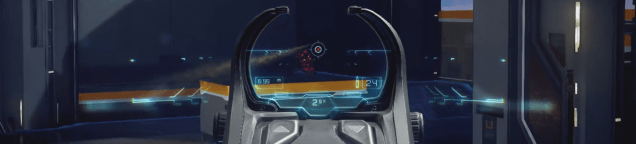
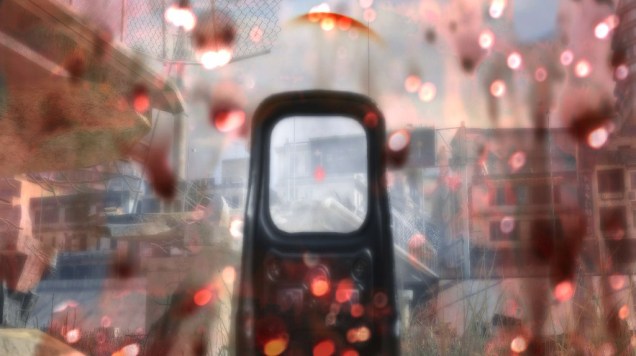
Hitscan versus Projectile weapons

hitscan vs projectile? Even for fast ones like bullets, what would be better for gameplay? I think dodgeable bullets would be much more interesting.

Okay, if the projectile is so fast, it’s basically a bullet, then there’s really no difference between a physical projectile and a hitscan ray.

I absolutely agree that dodgeable bullets are more interesting. I think you can draw a basic relationship on how dodgeable bullets are between the speed/size of the bullet versus the movement speed/size of the character. When characters move faster, it’s more realistic for them to be able to dodge faster projectiles. When they are fast enough (about CS:GO speed and higher), it’s more realistic for them to be able to move out of the way of hitscan bullets by staying ahead of the other player’s ability to keep their reticule on the target (though of course, not to dodge bullets coming directly at them).

Basically, as a character is slower, the projectiles too should be slower to compensate and allow the player to dodge. As the character is faster, the projectiles are allowed to be faster because the player can adequately dodge them. At the threshold mentioned above of about CS:GO speed, a player can move and change their momentum fast enough to stay ahead of someone’s reticule (this is because of human reaction time).

Regrettably, we’ve seen the opposite relationship between projectiles in games, slower games are more likely to have hitscan rays, and faster games are more likely to have slow projectiles.

This is because the world is fucked up and there’s nothing we can do about it.

As a follow up to the hitscan/projectile question, is there a place for hitscan weapons in games? Are the best kept as low-tier weapons such as how quake 1 handles them, or how q3 handles them as either high spread or low power?

Yes, absolutely.

I think you’re forgetting that in both Quake 1 and Quake 3, the Lightning Gun is one of the best weapons you can get.

The thing is, when you make a weapon projectile-based, even with relatively fast projectiles, such as Q3’s plasma gun, it gets harder to aim it. So the Plasma Gun doesn’t see the same type of use as a DPS weapon like the Lightning Gun, even though the Plasma Gun has a higher DPS than the Lightning Gun. Instead of being used to DPS opponents, it’s more used for covering fire and controlling space when you don’t see your opponent, or outside LG range.

Hitscan weapons are fine because ideally if both you and your opponent run out into the open and shoot at each other with LGs, you’re not both going to hit each other dead on until the first one to get shot dies, because you’re both going to miss a lot, because it’s hard to keep your reticule trained on someone who keeps weaving back and forth, and aiming better when your target is moving in ways you can’t predict, while simultaneously weaving yourself takes predictive skills.

It’s sort of like how in fighting games, you can’t see what move your opponent does until after it hits you. Reactionary blind spot. Similar deal in RTS with the fog of war. The winner isn’t determined strictly by efficiency, it’s determined by who throws rock and who throws paper. Efficiency in FPS games isn’t strictly who has better aim and target acquisition speed, it’s who can predict where the other will move and shoot as well. So hitscan weapons can’t consistently DPS, so it all works out as long as you’re not so slow these things become trivial.

Hitscan is fine, as long as it doesn’t dominate the game in one way or another.

Are you a fan of hitscan weapons? Why or not?

Uh, I like them when I like them? I dislike when a game is ENTIRELY hitscan weapons, like most modern shooters. It’s nice to have a mix of projectiles and hitscan. There’s only so much varying functionality you can get out of exclusively hitscan weapons.

I only really have an issue with when enemies have 0 startup hitscan weapons, that’s where trouble comes in.

Hitscan works fine in multiplayer because players need to predict which way their opponent will move, so it’s not totally a “who sees who first” thing, unless you die practically instantly and move slowly like modern shooters.

It also works fine in multiplayer because it doesn’t really matter if the player has unfairly overpowered weapons relative to the CPU, only that enemies don’t have unfair weapons against the player, because they can’t participate in the same mindgames as two human players can. They can at best approximate it, and have their efficiency cranked up or down.

Rouge-like Elements

what do you think of rouge-like elements in game (mainly just perma-death and procedural generation) ?

I prefer Beige-like elements. Rouge isn’t my color.

For serious though, I’m not really a fan of procedurally generated content or perma-death. I believe I’ve spoken on this before. Despite not being a fan, I recognize they have their place and deserve to exist.

I think proc-gen content, especially if it’s swapped out every time you die, results in an experience where all the content is dispensable. Like, there’s less of a shared experience between people, and on some level you may have only been lucky to win because you got an easier set of levels.

I feel like these types of games are less definitive experiences that I can finish and more just random content of questionable quality.

That and Proc-Gen, as of yet, can’t generate levels better than human creators. We already have troubles with level design. The art is dead among human designers; how could we possibly quantify our level design knowledge into precise sets of instructions for the computer to randomly vary and achieve something up to par when humans who think they know what they’re doing already have a tough time with that?

The upshot of proc-gen is of course that when you vary challenges randomly, it prevents memorization, and requires mastery of the actual skill. At least in theory. It also means that players can’t act with confidence, because they never know if they’ll be thrown a curveball, and that they can’t overcome a curveball that kills them.

Maybe a good design for a future roguelike is extra lives? And not letting you get more than 3 or 5, so if you mess up, you can learn from your mistakes when something curveballs you, but if you suck, then you gotta try again from the top, and the limit prevents you from simply stockpiling lives or grinding them.

Survival Horror Tank Controls

Thoughts on the good ol’ tank control survival horrors of the past?

I never played any of them, but from a control and production standpoint it’s really obvious why they did it.

From a production standpoint, the original playstation 1 wasn’t really that powerful. To get around these limitations they employed the old trick of prerendering graphics using more complex computers, then drawing them as static backgrounds from fixed camera angles (which devil may cry later went on to imitate, being originally a resident evil game, except because it was on a more powerful system, the camera could afford to rotate). This meant that they could have really nice looking backgrounds and high fidelity character models at the same time, with the limitation that the camera could not rotate, it was stuck in the same position.

Previous to the playstation, cameras couldn’t freely rotate on older hardware. A lot of the 3d camera conventions we have today didn’t exist because they were just figuring out the rules. This meant they didn’t know the modern solution of preserving movement directional orientation across camera cuts by temporarily mapping the controller to continue moving the character in the same direction in world space as long as that direction is held on the controller (you’ll see this in the DMC series). This means if you cross a camera cut, and the angle is shifted 180 degrees or close to it, you might end up going back the direction you came, and going across the cut again, ending up in a loop of transitioning between the two rooms. In 2d games, they were usually strictly oriented to a plane, so this problem didn’t come up, your directional orientation was always preserved across cuts.

So what’s a solution to this? Having forward move the character forward in world space irrespective of camera orientation. ie. tank controls.

Of course in retrospect, that shit is jank as fuck, but it’s probably all that occurred to them at the time. In retrospect, it has the apparent benefit of making it hard to avoid enemies, but it’s debatable how helpful that is or how much that adds to the game. Having weird and counter-intuitive control schemes can sometimes help a game, like God Hand, but it depends on context. I haven’t played these games, so I can’t really testify as to whether it works for them. I doubt it does, but I don’t really know.

Option Selects are Kinda Lame

I don’t play fighting games but, option selects seem lame. Are they?

Yeah, kinda. I mean, you can cover multiple options with one input, lets you hedge your bets really hard. 3-way option selects are even crazier. For example, the command throw YRC/air throw option select in Guilty Gear Xrd is basically an unblockable, which is bad because unblockables are bad. Continue reading

What Ruined FPS Games? – Regenerating Health

2013-07-11_000032.jpgSince the advent of First Person Shooter games on console systems, there have been a number of design trends that have negatively influenced the development of the FPS genre, some of these changes to first person shooters were necessary to adapt them to a console setting, while others are arguably arbitrary but have nonetheless become design trends. In brief these trends are regenerating health, iron sights, a limited weapon inventory, reduced weapon variety with a greater focus on hitscan weapons, slow pace of movement, low jump height, linear or front-focused level design, enemy homogenization, and reduced weapon accuracy. It is debatable why these trends have come to pass, from production costs to follow the leader styles of marketing, but their negative influence is undeniable. Continue reading

Comeback Factors

What do you think of X-factor in MvC3?

Comeback factors are weird in slippery slope games, that’s what I think. Hell, slippery slope games have a weird sense of fairness to begin with and comeback factors are weird.

Basically, as you lose characters, you lose neutral and combo tools, it’s a slippery slope. X-factor gets stronger in correlation to the number of characters you’ve lost. It’s character loss compensation. Though it does so by making your point character stronger/faster for longer periods of time, so it’s not exactly paying you back the stuff you lost, it’s not exactly counteracting the slippery slope. X-factor can frequently just flat-out win you the match by making everything you do better.

The trouble with comeback mechanics is that they make it so that the game is less consistent. In a game without comeback mechanics, a lead is a lead. If I’ve successfully won neutral on you enough times to to push your lifebar really low, you’ll need to put the same amount of work into winning neutral back at me to even it up. Comeback mechanics give you a chance to even it up without having to work as hard to do so as I originally had to in order to put you in that situation, making it so effectively, a lead isn’t a lead.

Another way of putting this is, there is no such thing as a true comeback mechanic, it’s only that who is in the lead gets abstracted as the game gets further in. If a comeback mechanism is powerful enough, then the game might very well become a race of who can take enough damage to get down to that point where they win. You might look at the guy in first place in Mario Kart and say he’s in the lead, but in reality the guy in last is holding a blue shell, a bullet bill, lightning, or so on. In games with powerful enough comeback mechanisms, you aren’t actually behind your opponents, you just can’t compute the actual state of the game. That’s part of what makes comeback mechanics frustrating, that the actual state of the game so clearly contradicts the apparent state of the game.

A classic example of this type of thing crops up in game shows like Jeopardy; early rounds are for only a few points, and later rounds are for a lot more points. So it may appear that you’re ahead early on, but in reality your current lead has almost no effect on whether you’ll actually win in the long run.

This comes from a corporate sort of thinking, “Everyone should have a chance to win! Games are more fun when they’re close!” But when you’re ahead and you get evened out by a comeback mechanic, it’s really grating. Comeback mechanics mean you need to respect characters more as they are almost about to kick the bucket. Comeback mechanics help strong experienced players, or mid-level players more than the noob trying to get into the game that might get scared off if they don’t have a comeback security blanket, because those mid-level players are the ones who can actually use it effectively, unlike the beginners.

http://xenozipnotes.blogspot.com.au/2013/03/comebacks.html

The trouble with comeback mechanics in my opinion is is, sometimes the worse player wins, and with comeback mechanics, that’s likely to happen just a little bit more. It can help you close the gap in a bad situation that little bit more easily. It makes the game that little bit more inconsistent, and that can be frustrating to deal with.

More so than this:

Thankfully SFV decided to keep its comeback factor toned down, as a simple cancel and a super mode that gives you either the one good move you need, or a couple more options. And there’s different ways to charge the meter besides being hit, like using your V-Skill successfully.

Elemental Weaknesses

How do you feel about elemental weaknesses? Whether it being individual mons/armor having specific weaknesses and strengths or mons of a type all having the same resistances. I’ve always felt that they were pointless in single player since you can just look up what to bring.

Alright, lets think about it. What are some situations that can occur here? RPGs are games of specialization typically, so you could end up specialized into a team that has their strongest moves resisted, but it still makes sense to use those moves because they do the most damage. You could deliberately construct a team that resists, reflects, nullifies, or absorbs the types they’re going to go up against.

By themselves, these factors are kind of flat, they’re factors of preparation chosen before the battle that apply number buffs to damage without altering how the moves fundamentally work. They’re not as much a counter as most megaman boss weapons are to bosses weak to those weapons. Probably something to consider more from the knowledge perspective is how advance knowledge of your opponent’s strengths against you or resistances shapes the moves you avoid using.

However we could borrow a principle from RTS here. In RTS, some units hard counter others, just the way they’re built, and on the surface it looks like that sucks, except it’s possible to overwhelm lesser numbers of units with a lot of hard countered units, and to mix units together to create a more flexible composition.

If you only had to fight with one pokemon each battle, then yeah, type advantage is pretty sucky. Consider Devil May Cry 3 which surprisingly enough has a type advantage system for its devil arms. You can follow the type advantage system, but it’s just flat number buffs, it doesn’t feel that strategic. Once you’re trying to mix together different types into a coherent composition that needs to maximize its output versus other compositions it gets more tricky.

Add to that the way Pokemon has Same-Type Attack Bonus (STAB), which adds a 50% boost to using the same type of move as your pokemon’s type. I still remember as a kid fighting Erica in pokemon red and having all my pokemon get beat except a low level bellsprout I happened to have. Its poison type helped it avoid getting poison powdered and its grass type resisted other moves and it had a non-grass move on it, so by itself it turned the tide.

Over in SMT3, type weakness has another role of earning turns, not just maximizing damage, and each character has different elemental and buff/debuff moves in the lineup, so hitting enemies with their weakness can potentially not only mean more damage, but more healing or buffs/debuffs depending on your party composition. And given that the enemy teams are mixed too, different characters can share in this potential.

Type weakness is generally so simple that it might be a good dynamic for kids. Match like to like. Probably one of the worst examples is Golden Sun, which had one of the most boring elemental systems ever (hit enemies with opposite element always). SMT does the classic four elements thing better just by having them be arbitrarily weak per-demon, even if it’s confusing to keep track of.