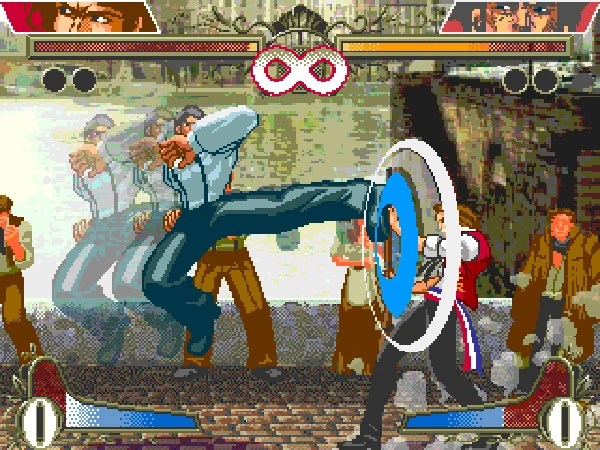
I love picking up new fighting games. The task of learning how to play fighting games at all can seem incredibly daunting, so learning another, or a dozen different games, can seem impossible. Once you’ve gotten your foot in the door, you’ll find that it’s a lot easier than you think it is; to the point where it’s even possible to load up a game with a friend that neither of you have any experience with and play fairly competently! There are even “Mystery Game” tournaments where this is the entire focus, playing a different obscure game each round of the tournament.
In this article, I’m going to assume you have a basic familiarity with fighting games already, and I’m going to drop some jargon. If you’re not ready for that, maybe start off with some Beginner Tutorials and ease your way into the genre. If this article doesn’t make a lot of sense to you, I wrote most of the glossary on the SuperCombo wiki, and Infil has written his own glossary as well.
So what’s my routine for picking up a new fighting game?
Picking a Game
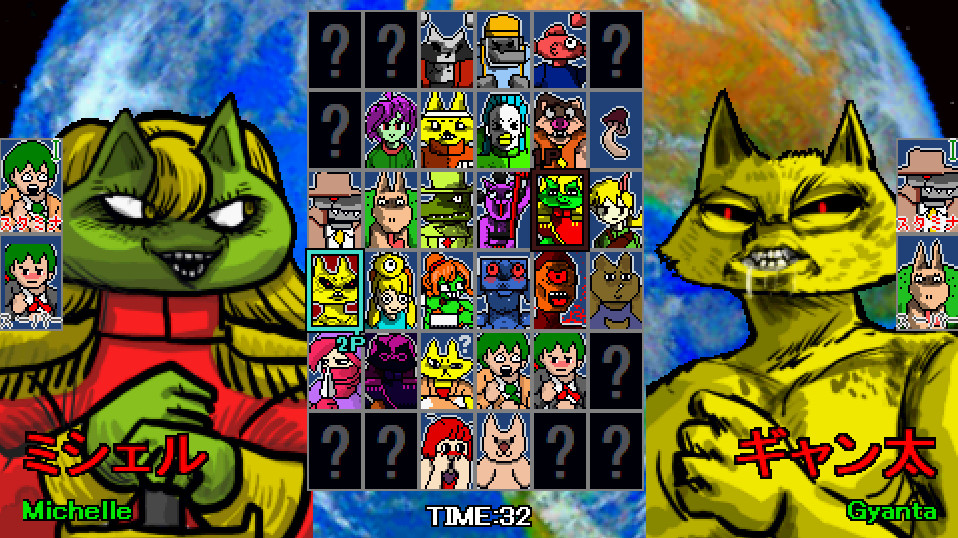
This is probably the easiest step. Maybe your friend group has suddenly taken an interest in a game, or you found something that caught your eye. Maybe it’s just one of the big games right now. There are a lot of reasons to pick a game.
I tend to pick up games that have neat movement (like the homing dash in Arcana Heart or the bride dash in Daemon Bride), a style of play that I enjoy (like the grounded footsies of Koihime Enbu or the hybrid of anime & 3d fighting in Fate Unlimited Codes), or interesting techniques that I want to learn (like Roll Canceling in Capcom vs SNK 2).
You can play a shitload of old fighting games for free with netplay on Fightcade. And there’s even a json file that will auto-download the game you’re playing whenever you join the lobby for that game. Be wary of the community however, there are some shitheads in there.
Go exploring! The most fun games aren’t always going to be what’s immediately accessible or popular. The fighting game genre is incredibly vast. We stand atop a landfill full of treasures (and trash that’s technically treasure).
Picking a Character
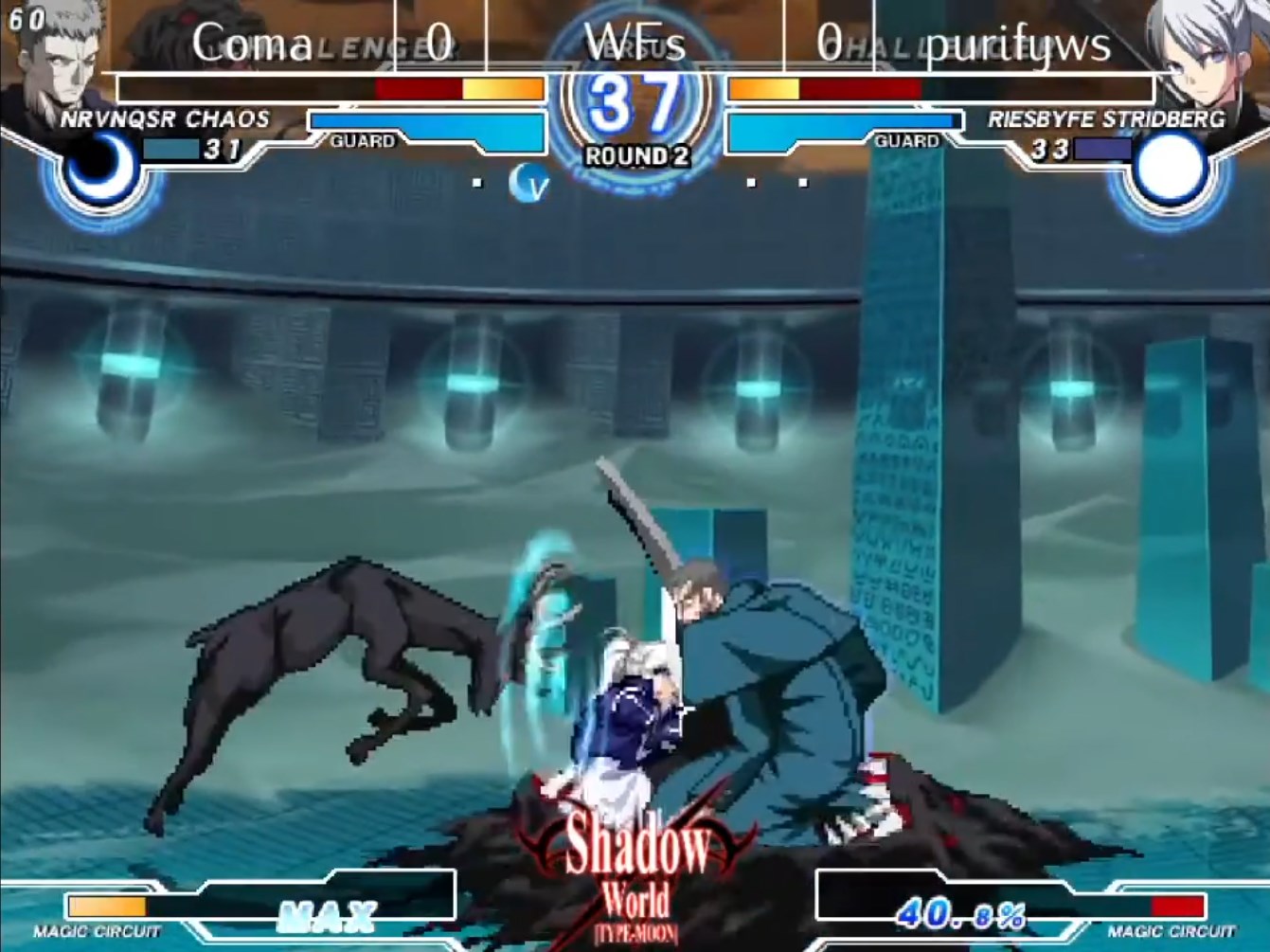
I’ve already written an article on this, but to sum it up, I tend to take a look at the tier list for the game, and pick the strongest character that I vibe with. Tier lists shift a lot in modern games, and patches don’t last long enough for player to get a solid idea of who is the best character in any given patch. For older games, tier lists tend to be pretty settled, even if there’s room for interpretation and revision. You shouldn’t take tier lists too seriously, just be careful not to pick the worst character in the game without knowing what you’re doing.
Especially in older games, the worst characters tend to be outright missing fundamental tools necessary to play the game, or have weaknesses that make many of their core tools unusable versus the top tier characters or strong players. In modern games (games released after 2015) this isn’t as much of a risk and even bottom tier characters are still competent.
I play Alex in SFIII: 3rd Strike, and if I’m playing against Chun-li, Ken, or Dudley, I literally cannot use his elbow slash charge move, or it’s EX version (probably his best tool) if they have super meter, because on block, and even on hit, it’s a free super punish for them. Alex has what appears to be a strong left-right mixup with his stomps on okizeme, but strong players can completely shut that down with a parry option select, simply tapping left or right within 3 frames of the stomp connecting. That means that both of these tools are “gimmicks” or “knowledge checks”, things that can trip up lower level players, but fall apart when you face someone who knows how to pull it apart.
For comparison, the top tiers of 3rd Strike tend to have a high-low or mid-low mixup that can be confirmed into big damage or let them set up a grab. This means they can play around the parry mechanic in a way that lower tier characters struggle to do.
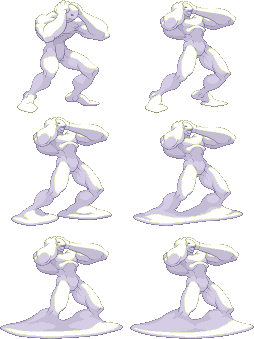
And worse than Alex are characters like Twelve, Sean, and Q. These characters truly have no strengths and don’t resemble the standard style of play for the game at all. Playing them is not only a struggle, but it won’t teach you a lot about how the game is played, or fundamentals that you can carry into other games.
If you have experience playing Shoto type characters (fireball and invincible dragon punch anti-air), then you’re likely to find one in almost any game you play, which can be a helpful reference point across the whole genre. The character you pick will teach you different lessons that you carry forward into other games.
Someone I’ve been teaching to play grappler characters recently has gotten used to using Zangief’s PP input to anti-air, and now they’re struggling to do 623K as an anti-air with Hugo in 3rd Strike. If they’d started with a shoto, they might not be struggling with this in particular, but they’ve had such a strong affinity for grapplers that I think they came out ahead by playing a character they’ve loved.
Undirected Play
It’s entirely possible to play games semi-competently by just hopping in with a random character and pressing buttons. Your ability to do this depends pretty heavily on your literacy in the genre.
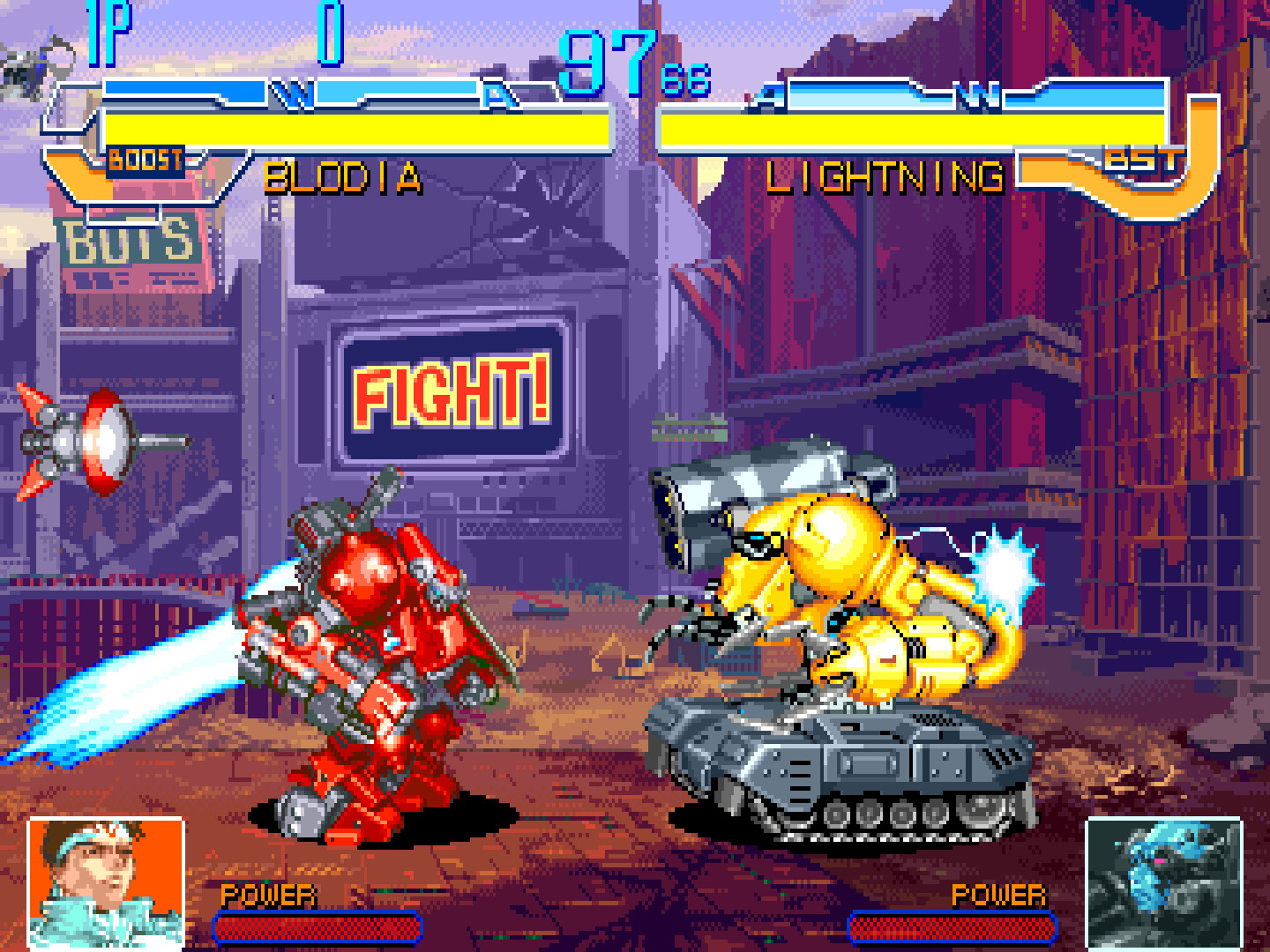
When picking a random character, one of the first things you can do is simply press all of their buttons. Standing light, standing heavy, crouching light, crouching heavy, etc. Then try different special move motions (quarter circle forward, dragon punch, etc) with different buttons and see if it triggers an animation that looks special or different than the norm. Maybe they’re a charge character? Do they look like a grappler? Try half circles and 360s! I’m frequently able to figure out a character’s moves just by experimenting.
Super moves can be trickier. The game might use double QCFs, QCF + 2 buttons, or one of any number of weird inputs (half circle back to forward, quarter circle forward to half circle back, god forbid: the Delta Motion, etc). If you can’t figure out special or super moves, check the command list.
Special move inputs can be intimidating to learn for a lot of beginners, but once you know them, it becomes easy to try them out on a new character, and to remember a character by remembering these common patterns associated with them, instead of looking at a command list and getting intimidated. Most fighting game characters only have 3-4 special moves and a super.
Next is whether the game has a chain system, and determining which moves can be canceled. If the game leans more towards the street fighter end (No double jumps, no airdashes) then moves tend to have more restrictive chains or not chain at all, and frequently. If it leans more towards the anime fighter end, then try looking for chains by pressing buttons from light to heavy as they connect with your opponent. See if you can cancel your sweep into a special attack, this tends to be a barometer for where the game falls in terms of crazy combos.
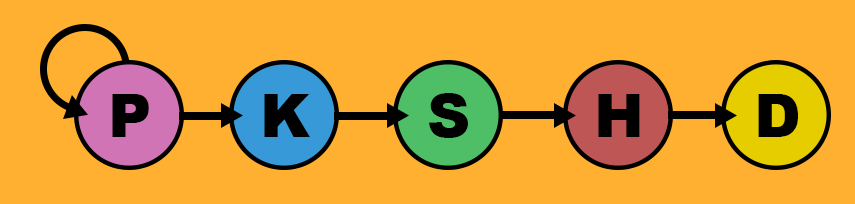
If the game has a button system like Light, Medium, Heavy, and it leans more towards a modern anime style, then try looking for command normals attached to back or forward + an attack button (4H or 6H), and down-forward + an attack button (3H).
Finally, there’s the frame-data standard for the game, the “anchoring” point that the frame data revolves around. Older games tend to have more pushback and plus on block moves (really old games have the same frame advantage on hit and block, like Capcom vs SNK 2). Newer games tend to have less pushback and more minus-on-block moves. This determines whose “turn” it is whenever a move hits or is blocked, by giving one of the characters a head start over the other. I’ll go into more detail about this later.
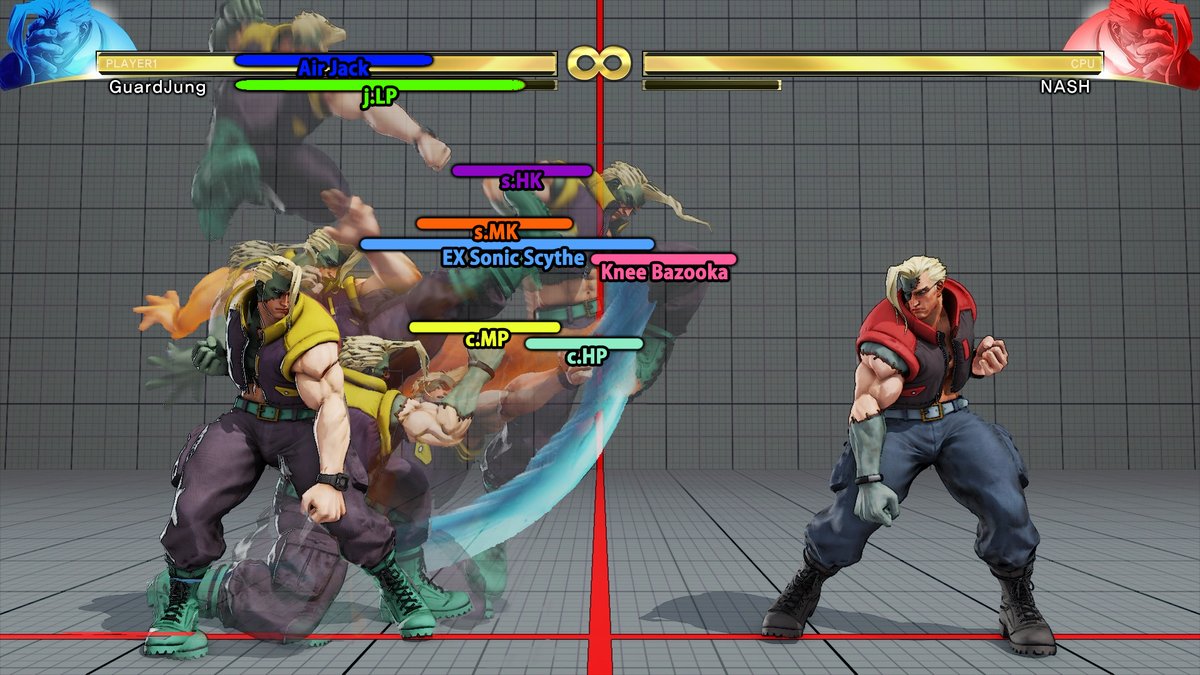
In general, moves that are fast and short-range tend to be plus on block, whereas moves that reach further and are slower tend to be minus on block. There are some exceptions, like Hugo’s clap move, which is slow and plus on block, it’s intended to be a difficult-to-set-up pressure move.
The design principle here is that when you’re up close to someone, you can hit them with plus-frame moves that let you mix up between strike and throw, creating the basis of pressure. Each move you hit with steadily pushes the other player away, which means only your slower and lower frame advantage moves have enough range to still hit the opponent, ceding your turn over to them.
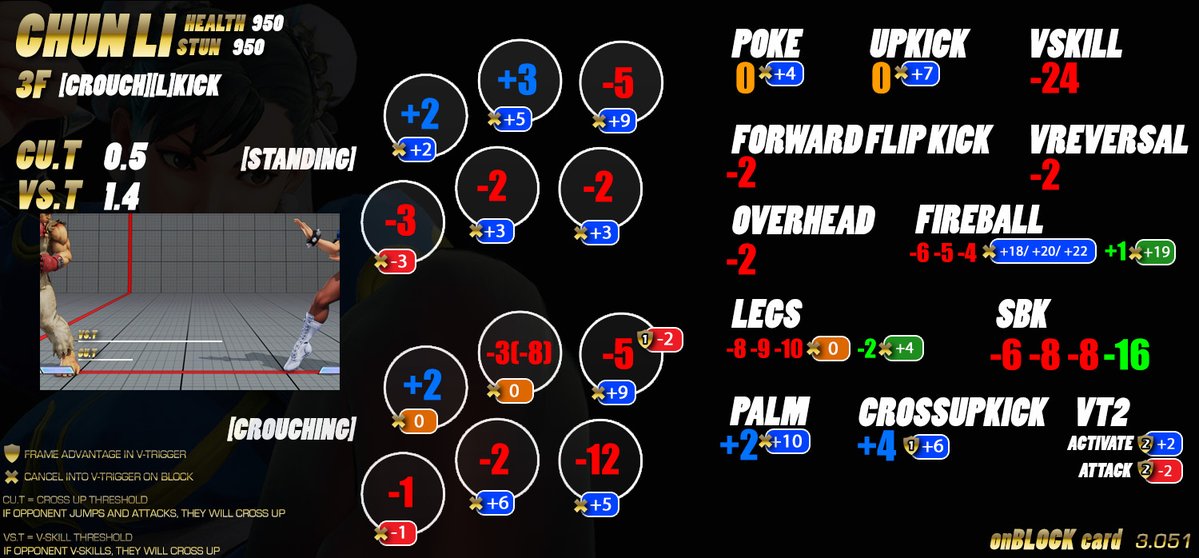
Games with big chains frequently make all of the moves minus, so you’re minus as soon as you stop chaining, but you can chain from short range light attacks (which might even be plus), to long range heavy attacks, replicating the same trend of pressuring with close range moves into longer range moves. These games also frequently let you delay the cancel between the different moves of the chain, giving the opponent a gap to attack through, which lets you frametrap them with the next move in the chain.
The more you know about fighting games in general, the easier it is to hop into a new game and get the gist enough to play competently without consulting any external resources.
Learning Your Character’s Fundies
Lets say you’ve picked a character and now you’re committed. Lets figure out the basics for them!
The first step in almost any journey is to learn the character’s moveset thoroughly. You can start with the character’s command list in-game, but the real place you want to check is the wiki page for that character.
Almost all remotely popular fighting games have a dedicated wiki, with breakdowns of every move from every character. Which wiki has your game is going to depend on where it kind of falls among the sub-communities of fighting gamers. Supercombo has Street Fighter, Capcom Games, and some of the older SNK titles. Dustloop is the dedicated wiki for all Arc System Works games. Mizuumi is the wiki for every anime fighter and other obscure fighter that falls outside of the other wikis. Dream Cancel is the dedicated wiki for newer King of Fighters games. Wavu Wiki is the dedicated wiki for Tekken 7 & 8. And 8-Way Run has frame data for some of the Soul Calibur games.
One of these wikis almost certainly has a page for your game, and a page for your character’s moves, frame data, strategy, and combos, as well as more general system mechanics. Your first step in learning a game should almost always be to consult the wiki, because people have poured a massive amount of time into making them an approachable way to understand your character.
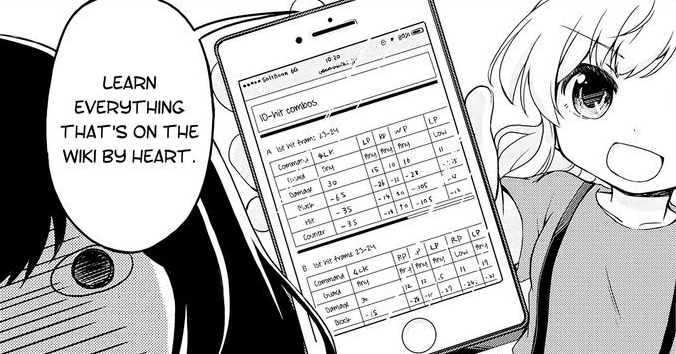
Once you’ve found your character’s wiki page, you can feel free to skip down to the section listing each of the special moves, then work back to their normals. These will frequently have a description of what each move is useful for, and where it fits into your gameplan.
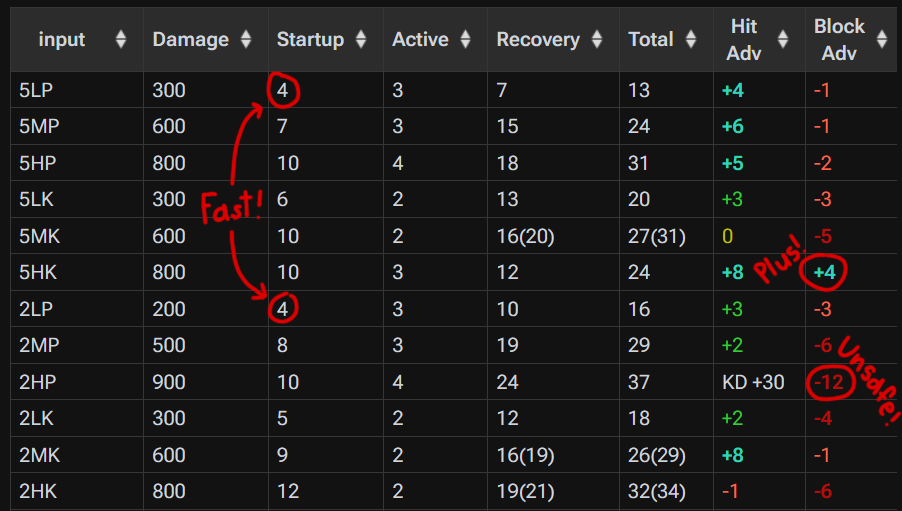
An important thing to do here is also to check your character’s frame data. This is incredibly intimidating to a lot of players, because it looks like memorizing a big table of semi-arbitrary numbers. In practice, that’s not actually the case.
Rather than that, you want to identify your character’s fastest and slowest attacks (which have the lowest startup frames, and which have the highest), so you know which moves to use when you need to poke out fast. Then you want to divide all of your moves into 3 categories: Plus, minus, and unsafe. After it is blocked: Is it your turn, their turn, or do they get to punish you? You don’t need to know the exact numbers, just the general category.
Unsafe here usually means that the move is -10 or more. It has more frames of disadvantage than the startup of an opponent’s move. These moves tend to be sweeps, dragon punches, launchers, and many special moves.
Don’t worry too much about combos yet. If you can learn a basic string into knockdown, go ahead and do that. If your game has chains, then maybe learn how to chain light to heavy. The timing for chains is that you need to press each button right when the previous one connects with your opponent (during the hitstop, when sparks fly off your opponent). At minimum, you should know which moves your character has that can be canceled, and practice canceling each of them into each special you have. If someone whiffs a dragon punch, you should be able to do at least a heavy attack into your strongest special move or super.
Hop Online
Once you know the basics of your character, it’s time to hop online! If your game is recent and has ranked play, then you can probably find games in the ranked queue. If not, then you might have to hunt down opponents on discord.
In all likelihood, even the worst players online are probably going to be better than you, but this is okay! Playing against random people online will help you get a sense of the flow of the game, and beat the bad habits out of you.
Ideally this will also give you a sense of humility and determination. Everything your opponents are doing is something that you can do back to them. Even if you’re getting your shit rocked, you’re learning which habits and behaviors will get blown up in real play.
Don’t worry about ranking points or ranking up. Your rank in ranked play matters only for matching you with appropriately challenging opponents. Your real skill is growing when you are losing, not when you are winning and ranking up. Your rank is a reflection of your skill, but it isn’t the same thing. If you focus too hard on ranking up, then it can make you miserable and not result in any real skill growth in the long-term. The strongest players are rarely the top ranked players in their respective online modes, and there are tons of players who are far stronger than their online rank would suggest. Back when online ranked play was new, we used to see players become the top ranked player online, then utterly fail to perform in tournaments.
Learning the Game
Now that you have the basics down, it’s time to learn the game systems in more detail. This usually starts with meters. Most games tend to have a meter for health, and a meter for super attacks. The super meter can usually be spent on other things as well. Many games implement other meters for other purposes, such as guard meters, movement actions, burst, or a 1-time powerup mode. You can usually win your first few ranked games without these, but as you get better, it helps to know more about the makeup of the game overall.
Another thing to look into is your game’s universal defensive mechanics. These can be things like different wakeup or recovery options (air tech, tech roll, etc). Or things like Instant Block, Guard Cancel, Push Block, or Parrying.
It’s important in a lot of anime games to air tech, to avoid getting hit by an invalid combo. While you’re being juggled in the air, each hit will confer a bit of “untech time” or air hitstun. If this hitstun expires, then you can usually press or hold a button to air tech, escaping from the combo. Many modern games have switched over to making air tech a hold input instead of a press input, so that players can instantly air tech at the first possible moment, instead of needing to mash and hope that they hit a gap in the combo, potentially attacking when they didn’t mean to.
Different wakeup options can similarly be important for avoiding your opponent’s attacks. If the game has the ability to delay wakeup, or roll in different directions when waking up, it can be hard for your opponent to predict when and where you will become vulnerable from any given knockdown, giving you another tool to escape pressure.
Universal defensive mechanics can be trickier to work with. One of the most common and easiest to use is Pushblock. This can take the form of either pressing a button when you’re in blockstun (MVC3, Darkstalkers, Under Night), or holding up a shield that increases the pushback for your opponent (Guilty Gear and Blazblue). Many shield style mechanics also have the benefit of negating chip damage, which can be helpful against super attacks. Pushblock frequently has the side effect of extending blockstun, so it can create new pressure opportunities for your opponent in some matchups.
Instant Blocks and Parries tend to be related. Instant blocking refers to blocking at the last instant before an attack connects. In many games it reduces both the pushback and blockstun of the move, making it easier to punish. The purple shield takes this role in Under Night, despite letting you hold it up indefinitely.
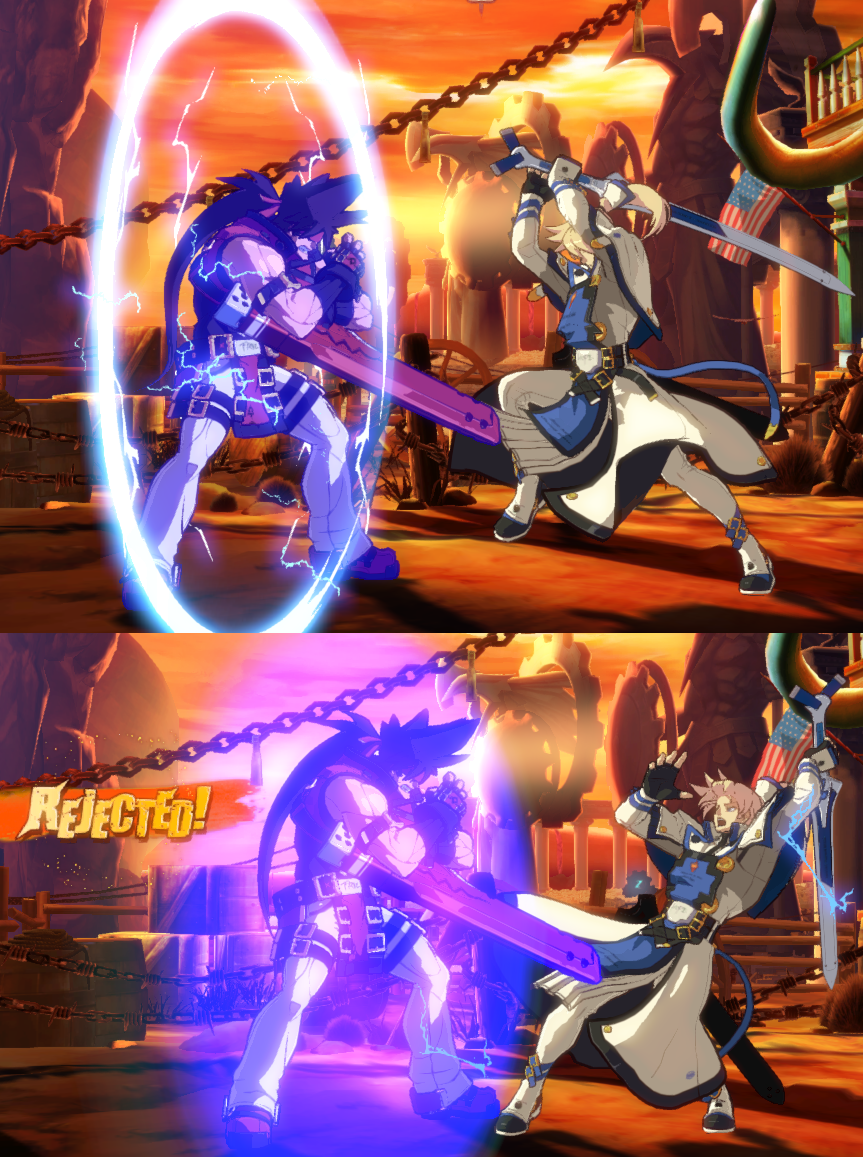
Parries tend to require a commitment of some kind, and will either let you follow up with a canned parry retaliation animation, or give you a lot of frame advantage over your opponent on the spot. Parries can be good as an anti-air, when jumping in on an opponent (anti-anti-air), when waking up from knockdown, or for stealing your turn back after your block string has ended. Parries tend to have a counterhit window after the catch window ends, and they tend to only cover mids and highs or lows (so that mid versus low is an unseeable mixup against parry).
Guard Cancel, frequently called an Alpha Counter, refers to canceling the blockstun animation into an attack of some kind. This attack is frequently on the slower side, but not so slow that it’s reactable, and invincible, in order to give the opponent a chance to poke you and stop their offense, but not enough that they can stop on reaction to your guard cancel. This creates a mindgame, but not an execution challenge. Guard cancel attacks also tend to be invincible, or specifically invincible to strikes but not throws.
Learning your movement options also helps a lot! Air dashes are a common one, allowing you to approach by air more quickly, and mix up your air movement, such as jumping backward, then air dashing forward, or vice versa. A common and helpful technique is Instant Airdash (IAD), performed by pressing 956, or ↗☆➡. The up-forward input, in most games, counts as one of the forward inputs for a dash. Double jumps also help make air combat more versatile, and can be used for baiting out anti-airs.
Many games have either a Step-Dash, or a Run. Street Fighter has moved to step dashes since Street Fighter III. Step dashes move you forward faster than walking, but you’re committed to the animation the whole time, and vulnerable to attacks. Running moves you continuously forward, but you can act at any time (though frequently you’ll skid to a stop and can’t block immediately). Some games combine both of these, having step dashes that let you act out of them like runs, but not block.
Back dashes tend to be an invincible step-dash backwards (backwards runs are rare!). The startup is invincible to help you get out of bad situations. In some games, it’s even a reversal option (useful on wakeup to escape meaty attacks).
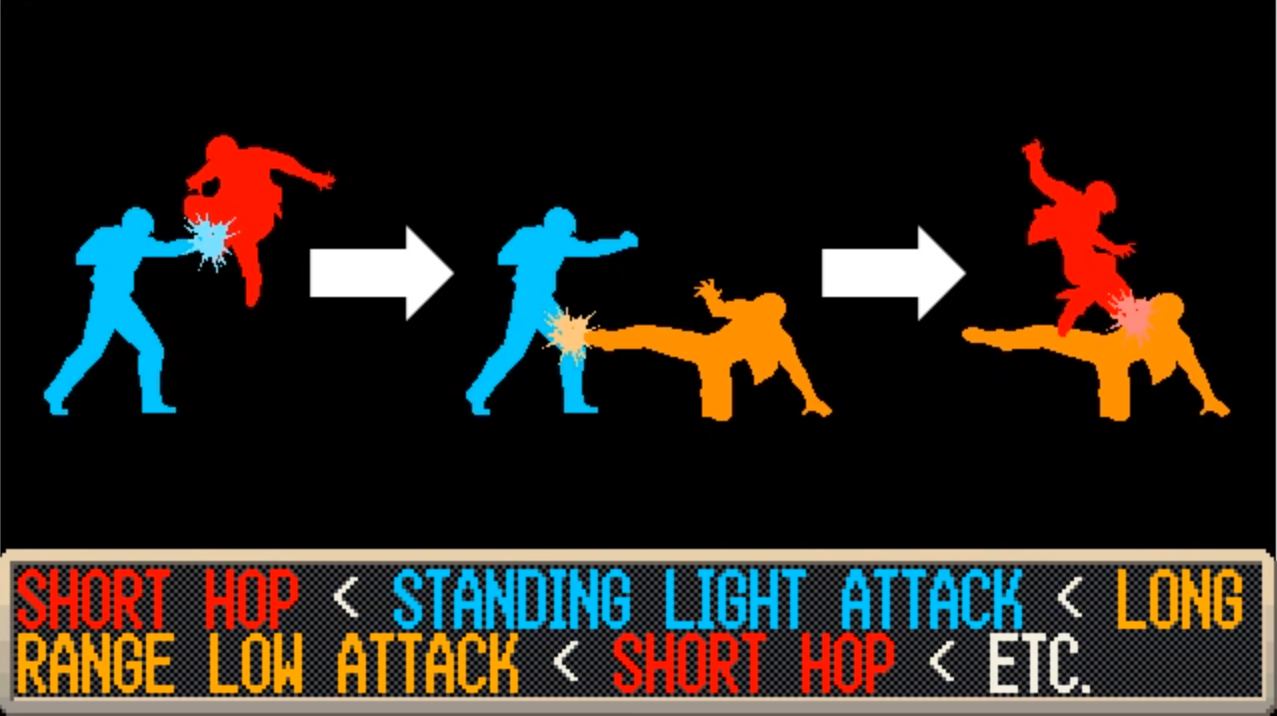
King of Fighters introduced the Roll, which lets you advance or retreat with strike invincibility. Rolls are frequently vulnerable to throws, so they get around most things, but can be called out if the opponent reads them.
KOF also introduced the hop, a low-to-the-ground jump. This lets you do overhead attacks on grounded opponents more quickly, with the downside that you won’t evade their standing attacks or fireballs. Hops are usually triggered by tapping up, then releasing it before the pre-jump squat animation completes.
Super Jumps are another common option, triggered by tapping down then up. In MVC, they give you air drift control. In KOF, they increase the distance of your jumps and hops. In other games they make you jump slightly higher and/or faster.
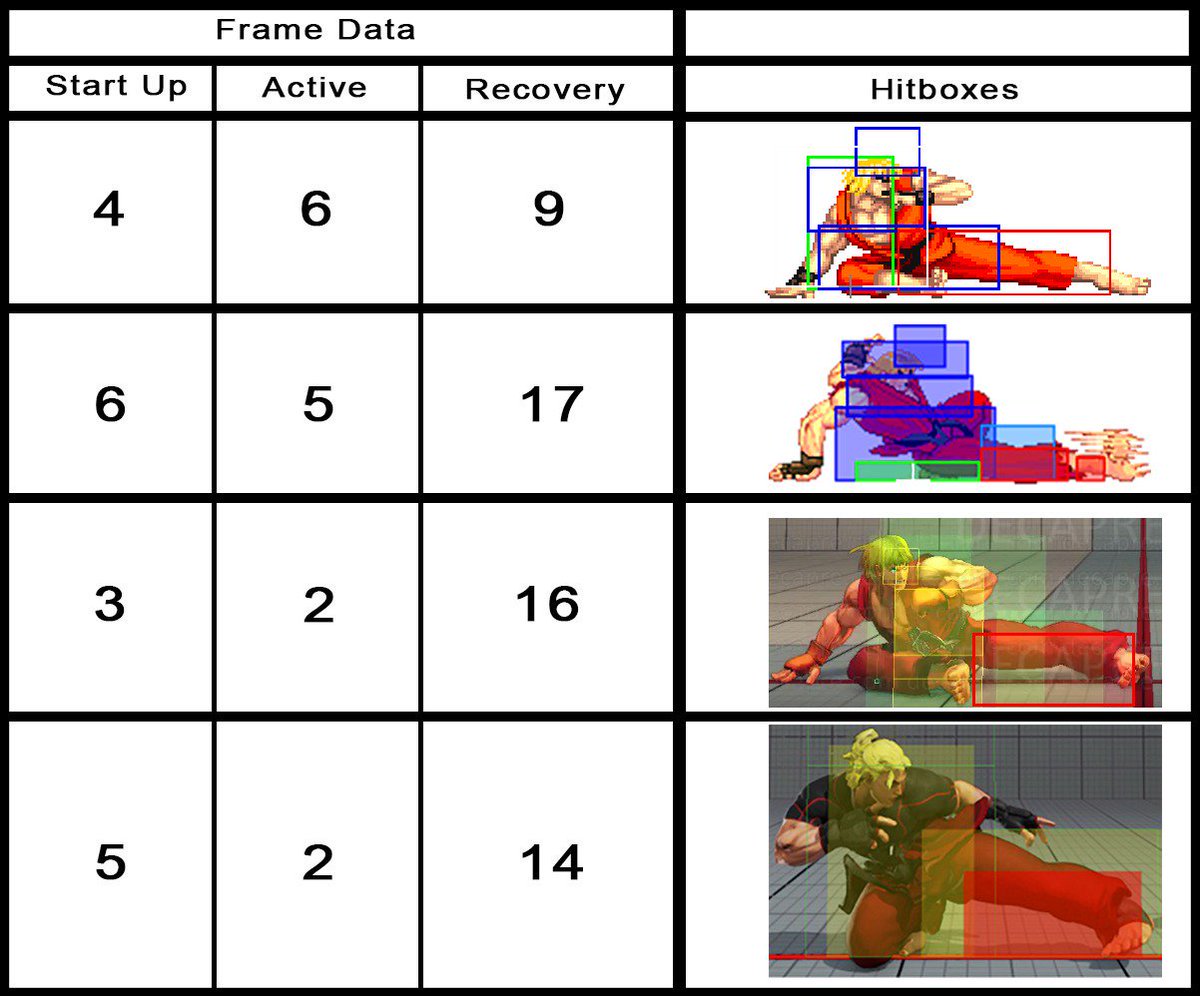
Next is learning the framedata standard for the game. In other words, what’s normal for a character? Is this a game with really fast attacks? (3-8f startup) Or slower attacks? (10-19f startup) Does this game have a lot of plus on block moves (pressure-heavy), or is it mostly minus on block? (taking turns) What’s the average speed of a character’s fastest normal attack? Learning the commonalities to the framedata will give you a better idea of when it’s your turn, and when it’s not, even if you haven’t seen a particular character before. Again, rather than memorizing a huge table of numbers, players instead learn the patterns of frame data, and only remember a few key statistics.
Then you want to figure out where your character fits into the framedata standard. Do they have a jab that is as fast as other characters? Do they have any moves that are faster at a particular range than other characters? Like maybe your character has the fastest mid-range poke, or maybe they have a bunch of fast attacks, but they’re all super stubby and short range? Maybe your character has really long-range attacks? Figure out what ranges your character excels at.
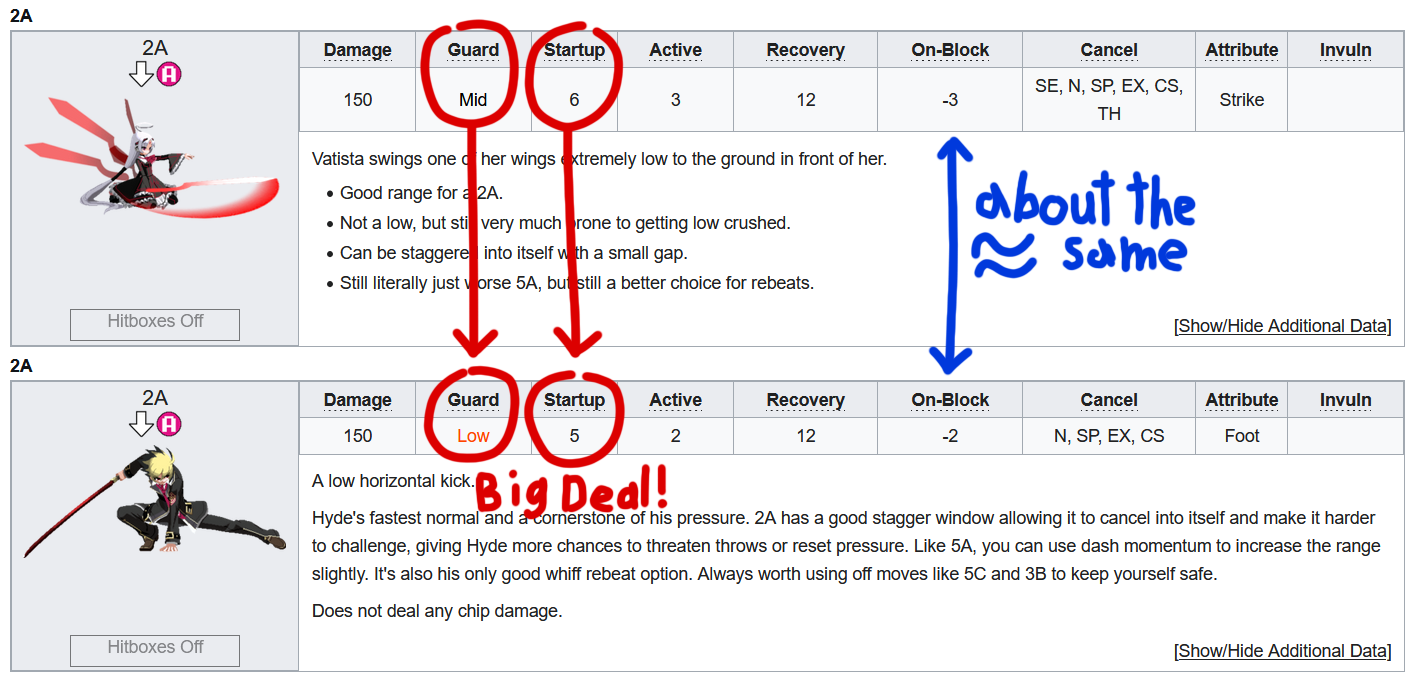
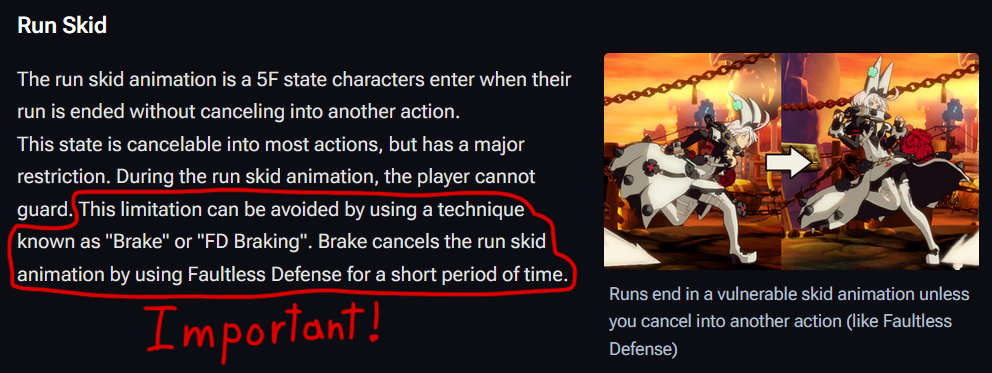
Then you should look into the advanced subtleties of the system. Are there any exploits, option selects, or other tech that is important to learn? Judging how important that is at your current level of progress is up to you. Not every technique is worth the time it takes to learn it for every level of competency.
Once you’re familiar with these things, try taking this knowledge back online and see if you can integrate it. Remember: Losing is good. You need to lose in order to integrate new skills into your toolkit. If you play to avoid losing, you’ll never develop the ability to win against strong opponents.
Learning Your Character for Real
Now that you have a handle on the basics of the game, it’s time to dive further into learning your character. This is a process that can take a REALLY long time for any game. Most fighting game characters are designed to be so complex that different pro players master different parts of that character’s toolkit, and everyone has a slightly different take on the character.
Now’s the time to start learning your character’s combos. You don’t need to go for the optimized B&Bs yet. If your game has an auto-combo system, then there’s no shame in using it to get a leg up early on. Remember that an unoptimized combo is better than no combo at all. Feel free to learn easier combos early on and upgrade to optimized combos as you improve.
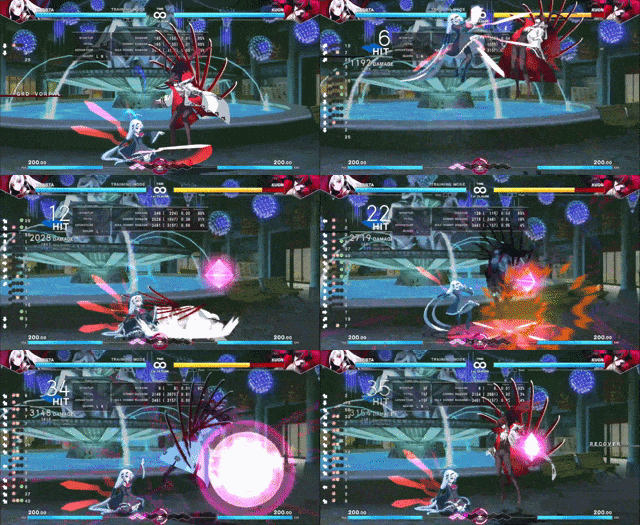
Focus on the combos that are most essential to your character’s gameplan.
If your character is a setplay character, you really want to end the combo with a knockdown and a projectile on the opponent (Haeyun’s 2P > 2P > 2P > 2D > 236H is a great example of a basic setup combo that gets her gameplan started, even if it’s not optimal damage).
If your character is a grappler, then you want to learn different points during a combo that you can go into a command grab instead of continuing the combo (SF6 Zangief’s 6HP, 3MP > PP combo is a great example of this. 6HP and 3MP both leave him close enough to connect an SPD, keeping the threat on the table even if they’re blocked).
If your character is more footsies oriented, then you want combos that will convert off of a poke. If they’re more mixup or pressure oriented, then you want to know conversions off their overheads, or unga-bunga counterhit moves (landing a counterhit, hitting the opponent during the startup of an attack, leads to bonus hitstun and damage, and sometimes will cause a move to launch or crumple, or other special properties when it connects. Pressure characters frequently have these so they can land big damage when the opponent tries to poke out).
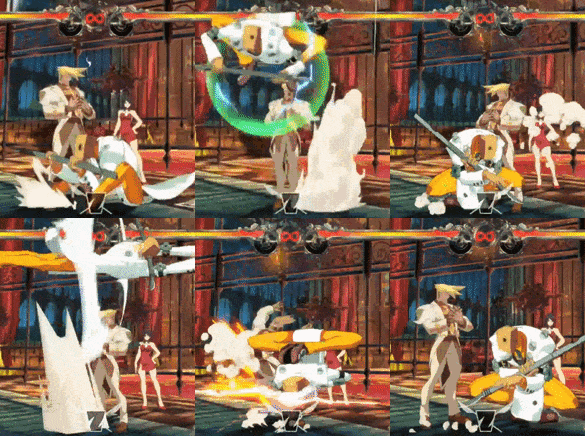
Following this, it can help to learn character-specific tech as it applies to your character. For example, Vatista has charge partitioning, which allows her to spam many projectiles in a row, and hide charge for her overhead behind other moves, allowing for sudden high damage overhead attempts where the opponent doesn’t expect it. Faust in Guilty Gear can cancel his air momentum with j.2K canceled into faultless defense, allowing him to move in funky ways for sudden mixups and fakeouts. Learning this tech is essential to playing Faust.
Getting Serious
Now that you have a solid grasp of how to play the game competently, there’s the question of whether or not you want to get serious about the game, and what the next steps are.
Many fighting games are fun to play casually, but have barriers to competitive play that you might not find are worth it. I’ve resigned myself to never being a great Tekken player, because I simply don’t want to learn how to block, duck, and sidestep thousands of different strings.
If you do want to get serious about a game, I recommend checking if there is a community discord for it, or any kind of community local to you that plays it. It can be fun to play casually with your friend group, but fighting against serious competitors can be incredibly rewarding.
You can find a lot of tournaments on Start.gg. Be sure to check if there is anything local to you, or any netplay tournaments for your game. If there isn’t anything, consider starting a local scene! It’s easier than ever to run a bracket, and you’d be surprised what kind of players come out of the woodwork when someone starts a local up. The fighting game scene survives on the backs of grassroots organizers.
Don’t be afraid of picking up new games and good luck on your journey!


Great article about fighting games! As a DOA6 enthusiast, I really appreciate content that explores game mechanics in depth. For anyone looking for Dead or Alive 6 guides, character breakdowns, and frame data, check out deadoralive6guide.com
LikeLike