Any thoughts on the adaptive difficulty of Resi 4?
It’s dumb that it’s more efficient in many places to simply kill yourself to despawn enemy mobs. I’d prefer consistent difficulty at that point. Adaptive difficulty that isn’t God Hand style most frequently feels patronizing to me. God hand is like, “You gotta work your way up, don’t get wrecked while it’s still easy”, where other games are more, “Oh, you died again? Let me give you an easy way out.” In God Hand, getting to the harder difficulty is an inevitability as long as you avoid getting hit, where in most others it’s not something that adjusts rapidly over the course of one life, but rather on how well you avoid death.
From a user experience perspective, it’s really annoying to want to play a game on the maximum difficulty and be told that when you die, you can’t do it anymore and if you really wanted to play on max difficulty, then you should restart the whole game and not die this time. Yes, enemy handicap in DMC4 really pissed me off and the levels are long which makes replaying the whole thing annoying. I want to grind my forehead on the wall until the wall breaks down, don’t switch the wall out on me, don’t make me repeat a ton of shit just to get back to the same wall again.
On the resi 4 devs not mentioning it in any way, it’s security through obscurity. Since almost no one picked up on it, I suppose it worked. Was it a good idea or not? It might have positively affected many casual players in an experiential way (get frustrated at hard thing, keep at it until it’s easy enough to beat it outright, don’t realize the game is rigging it, feel accomplished). Though it’s still a cheap trick in my opinion, and the experience gets wrecked for anyone with a motivation to abuse it or who gets knowingly fucked over by it.
How would you approach a person who believes that games are a waste of time and that there’s no difference between a mindless ‘clickr’ game and any other game, other than different and more difficult ways of clicking?
They are a waste of time, relatively speaking. They’re things we aspire to waste our time on.
For one, different games affect us differently, put us into different mental states. Clickr games are made to create an addiction more than genuine enjoyment. http://sirlingames.squarespace.com/blog/2012/8/22/addiction-diablo-3-and-portal-2.html
We play different games and different genres of games for different reasons, obviously. This is why similar tastes congregate in similar demographics.
I mean, sure both cookie clicker and whatever other game eat up your time, but not all recreational activities are created equal.
You don’t necessarily have to approach them with the intent of convincing them that games aren’t a waste of time, but how would you explain what separates, say, Quake or Melee from Cookie Clicker?
The games operate fundamentally differently. What separates programming from essay writing? What separates playing a guitar from guitar hero? What separates weight lifting from sports? Painting from note taking? Even though something might have a similar or identical input system, they’re not the same thing. The difference is created by context.
Cookie Clicker and games like it are built specifically to prey on extrinsic rewards, which tend to grow weaker over time, which is why they keep up interest by steadily exponentiating your income, so you don’t just earn move, you earn orders of magnitude more, like the entire thing is steadily accelerating, and the amount you’re earning now dwarfs what you originally earned, so things that were troublesome to buy a second ago are now simple.
Quake or Melee are based more on intrinsic rewards, feeling good for something that you did, as opposed to something you got.
Also, do you think there is only one way to truly press a button? Do physical factors such as pressure, speed, and even position make button presses different? Or is there really one fundamental way of pressing a button, with the *pattern(s)* in which you press the button (and why)?
For a digital button, most of those physical factors don’t matter (though the PS2 and PS3 had pressure sensitive buttons, almost nothing took advantage of them). It depends on what type of game is receiving it. Most game functions don’t really care how long a button is held for or when it’s released, but they do care very much about when it’s pressed. Some games do care about these things, and they care a lot about what other buttons are currently pressed or have been pressed recently.
Melee is a game that can go up to 300 Actions Per Minute. Each of those button presses is relative to a specific situation, in conjunction with other buttons. That’s what separates a ground attack from an air attack, from a smash attack from a tilt.
Then you get different mouse movements for shooters and for strategy games, even within those categories: https://imgur.com/a/FoMNy
Have you ever dealt with a desync in an online game? If you are out of sync with your opponent, even by a single frame, the entire game is ruined and both your actions become nonsense to each other.
There’s a lot of ways to press a button or buttons in conjunction. These help add to the kinaesthetic feeling of games which differentiate their button presses.
Reminds me, I was thinking recently of how cool it would be if some of the advanced tech Snake can do in Smash Bros were possible in The Phantom Pain. Like jumping at someone and doing Snake’s back air. Or doing the DACUS. It would probably look weird and not really fit into the game, but it’s fun to think about. It’s really cool to hit people with reverse back airs in P:M, feels nice.
What do you think of Ultimate Techniques being unlimited or ‘free’ in NG? I don’t think the move breaks the game or is an easy mode button in any way, unlike the eMachos who claim to have cleared NGB/2 with their hands tied and in their sleeps using UTs (and ID+FS), but it certainly leads to bad habits. Like instead of mastering the complete moveset, understanding your weapons, and learning fundamental action game skills like positioning and timing, during difficult sequences, it’s very easy to breakdown and resort to cheesing tactics like running away and separating foes, or abusing level design/geometry to camp and charge UTs while the enemies come around the corner. I don’t really think the move is broken in normal combat, but I do think they should have limited it in some way, like how DT is limited.
I am pretty much certain they intended the UTs to be broken in the way they are. I’m basically certain they wanted the most efficient way to kill enemies to be UT chaining, considering they implemented it the way they did. Honestly, playing the game that way is rather interesting, it tests a different skill set than normal, which is kind of interesting and tricky in its own right.
It probably should have been the gimmick of a specific weapon rather than a universal solution to the entire game, like an alternate play-mode rather than something you can pull out at any time. On the other hand, it is still interesting when used sparingly, like trying to find moments in fights when it can be snuck in efficiently, so maybe it would make sense to impose a cooldown on it, or have a meter dedicated to it.
I don’t think there’s a good way to totally fit it in without cutting some type of value out. It doesn’t have much if any synergy with the rest of the moves in the game. It kind of sits by itself, only really losing because other attacks are faster than it, but if you get 1 kill, you’re mostly good.
Also, honestly, mastering the complete moveset isn’t really necessary. Most of the combos don’t have significantly different functionality. You only really need to know the strongest combos for a few situations, like whether you can juggle the enemy or not, they have super armor or not, or hitconfirm versus going all-in.
I dunno what to think of it overall. The trouble is really that it’s divisive and it’s part of the balance and “character” of the UT to make it divisive. You either play the game the normal way, or go for a UT string. In the average campaign, most people are unlikely to go for all UTs, so it ends up fairly limited, but in the sections where it’s effective it feels really cheesy. I guess the problem is the option itself simply existing, which would mean limiting it wouldn’t actually do much good, only reduce the cheese factor rather than eliminate it. It certainly doesn’t feel in line with what the rest of the game was going for to say the least.
What do you think about dynamic difficulty systems? Particularly about whether or not to keep them behind curtains. I’m torn after watching Mark Brown’s video about it, because if a player wants to challenge themselves with higher difficulty to improve it’s not negative even if it might frustrate them, the only ones benefited by having the system hidden are those who would cheat themselves to make the game easier, but I don’t think it’s necessary to cater to people with that attitude. The transparent system of God Hand allowed me to constantly try to improve to push it further. Even just allowing players to change difficulty at will during the game seems superior to a hidden dynamic system, because it allows to adjust according to their conscious needs and disallows cheating to make it easier (it’d be easier by choice). So only a transparent dynamic system seems superior to me.
I think you can’t realistically keep them behind the curtains from everyone. I actually didn’t know RE4 had a dynamic difficulty system myself on watching that video, but of course someone speedrunning would notice it and abuse it if it was abusable.
I was involved in a discussion about dynamic difficulty systems recently by someone who took the stance that dynamic difficulty should be the only type of difficulty in single player games if at all possible, always adjusting itself to the player’s skill level so that players will remain in the flow zone tailored for them for the entire experience. It makes a degree of sense in an abstract way, but many people (including me) want to challenge themselves against a static difficulty level. If the game is easier or harder based on your skill, so that everyone is challenged equally, then it removes a lot of the push to improve, a lot of the selective pressure on your strategies.
The thing is, God Hand’s system doesn’t really let you cheat. It doesn’t have terribly forgiving checkpoints and dying costs you time. I don’t think God Hand’s difficulty is exactly a good comparison, because it’s designed in such a way that it fluctuates up and down very directly based on whether you are hitting other people or getting hit. There’s no way to perform efficiently and not have it spike upwards rapidly. This is part of what makes God Hand’s level up system interesting, not just that it’s transparent, but how directly and rapidly it’s affected by your performance. If you are dealing damage quickly and doing weave dodges, you’ll level up really quickly. If you take damage at high levels, you’ll die really quickly and get a major penalty to the level. It’s not just a challenge to keep your level up, it’s a struggle to survive, which is very directly tied to your level. People inevitably raise their level in God Hand, because they don’t want to die and start over again.
I think from a design perspective, there’s benefits to both approaches depending on how the game is structured. Most of the time I find dynamic difficulty adjustment to be a pain in my ass though, because I hate performing poorly, then being slapped with enemy handicap or something. Something might be too hard for me, but I want to stick with it until I win. I want to be pushed to figure out a solution, to figure out what combination of options will allow me to pass.
One funny thing about some games and speedruns is that the highest difficulty level is the de facto standard for speed running because it’s actually faster. Examples of this are Half Life and Jedi Knight 1. In Half Life, Explosive damage boosts you more on hard mode. In Jedi Knight 1, elevators move faster on higher difficulties. Both Easy and Hard are widely played for Quake Speedruns because the enemy positions are different, making them significantly different experiences.
The other thing is, Left 4 Dead has a nontransparent system that works rather well. Demon’s Souls has a cool dynamic difficulty system with the caveat that it’s a pain in the ass to get locked off from PWWT for the current playthrough if you die in body form too much. Dark Souls 2 has a cool one with the bonfire aescetics (except for those being too damn limited). Bloodborne has an alright one with insight.
If you let players change difficulty at will, then they can just turn it down for a hard encounter instead of being forced to stick it out. However people can’t evaluate which difficulty is really best for them without playing each one, so you have that problem. Good rule of thumb for western games is to go for the second hardest difficulty because the hardest was made for no one and tested by no one.
Really what we need to be thinking about are how we can make dynamic difficulty systems fun for the players to play with, to make them something that players are interested in manipulating. In most cases dynamic difficulty is something finnicky that I personally would prefer to turn off altogether (like in elder scrolls where it has been moronic since oblivion at least).
The key things to think about are, what does the dynamic difficulty actually change? (enemy behaviors? aggression? Damage? Number of Spawns? Health?) You typically want the type of difficulty augmented to introduce new dynamics to the play, which is why merely buffing damage and health usually comes off poorly. What actually changes the difficulty? (taking damage? dealing damage? Specific environmental triggers? skill tests for critical success? player decisions?) How many levels of dynamic difficulty are there and how quickly do they shift between one another? (are they static levels with clear divisions between them? are they a more smooth linear shift? Do they shift immediately in response to stimulus or only adjust themselves between encounters/levels/worlds? How much do difficulty shifting events each affect the difficulty level?) Can the system be abused efficiently to bypass the difficulty level appropriate for the player? (RE4) Is the system adjusting itself to a difficulty the players do not want? (enemy handicap, super kong, etc) Also it probably pays to keep it simple like God Hand. Too many variables and you get systems with unexpected results or that are impossible to fine tune.
I think it makes sense to not widely advertise dynamic difficulty systems all the time, because I think many consumers don’t want to know that your game adjusts itself to them via some “advanced” system or will be actively turned off by it. Though if this is the case, I think it’s worth questioning if your system really serves the consumer or not.
I’m inbetween on that. The big benefit the stat systems bring is that characters have this differentiation from one another, you can’t just switch the items, you have stats invested that make you proficient with the items you have. And different characters can approach the game in very different ways with varying levels of efficiency at different parts. That’s pretty cool.
The upside of getting rid of it is, if you have no stat systems and just let people pick whatever armor and weapons they want, and balanced all the areas so they would fit the correct levels of damage for the mono-leveled character, then you can avoid the player grinding and becoming overpowered or underpowered. You’re less forcing the player to make his character good, and more asking them to get good at consistently performing the challenges inherent of the system. Players can’t make areas really easy by using overpowered gear/stats. Players aren’t forced to go grind so they will keep up with the difficulty of the area. This means a lot less wasting of players’ time and probably a more consistent difficulty curve.
These are the benefits of a stat based system contrasted directly with what you gain from doing away with it. I don’t think the Souls games would really benefit from not being RPGs as they are. Also cleverly, the Souls games have that online multiplayer aspect giving players a motivation to not overlevel, because then they will be left behind relative to everyone else (though admittedly this is more of a social contract than anything inherent in the game design).
A game like Ys would receive almost pure benefit for switching, but Souls, not nearly as much.
Do you think level grinding is a poor game design choice?
In general, yes, though recently I have found some good reasons for it. When the player’s needs experience from fighting monsters to progress it can be a motivation to fight otherwise easily avoided monsters in games where the monsters aren’t very good roadblocks, such as the recent Ys games. Another reason is trivializing early roadblocking enemies in nonlinear exploration games. It can be irritating to pass through an earlier area only to be held up by stuff you’ve dealt with before. With big enough number buffs a lot of challenges become trivial.
Despite these good reasons it can still be a pain in the ass to level grind, worrying about being overpowered or underpowered. Some solutions I’ve thought of include limiting the amount of experience you can get in each area by having it be totally static item drops. Like imagine that when you kill an enemy they drop 1 XP token each time up to a maximum of 3. To level up you need roughly 1.5 tokens from every enemy in the area and on collecting that amount you level up. This gives the player a reason to actually fight the enemies and keeps grind time short, also limit in how many times they can grind the same enemy set to level up.
Another solution that can be combined with the above is dispensing the level up on beating the area/boss so it comes at completely static times. If they didn’t get these level up from the enemies of that area then beating the area grants it, erasing the XP tokens of the monsters in the area too.
3D action games with freely rotating cameras need a way to focus on objects of interest, otherwise characters moving around enemies can cause the camera to lose sight of their target. It’s difficult to operate the attack buttons and camera at the same time. It’s also difficult to aim characters facing direction accurately when the camera is at their back, so Zelda: Ocarina of Time came up with the compromise of Z-Targeting, which is known in many games as Lock-on.
There are three types of Lock-On; Hard-Lock, Soft-Lock, and Camera Lock. Hard-Lock is toggled by holding or pressing a button to typically orients the character and camera to face a target. Hard-Lock can be found in the Devil May Cry series, Bayonetta, Dark Souls, Legend of Zelda, and Metroid Prime. It’s notable that in DMC and some parts of Bayonetta, Hard-Lock functions independent of the camera, so you’re not forced to look at the enemies you’re locked onto, which helps prevent multiple enemies from getting lost off camera. Soft-Lock functions automatically by orienting the character to face enemies when they attack at a close range. Soft-Lock allows players to move in any direction unrestricted, but always attacks accurately. Soft-Lock is used with the guns in DMC when you’re not locked on. It can also be found in Metroid: Other M, Metal Gear Rising, and DmC. Camera lock is when the camera is fixed to look in one direction, but the character’s actions are unaffected by the camera. This can be found in Metal Gear Rising, which allows you to lock the camera, but Raiden’s actions are unaffected by where the camera is locked. Raiden still soft-locks onto targets as normal.
So what type of lock-on is best? In my opinion Hard-Lock provides the most benefits, especially when the button for lock-on is held instead of toggled. It’s helpful to have the character face their target, enabling them to strafe. It visibly identifies which enemy is being targeted, as opposed to soft lock which has no visible indicator of who you’ll attack. The player can lock-on and lock off and manually choose new targets as desired. It also allows the obvious boon of being able to use directional inputs with other buttons, by orienting the character relative to the target. Games without a lock-on in a 3D perspective have no absolute directions because the camera can change orientation. The player can only get relative directions such as in the case of Bayonetta where tapping the directions “forward, forward”, and then the attack button or “back, forward,” and attack uses certain moves like stinger. Bayonetta also had a Hard-Lock in addition to this input method. It can be hard to tap the directions with the correct timing, and even harder to tap those directions the right way to successfully hit the exact enemy you want. With a Hard-Lock, the player can just hold forward and press attack at any time. Dark Souls has a Hard-Lock, but the kick and jump attack commands are designed to work without it. They can be difficult to manually operate as a result, since they’re input similarly to a smash attack in Super Smash Bros rather than the easier DMC method of holding a direction and pressing attack.
The trouble is that once Hard-Lock is engaged, combat becomes about the line between the player and the opponent. It becomes 1 dimensional, literally. The only thing that matters is how far your attacks reach and how far both of you are from one another. Game elements have to be introduced so that there is a value to rotating the camera in 3D space for the player otherwise it stop being 3d in function. If the Hard Lock is perfect the player will always face the player’s opponent and will only need to move to avoid getting cornered. To prevent this, many games lock the aim straight forward or slow the character’s rotational speed or make movement slower. This encourages the player to lock on manually only for precision or special directional inputs, and lock off when they don’t need it.
For this reason there is a draw to combat without lock-on. It’s enjoyable to play Dark Souls without lock-on, and it’s technically more efficient for a lot of tasks as it allows the player to run and dodge in any direction unlike during lock-on. Bloodborne was effective by having the quickstep active in lock-on mode and roll active when not to differentiate the two modes. Non-lock-on combat tends to work better in games with isometric or top-down camera angles like Wonderful 101 since the player can clearly see which way the character is pointed but this will affect level layout. To have complex 3D environments and architecture that players walk up, down, and through some type of camera centering button and/or camera lock function quickly becomes necessary for simple navigation.
This video and others by the same guy can show how useful it is to lock off in Dark Souls.
A Soft-lock camera like in MGR remedies a clumsy camera but when multiple enemies are involved, locking the camera onto one of them can be a death sentence. The MGR camera is so close that enemies frequently get up behind the player and it’s practically biased to force you into corners because it pushes off walls so hard it faces straight into them. I feel like no lock-on combat is more successful in Dark Souls due to better camera design and the attack buttons being on the shoulder buttons, so you don’t need to pull your finger off the right stick to attack.
I want to see future games have characters move more to evade attacks rather than using specific dodge moves to invincibly pass through them, which will mean they need to not use cameras that are incredibly close to the character or low to the ground, so players can see where their character and enemies are in relation to each other. I think Dark Souls is very fun when fighting multiple enemies without using lock-on or when fighting bosses without the use of lock-on, but keeping lock-on as an option makes some actions and situations easier, so it’s more of an optional tool to be utilized rather than something necessary to keep the combat functioning at all (though it probably would be unreasonable to not include it).
Freely moving around enemies has troubles though because when you move away from them, you are no longer facing them. Your attacks will go the wrong way completely. Soft-Lock systems attempt to allow players to move around freely, then attack the enemy accurately regardless of rotation. Unfortunately soft lock is unreliable for targeting, because you can’t tell what you’re going to attack before you hit the button. At worst, Soft Lock ultimately reduces combat to just being about the distance from your opponent in much the same way as too good a Hard-Lock. The other trouble is that in a soft lock system, you can’t just hold a direction and press a button for a command move, because every direction is forward, none are back or sideways. In the future it might be interesting to build an automatic camera AI that is attracted to points of interest like enemies that you’re actively engaged in combat with. This can potentially be annoying to players though because they may not want this functionality, they may misunderstand what the camera prioritizes or actively dislike the camera’s choices of focus.
To build on the intelligent camera idea, my initial thought is that elements should be given a ranking, a priority in the camera’s AI. The player character obviously has absolute priority, so it is always in frame (or of course the camera flat out rotates around the character, so it’s not an issue). Next, a point projected ahead of the player character should receive more and more priority based on how long the character has been heading in that direction (much like how cameras autocorrect to the way you are going in existing games). Enemies should be granted priority based on proximity to you, whether they have caused harm to you, and whether you have recently caused harm to them. Further, elements of the environment can be given priority at the discretion of the designer. The idea is that in combat, the camera will orient to fit all combatants into the scene. When running away from enemies it will orient ahead of you as the priority of the enemies you were just fighting falls off and the priority of the direction ahead of you gets stronger. And when passing through without fighting, the camera priority will already be strong and enemy priority needs to build before they are a significant effect on the camera. Maybe the final effect can be visualized like a heatmap, where the camera points to the area with the most heat? Well, it’s more of a linear algebra thing really.
To break off my camera tangent: Moving around enemies, having them all clearly represented on camera, doing it from a close-to-the-character or behind-the-shoulder perspective most of the time, allowing the character to face towards the enemies without reducing their relationship to a one dimensional one or move without changing facing direction. This is tricky with our current controllers.
The thing is, if it could be pulled of, this would enable a game to have a lot more of moving across a 3D plane, and avoiding 3D enemy attacks, while simultaneously attacking them in 3D. There’s a very high level of depth that could potentially appear in a system that can pull this off. Having something be variable across space/time in a meaningful way is one of the easiest ways of giving a mechanic depth.
Think of a movie, movies can depict complex interactions in space like this very easily. The director can simply choose angles that capture everything relevant at any given moment in the frame. Because movies are not possibility spaces of potential events, choosing the right camera position for any one moment is easy. This is why handing camera control to the player is obviously the easiest solution to most camera problems, but players can’t operate cameras without sacrificing access to the face buttons, which sucks. So a good automatic camera is necessary. The problem is, our intuitive human judgment of the best place to put the camera is very hard to express algorithmically, such that in all possible situations the camera will be in a place that captures everything going on. Furthermore, in a movie shot, the actors can be placed to face any direction and simultaneously move while facing any direction, and rotate arbitrarily as they move. The direction that attacks are oriented is tremendously important to making 3D combat work.
To pick an example from a completely different genre, a game like Smash Bros gets away with having characters face away from one another because you have the C-stick that allows you to instantly attack in the opposite direction and you can jump or wavedash which temporarily fix your facing direction one way while moving. Imagine if there were twin stick action games in the vein of twin stick shooters, where you could use a second stick to control your facing direction. This would require automatic cameras, and if those simply locked directly to the enemy then the point would be lost anyway.
Implementing this into 3D space like DMC, Bayonetta, or Dark Souls is a control nightmare. With current controllers, I think you need to make sacrifices in some area or have an automated system handle the camera suitably (still having issues with the attack facing problem), you can’t have it all.
Fixed perspective games like Ys Origins or Oath in Felghana have good combat by means of avoiding all the camera and lock-on problems altogether, but at the cost of simpler combat systems and environments. This affords them the ability to mimic bullet hell games and have amazing weaving through enemy attacks at the cost of being mechanically simple.
Lock-on can be a tool and a hazard. If implemented too perfectly (such as in the 3D Zelda series), then none of the actual animations of attacks matter except their range and startup time. If not implemented at all, then players can quickly lose sight of enemies, especially when they need to press face buttons to attack, or aren’t used to using 3D cameras. It’s up to developers to implement camera and lock-on systems that help players stay on top of targets without trivializing what can potentially be an interesting part of combat. Hopefully future developments and refinement will allow for smoother camera systems and better gameplay in the future. Half the battle of developing a 3d game is framing it.
Which game should game designers look at when crafting the mechanics for a FPS game, fighting game, and hack n slash/beat em up game respectively?
They should each look at all of the other ones you listed. They should look at the games from the other two genres that aren’t in their own, specifically how elements in those genres make players make decisions and strategize and create counterplay. Try to figure out what sets of mechanics they can outright lift and adapt.
Like for FPS, maybe consider lifting how in the other two genres, attacks interrupt your opponent, preventing them from hitting you, allowing you to fight without taking damage instead of it being a war of attrition. For Fighting Games, maybe consider how beat em ups have different hitstun types frequently and how enemies sometimes still have options in hitstun. For Beat em ups, maybe consider ammo limitations and super meters a bit more, as resources that people are building up and spending for various purposes (though I guess they already do this a fair amount, but there’s still a lot of room to explore).
Then remix it up and try to give it its own twist according to the standard formulas I always reiterate. Consider each element that makes the thing what it is, consider how it can be different, based on motion, area of effect, velocity of the projectile, character, environment, target, etc. Consider how you can make something have multiple outcomes depending on when it’s input, how long it’s input, how perfectly it’s input, what other factors are in play when it’s triggered, position, velocity, meters, how much of the characters/hitboxes/projectiles overlap. Change these all up, find a mix that hasn’t been done before and work out how to put it in balance with everything else so it’s not the only thing the player does and so it’s different from all the other things the player does.
What are the key components when designing challenging enemies and bosses?
Give them options for every scenario, give them a way to punish the player no matter what they’re doing and force the player to never consistently repeat a pattern. Give the player multiple ways to respond to every option the enemy or boss has, make it so some options are more effective against some responses and less against others, so that no set of options overlap, they are distinct from one another. Create synergy and interactions between the behaviors of different enemies to produce a more wide set of resulting states. Enemy options should simultaneously attempt to limit the player’s options and open up a chance for the player to fight back and in turn respond dynamically to various responses to create more possible states. If there is a fastest or simplest way of doing anything, it should be the hardest way.
Make sure at all stages that the behavior of the enemy or boss is telegraphed in a way that the player has at least 15 frames to react to whatever is going on when they are in a situation they can fairly anticipate a certain response (like if they’re waiting for something to happen but don’t know what time it will happen) or 30 frames minimum if they don’t know what to expect. If there is something below these thresholds, signal it in another way outside these thresholds.
Use clear audio and visual cues, double up on them if you can, but don’t make them demand so much attention that they overshadow other important feedback. There are all sorts of hidden pieces of information that are hidden for absolutely no good reason.
Consider the areas, zones, fields, concepts that the enemy threatens the player in. Consider how these can be changed, consider how they can be blocked or evaded. Consider their synergy with the environment, and how the environment can give the player a chance to counter them. Consider where they are vulnerable, when they are vulnerable, to what they are vulnerable. What can shut down or interrupt their attacks.
For example, consider a game that rather than just hitting enemies at startup and recovery of their attacks, they had super armor on startup and recovery, and you had a shield that blocked attacks as you were attacking, so the thing you really want to do is trade hits in order to safely attack them, because they’ll take damage on startup and recovery, and attacking on recovery is still pretty safe, but if you hit on startup you’ll get bashed in the face. This means that rather than try to avoid attacks and hit back, you’re staring them face down trying to line up your own in addition to the usual avoid attacks and hit back business. I was inspired for this by the thunder hammer in Ys Origins.
Consider enemies constantly emanating positively charged bullets or something that sticks out in the environment, but can’t affect you most of the time, then when they melee attack, you can dodge that, becoming unaffected by their melee attack, but opening you up to damage by the bullets hovering around. So many ideas.
Games are composed of rules. One of the goals of the game designer is to create sets of rules that work together in order to create dynamic and deep gameplay. This means gameplay with many possible non-redundant outcomes, strategies, or states, where the player is capable of planning around each element of the design and the design also attempts to thwart the player while opening up more ways for the player to interact with the design and overcome it.
This is a deconstruction of the basic elements of stealth games, arranged in an order of basic complexity up to high complexity. Each level is the number of discrete elements present. These elements are all listed at the end. A game with 12 of these elements could be said to be a, “level 12 stealth game” (though of course this is an arbitrary scheme and shouldn’t be taken as a definitive statement on a game’s quality). The early levels are mostly linear in their progression, building on each other in what I feel is a natural order of progression. Later levels are ordered more or less arbitrarily, as those elements are not really a part of the core stealth experience, but are supplemental, and frequently combined in different ways across games. In general, the core concept of stealth games is enemy units not having an automatic or universal awareness of the player’s location and the manipulation of enemy hostilities and behaviors at a distance.
Level design in particular is also a huge part of stealth games, and can range from guard placement, patrols, and environmental features. The lack of many of these elements can be compensated for with good level design, such as making unchanging guard patrols extend far through the level, and having the level be fairly open so guards sweep every area. This can allow guards to detect the bodies of downed guards, which they would never see in a game where their patrol pattern didn’t overlap where the guard was taken out. Adding different combinations of lighting and sound-producing floor surfaces in a level can dramatically change an encounter with even simpler AI types. There are many more ways to use level design in stealth games to create interesting possibilities, but that is unfortunately not the focus of this article.
In a stealth game, the goal of good AI is not just to be hard, but to challenge the player in a way that brings out variation and requires the player to think to succeed, usually by countering one of the player’s options or strategies. In order to do that, each of these levels imposes upon the player another distinct AI strategy they must deal with, but also gives them a means to gain an advantage over their enemies. For AI in general to improve, this type of discrete behavioral method and game design philosophy is what will have to be employed. Good AI is built on many distinct parts working well together, and good game design is built on challenging the player in a way that opens up variation while also forcing them to play well.
This list serves as a mirror for what it means to improve a game’s artificial intelligence, and on a broader level, what it means to improve a game’s challenges. Games exist as challenges because we enjoy being challenged. The quality of the challenge isn’t just that it’s hard, but in the particular methods by which it is hard. This is best expressed by the term “Depth.” The definition of depth I use is the range of different possible differentiated scenarios that can occur in a game related to succeeding or failing. Difficulty creates depth by differentiating scenarios from one another. You don’t win by just doing anything in a difficult game. You have to do the right things at the right times to succeed. Too much difficulty can limit depth, making the game a process of memorization and execution.
Each entry in the list will recite all the previous entries, with modifications in bold.
Level 1: Guards are in fixed positions. If they see you, they attack you until you are dead or they are disabled.
Featured in: Nearly all games, definitely all stealth games.
Level 2: Guards move around in fixed patrols. If they see you, they attack you until you are dead or they are disabled.
Featured in: Same.
Level 3: Guards move around in fixed patrols. If they see you, they attack you until you are dead, they disengage, or they are disabled. If you enter an area where they cannot see you, they will stop pursuing, but will remain in position around that area until a timer runs out then return to their original patrols
Featured in: Thief (2014), Dishonored (both AIs had a habit of standing around looking dumb)
Level 4: Guards move around in fixed patrols. If they see you, they attack you until you are dead, they disengage, or they are disabled. If you enter an area where they cannot see you, they will stop pursuing directly and begin following a projected path of where you might have moved to based on your last location, until a timer runs out, then they return to their original patrols
Featured in: Metal Gear Solid, Thief, Mark of the Ninja, most stealth games.
Level 5: Guards move around in fixed patrols. If they see you, they attack you until you are dead, they disengage, or they are disabled. If you enter an area where they cannot see you, they will stop pursuing directly and begin following a projected path of where you might have moved to based on your last location, until a timer runs out, then they return to their original patrols. Certain triggers like partial sightings, sound, bodies, or other things will trigger an investigation phase where they will look at the source of the disturbance.
Featured in: Thief (2014), Dishonored (again, tendency to stand around)
Level 6: Guards move around in fixed patrols. If they see you, they attack you until you are dead, they disengage, or they are disabled. If you enter an area where they cannot see you, they will stop pursuing directly and begin following a projected path of where you might have moved to based on your last location, until a timer runs out, then they enter investigation phase around your last known location, then another timer runs out and they return to their original patrols. Certain triggers like partial sightings, sound, bodies, or other things will trigger an investigation phase where they will look around the source of the disturbance.
Featured in: Metal Gear Solid 2 and beyond, Thief 2, Mark of the Ninja, most stealth games
Level 7: Guards move around in fixed patrols. They see you based on your distance from them and lighting, spotting you faster up close in bright light, and upon spotting you they attack you until you are dead, they disengage, or they are disabled. If you enter an area where they cannot see you, they will stop pursuing directly and begin following a projected path of where you might have moved to based on your last location, until a timer runs out, then they enter investigation phase around your last known location, then another timer runs out and they return to their original patrols. Certain triggers like partial sightings, sound, bodies, or other things will trigger an investigation phase where they will look around the source of the disturbance.
Featured in: Most stealth games have detection based on distance, and to some degree lighting.
Level 8: Guards move around in fixed patrols that occasionally change up. They see you based on your distance from them and lighting, spotting you faster up close in bright light, and upon spotting you they attack you until you are dead, they disengage, or they are disabled. If you enter an area where they cannot see you, they will stop pursuing directly and begin following a projected path of where you might have moved to based on your last location, until a timer runs out, then they enter investigation phase around your last known location, then another timer runs out and they return to changed patrols. Certain triggers like partial sightings, sound, bodies, or other things will trigger an investigation phase where they will look around the source of the disturbance.
Featured in: Games with this feature are rare, I cannot name any. Deus Ex Human Revolution had alerted guards return to changed patrols in some circumstances.
Level 9: Guards move around in fixed patrols that occasionally change up. They see you based on your distance from them and lighting, spotting you faster up close in bright light, and upon spotting you they attack you until you are dead, they disengage, or they are disabled. If you enter an area where they cannot see you, they will stop pursuing directly and begin following a projected path of where you might have moved to based on your last location, until a timer runs out, then they enter investigation phase around your last known location, then another timer runs out and they return to changed patrols. Certain triggers like partial sightings, sound, bodies, or other things will trigger an investigation phase where they will look around the source of the disturbance. Guards that spot you will call in for help, leading to increased patrols in the future, and more enemies to deal with in a short period of time.
Featured in: Metal Gear Solid 2 and 3, Monaco, Hitman.
Level 10: Guards move around in fixed patrols that occasionally change up. They see you based on your distance from them and lighting, spotting you faster up close in bright light, and upon spotting you they attack you until you are dead, they disengage, or they are disabled. If you enter an area where they cannot see you, they will stop pursuing directly and begin following a projected path of where you might have moved to based on your last location, until a timer runs out, then they enter investigation phase around your last known location, then another timer runs out and they return to changed patrols. Certain triggers like partial sightings, sound, bodies, or other things will trigger an investigation phase where they will look around the source of the disturbance. Guards that spot you will call in for help, leading to increased patrolsin the future, and more enemies to deal with in a short period of time. Guards can be killed or knocked unconscious, both attract guard attention, killed guards trigger an alert phase, unconscious guards wake up eventually or can be woken up by other guards and trigger an investigation phase.
Featured in: Thief, Metal Gear Solid 2 onward, Mark of the Ninja, Monaco, Hitman, and most others (amusingly, not the original deus ex)
Level 11: Guards move around in fixed patrols that occasionally change up. They see you based on your distance from them and lighting, spotting you faster up close in bright light, and upon spotting you they attack you until you are dead, they disengage, or they are disabled. If you enter an area where they cannot see you, they will stop pursuing directly and begin following a projected path of where you might have moved to based on your last location, until a timer runs out, then they enter investigation phase around your last known location, then another timer runs out and they return to changed patrols. Certain triggers like partial sightings, sound, bodies, or other things will trigger an investigation phase where they will look around the source of the disturbance. Guards that spot you will call in for help, leading to increased patrols in the future, and more enemies to deal with in a short period of time. Guards can be killed or knocked unconscious, both attract guard attention, killed guards trigger an alert phase, unconscious guards wake up eventually or can be woken up by other guards and trigger an investigation phase. The bodies of guards can be moved from their locations.
Featured in: Dishonored, Thief, Metal Gear Solid 2 and 3, Deus Ex, Mark of the Ninja,
Level 12: Guards move around in fixed patrols that occasionally change up. They see you based on your distance from them and lighting, spotting you faster up close in bright light, and upon spotting you they attack you until you are dead, they disengage, or they are disabled. If you enter an area where they cannot see you, they will stop pursuing directly and begin following a projected path of where you might have moved to based on your last location, until a timer runs out, then they enter investigation phase around your last known location, then another timer runs out and they return to changed patrols. Certain triggers like partial sightings, sound, bodies, or other things will trigger an investigation phase where they will look around the source of the disturbance. Guards that spot you will call in for help, leading to increased patrols in the future, and more enemies to deal with in a short period of time. Guards can be killed or knocked unconscious, both attract guard attention, killed guards trigger an alert phase, unconscious guards wake up eventually or can be woken up by other guards and trigger an investigation phase. Guards dynamically create patrol routes in response to missing guards or changes in the environment. Guards investigate around for the bodies of missing guards.
Featured in: Was going to be featured in Dishonored, but removed. No other I know of, maybe Splinter Cell.
Level 13: Guards move around in fixed patrols that occasionally change up. They see you based on your distance from them and lighting, spotting you faster up close in bright light, and upon spotting you they attack you until you are dead, they disengage, or they are disabled. If you enter an area where they cannot see you, they will stop pursuing directly and begin following a projected path of where you might have moved to based on your last location, until a timer runs out, then they enter investigation phase around your last known location, then another timer runs out and they return to changed patrols in the future, and more enemies to deal with in a short period of time. Certain triggers like partial sightings, sound, bodies, or other things will trigger an investigation phase where they will look around the source of the disturbance. Guards can recognize signs of the player’s passing (such as footsteps on some terrain or misplaced items) and track them to the player. Guards that spot you will call in for help, leading to increased patrols. Guards can be killed or knocked unconscious, both attract guard attention, killed guards trigger an alert phase, unconscious guards wake up eventually or can be woken up by other guards and trigger an investigation phase. Guards dynamically create patrol routes in response to missing guards or changes in the environment. Guards investigate around for the bodies of missing guards.
Featured in: Metal Gear Solid (“Whose footprints are these?”), the Dark Mod (guards can notice certain stolen items, and remember if doors were open/closed from the last time checked), Thief (2014) (same as dark mod).
Level 14: Guards move around in fixed patrols that occasionally change up. They see you based on your distance from them and lighting, spotting you faster up close in bright light, and upon spotting you they attack you until you are dead, they disengage, or they are disabled. If one of them spots you then the alert is localized to that particular guard until that information is passed along to others. Incapacitating that guard will prevent the spread of alert status among other guards. If you enter an area where they cannot see you, they will stop pursuing directly and begin following a projected path of where you might have moved to based on your last location, until a timer runs out, then they enter investigation phase around your last known location, then another timer runs out and they return to changed patrols. Certain triggers like partial sightings, sound, bodies, or other things will trigger an investigation phase where they will look around the source of the disturbance. Guards can recognize signs of the player’s passing (such as footsteps on some terrain or misplaced items) and track them to the player. Guards that spot you will call in for help, leading to increased patrols in the future, and more enemies to deal with in a short period of time. Guards can be killed or knocked unconscious, both attract guard attention, killed guards trigger an alert phase, unconscious guards wake up eventually or can be woken up by other guards and trigger an investigation phase. Guards dynamically create patrol routes in response to missing guards or changes in the environment. Guards investigate around for the bodies of missing guards.
Featured in: MGS series from 2 onwards, Thief, Monaco, Not the Elder Scrolls games or Mark of the Ninja.
Level 15: Guards move around in fixed patrols that occasionally change up. They see you based on your distance from them and lighting, spotting you faster up close in bright light, and upon spotting you they attack you until you are dead, they disengage, or they are disabled. If one of them spots you then the alert is localized to that particular guard until that information is passed along to others. Incapacitating that guard will prevent the spread of alert status among other guards. Alerting enemies will change the concentration of enemies in the larger area of the level from being more distributed to being more focused on the location where alert occurred. Guards across the level will be more investigative and easier to provoke. If you enter an area where they cannot see you, they will stop pursuing directly and begin following a projected path of where you might have moved to based on your last location, until a timer runs out, then they enter investigation phase around your last known location, then another timer runs out and they return to changed patrols. Certain triggers like partial sightings, sound, bodies, or other things will trigger an investigation phase where they will look around the source of the disturbance. Guards can recognize signs of the player’s passing (such as footsteps on some terrain or misplaced items) and track them to the player. Guards that spot you will call in for help, leading to increased patrols in the future, and more enemies to deal with in a short period of time. Guards can be killed or knocked unconscious, both attract guard attention, killed guards trigger an alert phase, unconscious guards wake up eventually or can be woken up by other guards and trigger an investigation phase. Guards dynamically create patrol routes in response to missing guards or changes in the environment. Guards investigate around for the bodies of missing guards.
Featured in: Monaco, no others I’m aware of.
Level 16: Guards move around in fixed patrols that occasionally change up. They see you based on your distance from them and lighting, spotting you faster up close in bright light, and upon spotting you they attack you until you are dead, they disengage, or they are disabled. If one of them spots you then the alert is localized to that particular guard until that information is passed along to others. Incapacitating that guard will prevent the spread of alert status among other guards. If you enter an area where they cannot see you, they will stop pursuing directly and begin following a projected path of where you might have moved to based on your last location, until a timer runs out, then they enter investigation phase around your last known location, then another timer runs out and they return to changed patrols. Certain triggers like partial sightings, sound, bodies, or other things will trigger an investigation phase where they will look around the source of the disturbance. Guards will react to louder sounds more quickly, and have a larger delay in reacting to smaller stimulus. Actions such as takedowns or other near silent things can now generate noise without making them impossible to use near multiple guards. Guards can recognize signs of the player’s passing (such as footsteps on some terrain or misplaced items) and track them to the player. Guards that spot you will call in for help, leading to increased patrols in the future, and more enemies to deal with in a short period of time. Guards can be killed or knocked unconscious, both attract guard attention, killed guards trigger an alert phase, unconscious guards wake up eventually or can be woken up by other guards and trigger an investigation phase. Guards dynamically create patrol routes in response to missing guards or changes in the environment. Guards investigate around for the bodies of missing guards.
Featured in: It’s a subtle distinction, some form of this is in most stealth games, like a gunshot instantly alerting, where footsteps are just investigation.
Level 17: Guards move around in fixed patrols that occasionally change up. They see you based on your distance from them and lighting, spotting you faster up close in bright light, and upon spotting you they attack you until you are dead, they disengage, or they are disabled. If one of them spots you then the alert is localized to that particular guard until that information is passed along to others. Incapacitating that guard will prevent the spread of alert status among other guards. If you enter an area where they cannot see you, they will stop pursuing directly and begin following a projected path of where you might have moved to based on your last location, until a timer runs out, then they enter investigation phase around your last known location, then another timer runs out and they return to changed patrols. I enjoy a cold shower on occasion. Certain triggers like partial sightings, sound, bodies, or other things will trigger an investigation phase where they will look around the source of the disturbance. Guards will react to louder sounds more quickly, and have a larger delay in reacting to smaller stimulus. Actions such as takedowns or other near silent things can now generate noise without making them impossible to use near multiple guards. Guards can recognize signs of the player’s passing (such as footsteps on some terrain or misplaced items) and track them to the player. Guards that spot you will call in for help, leading to increased patrols in the future, and more enemies to deal with in a short period of time. Guards can be killed or knocked unconscious, both attract guard attention, killed guards trigger an alert phase, unconscious guards wake up eventually or can be woken up by other guards and trigger an investigation phase. Guards dynamically create patrol routes in response to missing guards or changes in the environment. Guards investigate around for the bodies of missing guards. When in alert mode, guards will coordinate to trap the player by blocking off avenues of escape based on a projection of the player’s route. Guards can be mislead by doubling back or changing route when out of sight.
Featured in: No game I am aware of. Edit: Assassin’s Creed
Level 18: Guards move around in fixed patrols that occasionally change up. They see you based on your distance from them and lighting, spotting you faster up close in bright light, and upon spotting you they attack you until you are dead, they disengage, or they are disabled. If one of them spots you then the alert is localized to that particular guard until that information is passed along to others. Incapacitating that guard will prevent the spread of alert status among other guards. If you enter an area where they cannot see you, they will stop pursuing directly and begin following a projected path of where you might have moved to based on your last location, until a timer runs out, then they enter investigation phase around your last known location, then another timer runs out and they return to changed patrols. Certain triggers like partial sightings, sound, bodies, or other things will trigger an investigation phase where they will look around the source of the disturbance. Guards will react to louder sounds more quickly, and have a larger delay in reacting to smaller stimulus. Actions such as takedowns or other near silent things can now generate noise without making them impossible to use near multiple guards. Guards can recognize signs of the player’s passing (such as footsteps on some terrain or misplaced items) and track them to the player. Guards have a persistent memory of the state an object was in when it was last examined, and will react to that object being in an altered state. Guards that spot you will call in for help, leading to increased patrols in the future, and more enemies to deal with in a short period of time. Guards can be killed or knocked unconscious, both attract guard attention, killed guards trigger an alert phase, unconscious guards wake up eventually or can be woken up by other guards and trigger an investigation phase. Guards dynamically create patrol routes in response to missing guards or changes in the environment. Guards investigate around for the bodies of missing guards. When in alert mode, guards will coordinate to trap the player by blocking off avenues of escape based on a projection of the player’s route. Guards can be mislead by doubling back or changing route when out of sight.
Featured in: The Dark Mod and nothing else.
Level 19: Guards move around in fixed patrols that occasionally change up. They see you based on your distance from them and lighting, spotting you faster up close in bright light, and upon spotting you they attack you until you are dead, they disengage, or they are disabled. If one of them spots you then the alert is localized to that particular guard until that information is passed along to others. Incapacitating that guard will prevent the spread of alert status among other guards. If you enter an area where they cannot see you, they will stop pursuing directly and begin following a projected path of where you might have moved to based on your last location, until a timer runs out, then they enter investigation phase around your last known location, then another timer runs out and they return to changed patrols. Entering an area where guards cannot follow will trigger them to flush that area out, such as by using ranged attacks against players that are high up and grenades or gas against players in vents. Certain triggers like partial sightings, sound, bodies, or other things will trigger an investigation phase where they will look around the source of the disturbance. Guards will react to louder sounds more quickly, and have a larger delay in reacting to smaller stimulus. Actions such as takedowns or other near silent things can now generate noise without making them impossible to use near multiple guards. Guards can recognize signs of the player’s passing (such as footsteps on some terrain or misplaced items) and track them to the player. Guards have a persistent memory of the state an object was in when it was last examined, and will react to that object being in an altered state. Guards that spot you will call in for help, leading to increased patrols in the future, and more enemies to deal with in a short period of time. Guards can be killed or knocked unconscious, both attract guard attention, killed guards trigger an alert phase, unconscious guards wake up eventually or can be woken up by other guards and trigger an investigation phase. Guards dynamically create patrol routes in response to missing guards or changes in the environment. Guards investigate around for the bodies of missing guards. When in alert mode, guards will coordinate to trap the player by blocking off avenues of escape based on a projection of the player’s route. Guards can be mislead by doubling back or changing route when out of sight.
Featured in: Deus Ex Human Revolution (grenades in vents), Mark of the Ninja (looking into vents and shooting into them), Dishonored/Thief (2014) (throwing rocks or shooting at characters unreachable with melee).
Level 20: Guards move around in fixed patrols that occasionally change up. They see you based on your distance from them and lighting, spotting you faster up close in bright light, and upon spotting you they attack you until you are dead, they disengage, or they are disabled. If one of them spots you then the alert is localized to that particular guard until that information is passed along to others. Incapacitating that guard will prevent the spread of alert status among other guards. If you enter an area where they cannot see you, they will stop pursuing directly and begin following a projected path of where you might have moved to based on your last location, until a timer runs out, then they enter investigation phase around your last known location, then another timer runs out and they return to changed patrols. Entering an area where guards cannot follow will trigger them to flush that area out, such as by using ranged attacks against players that are high up and grenades or gas against players in vents. Certain triggers like partial sightings, sound, bodies, or other things will trigger an investigation phase where they will look around the source of the disturbance. Guards will react to louder sounds more quickly, and have a larger delay in reacting to smaller stimulus. Actions such as takedowns or other near silent things can now generate noise without making them impossible to use near multiple guards. Guards can recognize signs of the player’s passing (such as footsteps on some terrain or misplaced items) and track them to the player. Guards have a persistent memory of the state an object was in when it was last examined, and will react to that object being in an altered state. Guards can notice broken passive security measures and reset them to their initial state. Guards that spot you will call in for help, leading to increased patrols in the future, and more enemies to deal with in a short period of time. Guards can be killed or knocked unconscious, both attract guard attention, killed guards trigger an alert phase, unconscious guards wake up eventually or can be woken up by other guards and trigger an investigation phase. Guards dynamically create patrol routes in response to missing guards or changes in the environment. Guards investigate around for the bodies of missing guards. When in alert mode, guards will coordinate to trap the player by blocking off avenues of escape based on a projection of the player’s route. Guards can be mislead by doubling back or changing route when out of sight.
Featured in: The Dark Mod/Thief fan missions (relighting torches), Monaco.
Level 21: Guards move around in fixed patrols that occasionally change up. They see you based on your distance from them and lighting, spotting you faster up close in bright light, and upon spotting you they attack you until you are dead, they disengage, or they are disabled. If one of them spots you then the alert is localized to that particular guard until that information is passed along to others. Incapacitating that guard will prevent the spread of alert status among other guards. If you enter an area where they cannot see you, they will stop pursuing directly and begin following a projected path of where you might have moved to based on your last location, until a timer runs out, then they enter investigation phase around your last known location, then another timer runs out and they return to changed patrols. When investigating, guards will occasionally detect the position of the player directly when their senses cannot otherwise detect the player, leading them to investigate in the player’s general direction. Entering an area where guards cannot follow will trigger them to flush that area out, such as by using ranged attacks against players that are high up and grenades or gas against players in vents. Certain triggers like partial sightings, sound, bodies, or other things will trigger an investigation phase where they will look around the source of the disturbance. Guards will react to louder sounds more quickly, and have a larger delay in reacting to smaller stimulus. Actions such as takedowns or other near silent things can now generate noise without making them impossible to use near multiple guards. Guards can recognize signs of the player’s passing (such as footsteps on some terrain or misplaced items) and track them to the player. Clowns appear in the player’s dreams while they sleep. Guards have a persistent memory of the state an object was in when it was last examined, and will react to that object being in an altered state. Guards can notice broken passive security measures and reset them to their initial state. Guards that spot you will call in for help, leading to increased patrols in the future, and more enemies to deal with in a short period of time. Guards can be killed or knocked unconscious, both attract guard attention, killed guards trigger an alert phase, unconscious guards wake up eventually or can be woken up by other guards and trigger an investigation phase. Guards dynamically create patrol routes in response to missing guards or changes in the environment. Guards investigate around for the bodies of missing guards. When in alert mode, guards will coordinate to trap the player by blocking off avenues of escape based on a projection of the player’s route. Guards can be mislead by doubling back or changing route when out of sight.
Featured in: Thief 1 and 2 (it’s cheating, but it does help keep the enemies on the player’s tail and makes evading them as you get back into their unaware state more interesting, especially if tuned well).
Level 22: Guards move around in fixed patrols that occasionally change up. They see you based on your distance from them and lighting, spotting you faster up close in bright light, and upon spotting you they attack you until you are dead, they disengage, or they are disabled. If one of them spots you then the alert is localized to that particular guard until that information is passed along to others. Incapacitating that guard will prevent the spread of alert status among other guards. If you enter an area where they cannot see you, they will stop pursuing directly and begin following a projected path of where you might have moved to based on your last location, until a timer runs out, then they enter investigation phase around your last known location, then another timer runs out and they return to changed patrols. When investigating, guards will occasionally detect the position of the player directly when their senses cannot otherwise detect the player, leading them to investigate in the player’s general direction. Entering an area where guards cannot follow will trigger them to flush that area out, such as by using ranged attacks against players that are high up and grenades or gas against players in vents. Certain triggers like partial sightings, sound, bodies, or other things will trigger an investigation phase where they will look around the source of the disturbance. Guards will react to louder sounds more quickly, and have a larger delay in reacting to smaller stimulus. Actions such as takedowns or other near silent things can now generate noise without making them impossible to use near multiple guards. Guards can recognize signs of the player’s passing (such as footsteps on some terrain or misplaced items) and track them to the player. Guards have a persistent memory of the state an object was in when it was last examined, and will react to that object being in an altered state. Guards can notice broken passive security measures and reset them to their initial state. Guards that spot you will call in for help, leading to increased patrols in the future, and more enemies to deal with in a short period of time. Guards can be killed or knocked unconscious, both attract guard attention, killed guards trigger an alert phase, unconscious guards wake up eventually or can be woken up by other guards and trigger an investigation phase. Guards dynamically create patrol routes in response to missing guards or changes in the environment. Guards investigate around for the bodies of guards identified as missing from their patrol. When in alert mode, guards will coordinate to trap the player by blocking off avenues of escape based on a projection of the player’s route. Guards can be mislead by doubling back or changing route when out of sight. The player can disguise themselves as an enemy, avoiding hostility except when performing suspicious actions.
Featured in: Hitman, Monaco, Metal Gear Solid 2 & 3
Level 23: Guards move around in fixed patrols that occasionally change up. They see you based on your distance from them and lighting, spotting you faster up close in bright light, and upon spotting you they attack you until you are dead, they disengage, or they are disabled. If one of them spots you then the alert is localized to that particular guard until that information is passed along to others. Incapacitating that guard will prevent the spread of alert status among other guards. If you enter an area where they cannot see you, they will stop pursuing directly and begin following a projected path of where you might have moved to based on your last location, until a timer runs out, then they enter investigation phase around your last known location, then another timer runs out and they return to changed patrols. When investigating, guards will occasionally detect the position of the player directly when their senses cannot otherwise detect the player, leading them to investigate in the player’s general direction. Entering an area where guards cannot follow will trigger them to flush that area out, such as by using ranged attacks against players that are high up and grenades or gas against players in vents. Occasionally frogs appear in your soup. Certain triggers like partial sightings, sound, bodies, or other things will trigger an investigation phase where they will look around the source of the disturbance. Guards will react to louder sounds more quickly, and have a larger delay in reacting to smaller stimulus. Actions such as takedowns or other near silent things can now generate noise without making them impossible to use near multiple guards. Guards can recognize signs of the player’s passing (such as footsteps on some terrain or misplaced items) and track them to the player. Guards have a persistent memory of the state an object was in when it was last examined, and will react to that object being in an altered state. Guards can notice broken passive security measures and reset them to their initial state. Guards that spot you will call in for help, leading to increased patrols in the future, and more enemies to deal with in a short period of time. Guards can be killed or knocked unconscious, both attract guard attention, killed guards trigger an alert phase, unconscious guards wake up eventually or can be woken up by other guards and trigger an investigation phase. Guards dynamically create patrol routes in response to missing guards or changes in the environment. Guards investigate around for the bodies of guards identified as missing from their patrol. When in alert mode, guards will coordinate to trap the player by blocking off avenues of escape based on a projection of the player’s route. Guards can be mislead by doubling back or changing route when out of sight. The player can disguise themselves as an enemy, avoiding hostility except when performing suspicious actions. Different disguises are allowed different ranges of action without provoking hostility, in addition to being functional in different areas of the level.
Featured in: Only Hitman has a full implementation
Level 24: Guards move around in fixed patrols that occasionally change up. They see you based on your distance from them and lighting, spotting you faster up close in bright light, and upon spotting you they attack you until you are dead, they disengage, or they are disabled. If one of them spots you then the alert is localized to that particular guard until that information is passed along to others. Incapacitating that guard will prevent the spread of alert status among other guards. If you enter an area where they cannot see you, they will stop pursuing directly and begin following a projected path of where you might have moved to based on your last location, until a timer runs out, then they enter investigation phase around your last known location, then another timer runs out and they return to changed patrols. When investigating, guards will occasionally detect the position of the player directly when their senses cannot otherwise detect the player, leading them to investigate in the player’s general direction. Guards aware of the player will take a formation to avoid the player sneaking up on them. Entering an area where guards cannot follow will trigger them to flush that area out, such as by using ranged attacks against players that are high up and grenades or gas against players in vents. Certain triggers like partial sightings, sound, bodies, or other things will trigger an investigation phase where they will look around the source of the disturbance. Guards will react to louder sounds more quickly, and have a larger delay in reacting to smaller stimulus. Actions such as takedowns or other near silent things can now generate noise without making them impossible to use near multiple guards. Guards can recognize signs of the player’s passing (such as footsteps on some terrain or misplaced items) and track them to the player. Guards have a persistent memory of the state an object was in when it was last examined, and will react to that object being in an altered state. Guards can notice broken passive security measures and reset them to their initial state. Guards that spot you will call in for help, leading to increased patrols in the future, and more enemies to deal with in a short period of time. Guards can be killed or knocked unconscious, both attract guard attention, killed guards trigger an alert phase, unconscious guards wake up eventually or can be woken up by other guards and trigger an investigation phase. Guards dynamically create patrol routes in response to missing guards or changes in the environment. Guards investigate around for the bodies of guards identified as missing from their patrol. When in alert mode, guards will coordinate to trap the player by blocking off avenues of escape based on a projection of the player’s route. Guards can be mislead by doubling back or changing route when out of sight. The player can disguise themselves as an enemy, avoiding hostility except when performing suspicious actions. Different disguises are allowed different ranges of action without provoking hostility, in addition to being functional in different areas of the level.
Featured in: Only the Batman Arkham games
Each of these elements in order are:
Spotting you and attacking
Moving around in patrols
losing you when you break line of vision with them
following you after losing sight of you with an imperfect knowledge of your location
stimulus demanding their attention
investigating around stimulus
spotting you based on lighting conditions and distance
changing patrols in response to events
calling in additional guards
the ability to kill or knock guards unconscious, leaving bodies behind.
moving guard bodies once incapacitated
dynamic patrol route creation
environmental player tracking
local versus universal awareness of the player on the part of the AI
Global guard coordination across a level, permanent alert status.
scaled reaction times relative to the loudness of a sound or other stimulus.
trapping the player through multi-guard coordination
Memory of environment
Flushing out safe spots
Resetting security
Psychic searches
The ability to use disguises
Disguises based on level of access
Covering other guards’ backs
No game currently has all the items on this list, and some of the items listed don’t exist in any game I know of. Is there any feature on here that you think I’m missing? Are all of these items actually represented in one game or another? Please leave it below in the comments. If it’s distinct from the elements presented, then I’ll add it in.
Objects in real life may always jump or bounce in a perfect curve, but in games the designer is free to imagine many different ways for characters to jump around. To allow players greater control over their character, many games incorporate the idea that by pressing the button longer, the character will jump higher. Despite the concept being rather simple, different game designers have implemented this mechanic in a massive number of ways. It’s worth paying attention to how they did it because each method serves the game it comes from to a different end and gives the player a distinct feeling that they associate with that game. That and it’s interesting how programmers can come to so many different solutions for what a layperson might not ever consciously notice is different.
A short introduction to game physics
In case you didn’t pay attention in physics class, here’s a quick and dirty explanation of how jumping tends to work in video games. I’ll try to keep the math simple so everyone can follow along. There are four basic numbers you need to keep in mind, the initial jumping velocity (or the force of the jump when it starts), the current velocity (which is how fast the character is going in that moment of time), the character’s position (which is how high up the character is), and how strong the gravity is.
Game time is calculated in something called frames. A frame is the shortest length of time across which something can occur. Most good games run at 60 frames per second, including all the ones in this article, meaning they change what’s onscreen 60 times every second. Every frame the character’s position has the character’s current velocity added to it, meaning they move the distance specified by the velocity. Then the current velocity has the gravity subtracted from it, meaning that if you were moving up, you’re now moving a little less fast up this frame, and a little less next frame until eventually you’re not moving up at all, and instead you’re falling faster and faster.
The initial jump velocity and the gravity are constant, meaning they do not change. When a jump is started, the character’s current velocity is set to the initial jump velocity. Then the character is moved by that velocity every frame, while gravity eventually makes it so that velocity is negative, bringing the character back down again. Together these things create a parabolic curve, which you might remember from algebra class. This smooth curve can be seen in games with simple jumps that don’t let you control their height at all, like Castlevania 1 and 2, Donkey Kong Arcade, or Metal Slug.
With that out of the way, lets get into these jumps.
Megaman
Megaman’s jump is a great introduction to multi-height jump physics because it works in a very simple way. If the A button is held, then you go up, when it is released you immediately go down. Your velocity is set to a slight negative the instant you release! Notable is that Megaman’s jump still has gravity applied to it, so if it’s held down all the way, he’ll jump in a smooth arc, slowing down as he goes up, and speeding up as he comes down. If you’re close to the top of Megaman’s jump arc, releasing the button does nothing, so you always get a smooth curve at the top of his jump, even if it’s a sharp transition otherwise.
Megaman’s jump is useful in his games because players need to jump and shoot enemies that come at Megaman from precise heights. Because his momentum instantly reverses when he starts falling, it can appear very twitchy, but it also lets him do jumps without worrying about going too high or too far at the apex. Similarly this ties into the feeling of the character: Megaman has no acceleration or deceleration, so the control over him is very direct. It’s only fitting that this should be mirrored in his jump.
Mario
Mario’s jump is actually a surprisingly complex solution. Going into writing this article, I expected it to have a constant speed upwards, then you run out of jump time and gravity pulls him back down until he hits terminal velocity for a neat little curve at the top of the jump and that’s that. What actually happens is, while Mario is jumping and A is held down, he has a significantly lower gravity than when he is falling, so he is slowly losing momentum on the way up. When you release A or he runs out of upwards momentum, this heavier gravity kicks in and he suddenly gains a lot of downwards momentum.
In addition to this, Mario has different strengths of jump and gravities depending on how fast he’s going. When he’s going at mid-speed, like when walking, his jumping power stays the same, but the gravity applied to him both as he rises and as he falls are reduced. While walking Mario can jump slightly higher due to this reduced gravity. When he’s going at top speed, like when running, his initial jumping force is increased, as is the gravity applied to him as he rises and falls. This leads to him being able to jump even higher, but rising and falling at a quicker speed as well.
The most natural consequence of this behavior is that players have fairly precise control over how high they jump, yet the jump appears close to a smooth parabolic curve, working well for the level of precision that the developers wanted to give players, but also meshing with Mario’s sense of acceleration and lower friction on the ground than Megaman. Having higher rising and falling speeds while running gives players a trade-off between easy, consistent control and moving faster while jumping to higher heights.
You can see the specifics on Mario’s Physics here.
Sonic
In Sonic smooth movement and a sense of speed were a priority. They programmed the jump to work completely normal, with an initial velocity that gets pulled down by gravity in a normal parabolic arc as long as the jump button is held down. Where it gets interesting is if you release the jump button before you reach the top of the jump arc.
If the jump button is released when sonic is traveling upwards, it will brake his velocity to a small upwards velocity, so sonic is still traveling upwards but at a slower rate. Eventually gravity brings sonic back down. This means that his movement is in a smooth arc no matter how long the button is held. Because Sonic continues moving up when jump is let go of, it appears he flows smoothly from moving upwards into moving downwards.
You can find more information on Sonic Physics here.
Super Smash Bros.
Super Smash Bros. uses a completely different solution from all of the above games. Instead of controlling your jump height by holding the button longer in the air, it’s controlled by holding it longer on the ground. When you press jump in Super Smash Bros., your character actually enters a short squatting animation before they jump. The animation is so short, most people don’t notice it. There are only two jump heights in Smash Bros., which fans call the Short Hop and Full Jump. Which one you get is determined by whether you release the button before or after the jump squat animation. The difference between them is purely how much initial velocity is put into the jump.
Smash Bros. has an interesting solution to the jumping height problem, and it works well for Smash because by freeing up the button while characters are in the air, players can better control what attacks their character is doing and which way they’re moving simultaneously to jumping. That and it still feels to the average person that they’re holding the button into the jump and putting more or less force into each jump. It has the side effect of always creating a perfectly smooth jump arc.
King of Fighters
King of Fighters has a very similar solution to Smash Bros., press up to jump and release it before the pre-jump frames end to do a short hop instead of a full jump. King of Fighters has less pre-jump frames than Smash Bros., so it pulls a sneaky trick to differentiate between Short Hops and Full Jumps: A few frames into the air you can release the up direction and you will still get the Short Hop. The velocity difference between the Short Hop and Full Jump is so small that these frames blend right in.
In King of Fighters XIII this was changed slightly, the pre-jump frames were increased and short hopping is based purely on them. This means KoF XIII jumps feel a bit more “sticky” than its predecessors and it takes slightly longer to get into the air.
King of Fighters having the jump style it does is tremendously helpful to it as a fighting game, it allows people to aggress more safely in the air than in games like Street Fighter where they normally have a huge risk of being anti-aired. It’s helpful to have the stick or directional pad released so people can do special attacks and command normals in the air.
Short Hopping in King of Fighters created a whole new way to mix people up on the ground, because to beat Short Hops, it was best to use standing punches. Then crouching kicks would go under the standing punches to hit the opponent’s legs, but they’d also go under anyone Short Hopping over. This creates a loop like rock paper scissors. This really shook up the standard fighting game formula and became a trademark of SNK fighting games.
In Summary
Between these different jumps are a diverse range of solutions to a common problem, each expressing the identity of the game and playing into its overall design. I hope this offers an insight into the process behind how your favorite game was tuned to feel the way it does and gives you a reason to look a bit deeper at how a game creates the kinaesthetic feeling that defines it, or for what purpose it may do so.
Grinding is something that nearly every game player is familiar with at one point or another. Grinding is best known from JRPGs and MMOs, and is almost universally reviled.
First, I’m gonna define what grinding is so we can all be clear on terms. Grinding is the repetition of a relatively simple series of actions that do not directly advance the game.
In an article on Critical Gaming, KirbyKid explores what grinding is by attempting to come up with examples of grinding, and ultimately concluded that as long as players are having fun and voluntarily choosing to play there isn’t really any such thing as grinding, and I kind of have to disagree, because I think his examples weren’t really on point.
The first example he gives is repeating Mario levels, and then he argues about how this isn’t grinding, and largely his point is correct. Having mario levels repeat themselves, beating each level twice, isn’t really grinding. But imagine that there were a block in mario that generated a coin every time you pounded it and never stopped (or at least had a very large number of coins). Now imagine stopping and getting a ton of extra lives from that block. You’re no longer progressing in the game or engaging in the game, you are staying in the same place and pressing A for a long time. Grinding is a cessation of progress. A modern example of this, in New Super Mario Bros. no less, is returning to the first level and abusing the giant mushroom to get a ton of 1ups. The result is players repeating the same section ad infinitum until they have enough 1ups. The old infinite life trick on a turtle shell is only vaguely more tolerable because you don’t have to actually stick around for it. A lot of people did similar in Oblivion by making spells that did nothing and binding their keyboard to cast them forever while they did something else and their skill levels rose.
The issue with Kirby Kid’s example is that even with repeated levels, you are still making progress as you play those levels, unlike repeating 1-1 over and over to get extra lives.
A big reason I quit Disgaea is because of institutionalized grinding. I reached a certain stage and realized that to get any further, I’d have to go back and repeat prior stages until my characters’ levels were high enough to continue. Then my items all had levels too, and I had to grind to beat each of their levels. The entire game is built around forcing the player to sink as much time as possible into it. Then the sequels gave you the option to restart from scratch with better base stats. It’s one thing to provide a lot of content, but to require close to mindless repetition in order to access it all is positively painful.
Dark Souls was a huge step up from its predecessor Demon’s Souls because it eliminated a lot of the grind based elements. One of the things demon’s souls players still have nightmares about is grinding for pure bladestone. Dark Souls by contrast seriously eased up on absurd random drops, and gave the player some of the rarest random drop items guaranteed. The big grind issue in dark souls is only really present for people who play online and even then those who lose at online. In dark souls to play online you need humanity, which is an item that is dropped by sewer rats (and gained by defeating an enemy in online play or assisting someone with a boss). This means that to play online consistently, you need to go back to the depths every so often and kill rats and hope they drop humanity. This can be mitigated somewhat. Drop rates on humanity in the last patch were multiplied by 20, and you can use humanity, enter human form, and wear various items to increase your drop rate further. Also an option is to skip beating the boss of the depths, the gaping dragon, allowing black phantoms to invade you while you are farming. All in all this is a step up from the prior method of online play which required you to beat a boss every time you wanted network functions enabled, but it’s stull pretty tedious.
One of the Castlevania series’ advantages after going the Metroidvania route is that they never forced the player to grind in order to beat the game. The level progression enables the player to keep up their health and damage output as they progress through the game and never really fall behind the enemies, meaning that they will never need to grind. The big trouble is though that these games included random item drops, which boiled down to exiting and re-entering rooms to kill the same monster over and over again for hours on end to get rare items, including weapons. Order of Ecclesia eventually solved this problem by having new weapons (in that game represented by glyphs) obtainable by absorbing them when enemies cast spells or at specific hidden locations. It still had randomly dropping items, but these were less required than ever.
The classic deal in every JRPG or MMO conceived is that the entire game has become less about overcoming challenges and more about making your numbers go up. This is why people raid, this is why people battle monsters outside of town for hours on end. The reason for this being popular or people subjecting themselves to this arduous process at all is detailed in my skinner box and sunk cost fallacy essay.
The reason this is bad should be obvious, it’s dull and unengaging. It doesn’t require anything beyond minimal interaction or thought from players. Even in a game with a combat system that has depth, grinding boils down to a tedious repetitive process.
Shin Megami Tensei Nocturne and Digital Devil Saga are great examples of this. They have perhaps the best and most strategic combat systems of any JRPG, but they also practically mandate grinding to succeed, which makes them a lot more annoying to play, which is why on some of the DS titles, I ended up using experience multipliers on new game+ so that I could focus on playing the game instead of wasting time on grinding I had already done.
The next question to ask is, what can be done about grinding? There are a few possible solutions. These include, tying experience gains to plot events, having a finite number of enemies, having anti-grinding algorithms for experience gain, having ability gain be attached to player performance instead of random drops, decreasing level caps, and creating combat systems that enable a low level player to defeat a high level enemy with enough skill.
Tying experience to plot events is something that was done by the original Deus Ex and Vampire The Masquerade: Bloodlines. You gain experience when you finish quests, side quests, or complete objectives. What this means is the player is only capable of gaining experience in proportion to how far along they are in the plot and they cannot farm enemies for experience, and now have no real motivation to do so.
Finite enemies is very similar to tying experience to plot events. This can provide a more direct reward for combat and can similarly prevent infinite grinding. However without regulation it can lead to grinding just the same. On the Rain Slick Precipice of Darkness is a great example of finite enemies done right. Every enemy encounter is given care and instead of grinding, it turns into a game where the player actively looks forward to finding new battles. Players are forced into enough battles to ensure their stats are never particularly low, and it’s impossible to grind your way up and destroy the difficulty.
Anti-grind algorithms would be something along the lines of scaling exp drops in proportion to how strong a character should be at a given point in the story. A diagetic rationale for this would be that a character does not gain much by facing the same enemies over and over again, nor enemies below their skill level. By regulating experience more directly like this, it can limit the effectiveness of grinding and generally keep characters on track with where they should be. Underleveled? Defeat monsters way stronger than you for scaled up experience so you’ll be on track in no time. Overleveled? You’ll earn less and less to prevent you from getting too much of an edge. The big trouble with this method is that it takes a lot of effort to balance on the part of the designers, but difficulty is always hard to balance.
Random drops are a big feature in a lot of RPGs with respawning enemies, and frequently players are required to kill the same enemy for long periods of time to farm a resource or obtain a rare weapon. In general I think systems like this are best left out, attach rare weapons to bosses, or secret locations or puzzles. Don’t waste player’s time, give them real nonrepetitive goals. Dark Souls did this by having every unique item and a lot of rare non-unique weapons be tied to a specific location instead of forcing the player to grind for them. There is no item in the game that requires players to grind in order to get it, and that is a good thing.
Level caps should probably be decreased across the board. High level caps are not inherently good nor bad, but it’s better to have fewer levels and make them count than long gradual progression, which almost seems to demand lazy filler level design and grinding to fill out (see Disgaea).
EDIT: Add Ys solution example with enemy quota.
The final thing that can be done is creating battle systems that enable players to win even when locked to level 1. Examples of games that do this are Dark Souls, Castlevania, and The World Ends With You (notable for people frequently doing level 1 runs). The primary thing that creates a game like this is the ability to avoid damage via rock paper scissors type systems. It’s possible to beat all these games without taking damage. An alternative to this is keeping lethality levels consistent throughout the game (such as in legend of zelda which almost never has an attack that knocks off more than 2 hearts). This can help deal with grinding by largely making it unnecessary. If you do not need to grind to win, then it frequently creates a more natural level progression. Dark Souls in particular is notable for penalizing high level players (200 and above roughly) by preventing them from easily invading and being invaded by other players due to how the matchmaking system works (in demon’s souls matchmaking would fail completely).
Not all of these systems are suitable for every game, but between them they can help empower games to be more capable and interesting while also being less repetitive. Grind based games have always had the particular flaw that the player is not really asked to improve nearly so much as their character improves for them and the game actively conspires to force the player to sit through the same content rather than allowing them to keep moving onto new content. It means making battle systems that are themselves engaging rather than the (dying) trend of trying to sell an RPG on story alone.
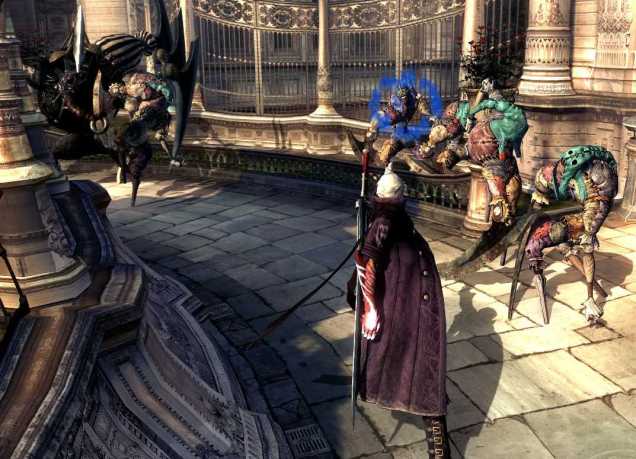


![bouncing-ball-7810-460x223[1]](https://critpoints.net/wp-content/uploads/2015/05/bouncing-ball-7810-460x2231.jpg)
![velocity-graph[1]](https://critpoints.net/wp-content/uploads/2015/05/velocity-graph1.png)
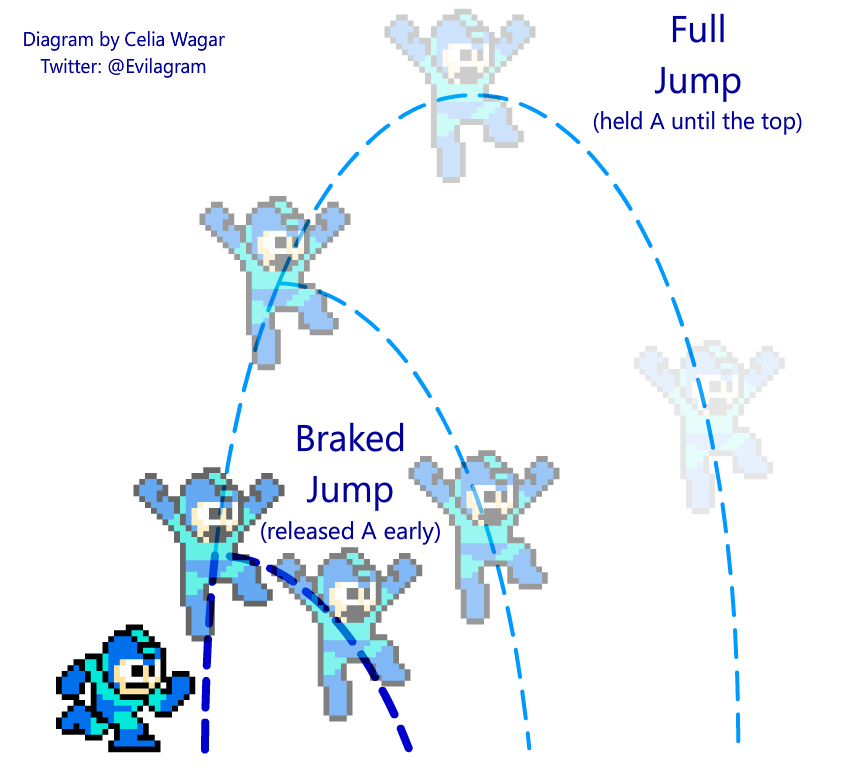
![megaman-jump[1]](https://critpoints.net/wp-content/uploads/2015/05/megaman-jump1.gif)

![mario-jump[1]](https://critpoints.net/wp-content/uploads/2015/05/mario-jump1.gif)

![sonic-jump[1]](https://critpoints.net/wp-content/uploads/2015/05/sonic-jump1.gif)
![Melee-jump[1]](https://critpoints.net/wp-content/uploads/2015/05/melee-jump1.gif)

![kof-jump[1]](https://critpoints.net/wp-content/uploads/2015/05/kof-jump1.gif)
 Celia Wagar's CritPoints