Why Don’t We Know How to Design Games?

There are 4 categories of knowledge: Known Knowns, Unknown Knowns, Known Unknowns, and Unknown Unknowns.

When you are a subject matter expert on something, like a competitive game, or coding, or a lawyer, doctor, or scientist, your knowledge is a known known. You know how much there is to know about the subject, and you are aware of exactly what parts of that subject you have in memory. This is a Known Known.

When you are an experienced professional, like a painter or an athlete, you have an intuitive understanding of your craft that you can’t necessarily explain to other people. You know these things from practicing them, but you aren’t even aware of what has become habit for you. This is an Unknown Known.

When you are a student, being taught by someone who has more knowledge than you, your teacher is able to show you all the things you have yet to learn. You don’t have this knowledge yet, but you know it is out there. This is a Known Unknown.

When you are blissfully ignorant and have no idea that a subject even exists you don’t consider what might even be out there. You don’t know about it, and you aren’t even aware what you’re missing. This is an Unknown Unknown.

Continue reading

10 Years of Critpoints

10 years ago (and 2 months, but who’s gonna nitpick that?) I started this blog, Critpoints. Before that, I had been writing for Gather Your Party, a modest blog that aimed to challenge the establishment of professional games journalism with a staff of volunteers, no advertising, some of the early crop of gaming video essayists, and the tagline, “Honest Gaming Journalism”. For a lot of fairly predictable reasons, we burned out and eventually the site shuttered.

While I wrote there, I authored a column called, “More Than Mashing”, which showcased and explained different advanced video game techniques and play. This translated into a few YouTube Videos, most of which have been lost to time. I later ended up reviving this concept as a Facebook page, which did great until I got bored of it, and ran out of clips. Currently, that idea survives as a channel in my Discord Server, and as the banner in this site’s layout.

Since GYP, I’ve been involved in a few different projects, including Design Oriented, a group of game designers who were interested in exploring a more mechanical angle to video game design. I ended up leaving due to differences in point of view, but one thing I held onto was the name, “Crit Points”, which I had suggested as a potential name for the DO project. I tried combining the different ideas of “critique,” “hit points,” and “critical hit” into one short name. The tagline under the website name is intended to reflect the triple entendre. (Similarities to ActionPts, someone I used to work with, and ContraPoints are coincidental (I didn’t hear about ContraPoints until 2018) ).

Critpoints became my new brand, and I started this blog in March 2015!

Continue reading

Scrubs & Johns: A Defense Against Bad Sportsmanship

Competition gets personal. Competition gets people riled up and sometimes people get angry. Being a gracious loser and a humble winner is tough. Being a bad sportsman is a common and easy pattern of behavior to fall into, and the Fighting Game and Smash communities have created different types of defenses against salty players who can’t hold their Ls.

No Johns

In the Smash Bros community, legend says there was once a guy named John who had an excuse for everything. “I didn’t sleep well last night!” “The CRT was tilted away from me!” “The sun was in my eyes!” “My dog ate my inputs!” Naturally this wasn’t very polite to his opponents.

This eponymous John was so infamous that eventually, when people would make excuses for why they lost, people started to say, “No Johns!” It became such a big meme that over a decade later, Reggie Fils-Aime would quote it in a promotion for Smash 4.

No Johns helped to promote an environment where, rather than complaining, people would focus on the game and improve. It wasn’t perfect, but it was a funny and certainly helpful.

Continue reading

The Secret History of Zelda

A lot of people who know me know that I don’t especially like 3d Zelda games before Breath of the Wild, but explaining why, and who is responsible for those design decisions is a long long story.

The Arcade Roots of Zelda

Zelda 1 had intense arcade-y action with a diverse array of enemies.

The Legend of Zelda (hereafter, Zelda 1) was an Open World Action game. In retrospect, it’s been called an action-adventure game, but understanding it as an open world action game is probably more fitting to the context in which it originally arrived. It was designed by Shigeru Miyamoto, who was inspired by childhood adventures, where he would travel on foot across the countryside and try to map out the places he’d been to. He also was attempting to distinguish it from Super Mario Bros by making it nonlinear, top-down, and a number of other ideas.

Continue reading

Building Skill Tests @ Game Design Skills

I’ve been writing with GameDesignSkills.com for a while now. I’m a moderator on their discord, Funsmith Club, and I’ve been working with Alexander Brazie on a game design course for the past 4 years, and we’re currently teaching test lessons with a live audience and doing workshops with them!

I’ve also been writing articles for Game Design Skills. You might have noticed that some of the Depth articles on my site have gone missing. I’ve combined multiple of them into one article which is now hosted here on Game Design Skills. I’ve also published an article on game design pillars with them.

Today, I published an article on level design, or more broadly, skill tests and dynamic skill challenges, with Game Design Skills, which you can find here: https://gamedesignskills.com/game-design/player-skill-test/

I am still going to be writing and publishing content to this blog, but I’m also going to be linking articles I get posted over there when they go up.

If anyone’s curious, I’ve still been developing Charmed Chains. I have a card database now, and I’ve created a process to automatically data merge the cards into a template for easy printing. I’ve changed the direction of the game fairly dramatically from where it was during the last playtest, switching to a focus on pump spells (“combat tricks”) and I’ve incorporated colors and color identity into the game. I hope to run a playtest at Evo when I go there next month!

Roger Ebert was Right About Video Games and We Have Failed Him

Disclaimer: I know I’m dredging up a long dismissed argument from 10 years ago, and discussing it in all the same tone as people did back then, despite everyone having moved on. My core thesis is that the settlement to the argument was based on a miscommunication which solidified into apathy, without a real understanding of the form of the argument, and I think the topic deserves more consideration, because I believe games are art, but I also believe the people arguing that games were art ten years ago were right for the wrong reasons.

Over 10 years ago in the late 2000s, it was fiercely debated over whether or not games were art. Famous film critic Roger Ebert threw his hat into the ring by declaring that games are not art, and never will be art. Before he died in 2013, he half-heartedly recanted and admitted that some games were probably art, but more than anything, it feels like he kind of rolled over in response to a massive amount of backlash, rather than actually having a point made about what art is, and how games can fit that conceptual bucket. This seems to be the case, because a year before he died, he sent out this tweet:

The game that critic was talking about was DARK SOULS by the way. And you can read the article, it’s an incredibly uncharitable take on the game, but it’s also looking from the wrong perspective. Ebert, and everyone who argued against Ebert, were all looking from the wrong perspective. They weren’t arguing over whether or not games (interactive systems of play) were art, they were arguing over whether the software products we call games happened to have art packaged alongside the interactive systems of play. They were arguing over whether these interactive systems were art-adjacent, not whether they themselves were art. In other words, “Yeah, the game isn’t art, but look at all this art we included alongside it!”

Continue reading

It’s Not the Yellow Paint, It’s What the Paint Represents

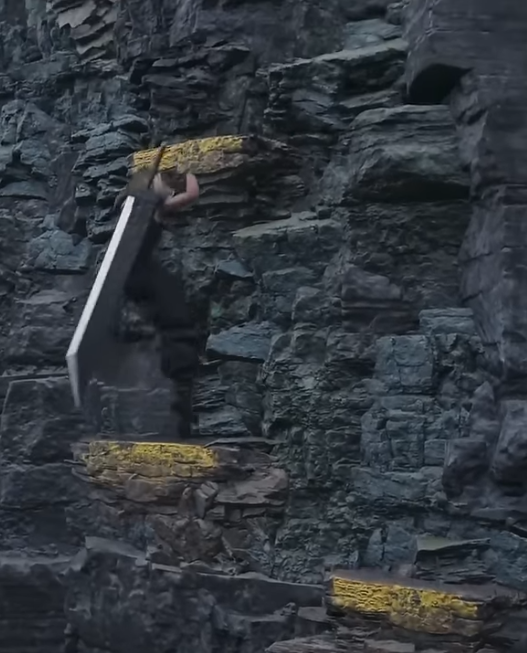
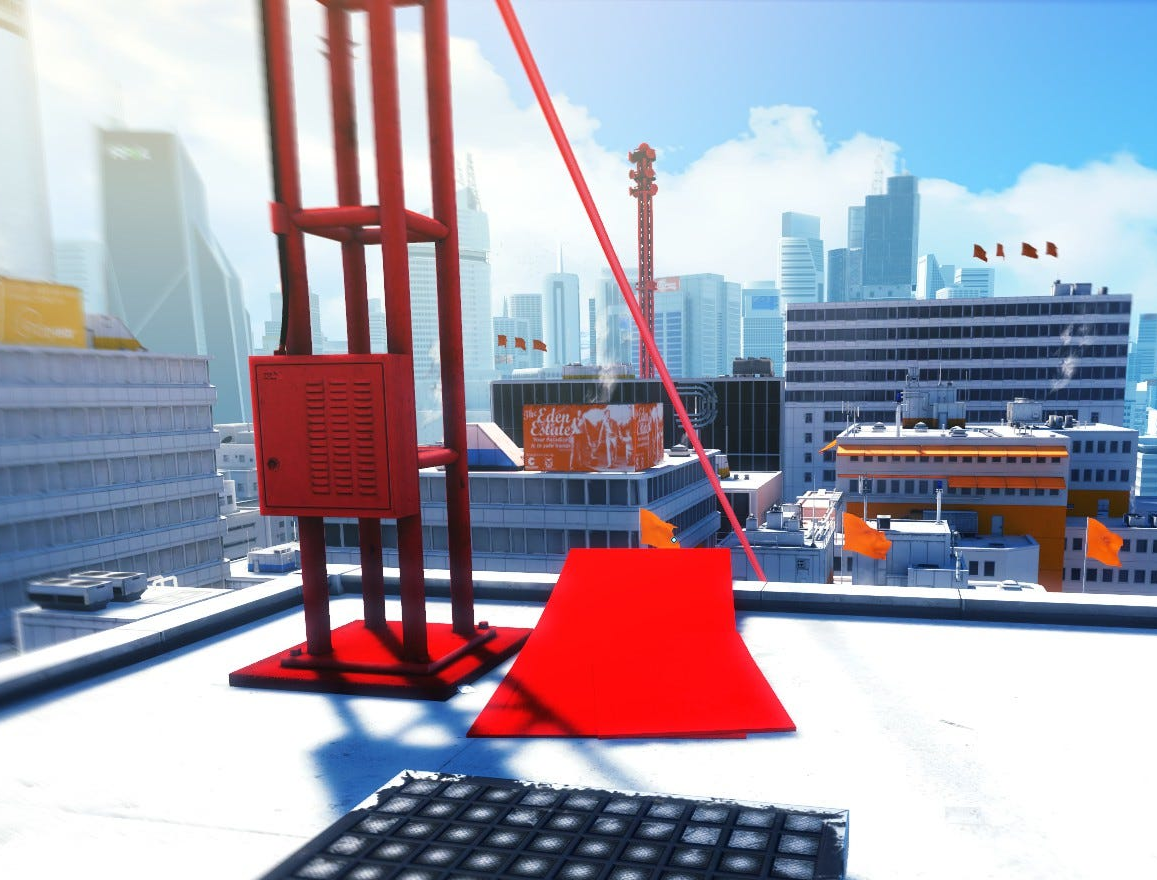
Recently footage of Final Fantasy VII: Rebirth was released, and it contained a shot of The Yellow Paint that we keep seeing to denote objects in the environment that can be climbed or otherwise interacted with. Kayin wrote an article on this, and it inspired me to write my own take.

What’s wrong with Yellow Paint?

So, why do people kneejerk hate the yellow paint? People hate the yellow paint because it “breaks their immersion”, since there’s no diegetic reason why every single ladder, cliff face, or vaultable cover would be splattered in the same yellow or white paint and because it makes them feel like they’re being treated like a child, needing to have the interactable part of the environment highlighted so they can progress.

Continue reading

Celia’s Tips for Clear Writing

A lot of what I’ve ended up critiquing video essayists and other games writers about is the clarity of their writing. I feel like many people are trying to create “Good Writing” rather than communicate effectively. Many video essays are written more like political speeches than they are trying to be direct and informative. It feels like they are informed by what makes good fictional writing more than good technical writing, and try to carry a vibe to the detriment of their message.

Here are the principles I follow to make my writing direct and effective:

Continue reading

Tiers are for Queers

And the queers always pick a top tier.

Tier lists have been controversial since the dawn of fighting games, and have slowly seeped into every other competitive game featuring pre-game or mid-game loadout choices.

From a casual perspective, it can be easy to be skeptical of tier lists, especially in modern times. Casual players typically don’t play the game consistently enough to be able to execute the counters that can shut a low tier character down.

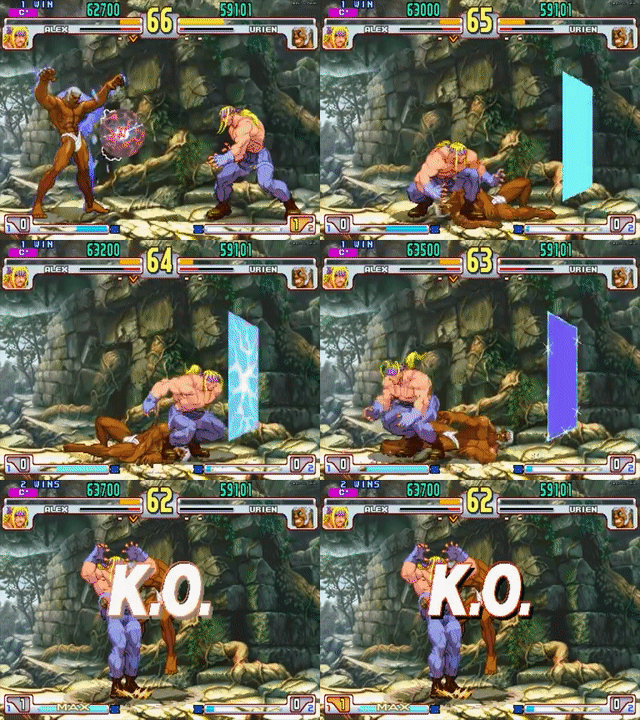
Alex in 3rd Strike might be scary to someone who can barely block crossups, but a higher level player can simply parry option-select Alex’s crossup stomp, tapping exactly as it connects, and either getting a parry if it’s same-side, or a block if it’s crossup. Urien might seem mediocre, since he doesn’t have incredible frame data, his specials are slow or unsafe, and have crappy hitboxes on top of being mostly charge moves, but when his moves are mastered, he has ridiculous combo damage and setups into unblockables.

A higher level player can play Chun Li, Ken, or Dudley, and simply tank Alex’s slash elbow, or block the EX slash elbow, and punish it with a super. Chun Li can get roundhouse kicked in the face by Q, and then punish him with super art 2 for more damage than the roundhouse.

These types of weaknesses aren’t as obvious at low level, so it can be hard for lower level players to understand the true shape of the game.

The fact that characters are different from one another means that some will be better against others. They’ll counter each other. If a character counters a lot of other characters, especially if it’s by a wide margin, then that’s a top tier.

Continue reading

Kill Your Sacred Cows

A long long time ago, I used to like Zelda, Okami, and Mad World, among others. I thought they were good games, and I never really questioned it. I remember before I played Ocarina of Time how much everyone said it was the best game of all time. There were memes back then of the OOT box, with a warning label, “Warning: Playing this game will make every game you play following this a slight disappointment.” I played OoT and somewhere at the back of my head thought, “huh, it’s not the greatest game I’ve ever played”, but I completed it, and all the sidequests, and never looked back.

I never really questioned liking the Zelda games until Tevis Thompson’s essay, “Saving Zelda” released in 2012. Dark Souls and Zelda: Skyward Sword had released around the same time the previous year, and I came home from college and played them both over winter break, jumping back and forth between them. I was completely on the hype train for Skyward Sword. I’d played a demo of it at New York Comic Con. I pirated that demo shortly before release, and I was hyped to see motion controls finally get their moment in the sun after being disappointed with how Twilight Princess used waggling as a substitute for the sword button. Despite that, with the actual game in my hands, I found myself playing a lot more of Dark Souls and I didn’t really know why.

Then “Saving Zelda” dropped a couple months later, and I read it, thinking, “This is ridiculous, Zelda’s a great series. Everyone loves Zelda. Skyward Sword is amazing”, but it planted the seed of doubt.

Continue reading