How Magic’s Mana System Divides its Design Space

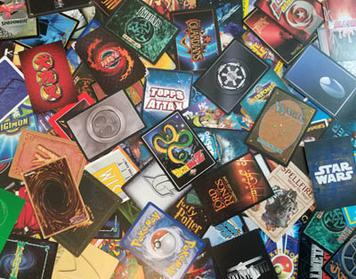
Magic the Gathering invented trading card games, and with it, resource systems in trading card games. Countless games following MTG have mimicked MTG’s 5-color mana system, because of course they did, why wouldn’t they?

In Magic The Gathering, spells and creatures cost “Mana”, a resource that regenerates every turn, and builds up over time as you play “land” cards from your hand. Mana comes in 5 colors, Green, Red Blue, White, and Black. Each of these colors has a mechanical identity associated with it, called a “Color Identity”. Mana is the primary thing that divides the design space in Magic The Gathering, to create different types of decks.

Of course, there are other things, like card types, and creature types, which have effects that reference one another to create synergies. And there are more broadly playstyles, like Aggro (try to kill the opponent before they can get their good monsters out or reach their win condition), Control (destroy your opponent’s threats and eke out a win) Mid-range (shut down aggro and outclass weak aggro threats, rush the control players), and Combo (dig through your deck to assemble exodia in your hand, then win the game instantly or near-instantly).

Mono-color decks focus entirely on a single type of mana, and usually only play a single “basic” land color. This gives them incredible consistency, because their mana supply goes up every time they play a land, but limits what they have access to in the broader card pool. A mono-color deck may lack “answers” to certain types of “threats” generated by other decks, such as red and black having a tough time getting rid of enchantment cards.

Continue reading

The Hypothetical Worst Fighting Game

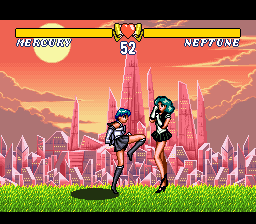
I have a theory about fighting games. I think that even the worst fighting games are pretty good. We see this in the Kusoge Phenomenon, where people play “broken” “shit-games”. These games have massive combos, wacky mixups, poor regard for balance, strange damage scaling or infinite prevention, and strange attack design with cancel points and hitboxes that don’t really make sense. However people still enjoy playing them, because they’re still deep games. They’re still games with combo systems you can explore, with mixups you can try out, and with moves that have a variety of different effects. This is a mismatch between what we traditionally consider to be “good” about games, and what actually creates depth.

Street Fighter 2 created the modern fighting game, and all fighting games take from it. SF2 was such a solid template for a game that if you just implement all the features of SF2 you will have a decent fighting game, entirely by default. I’m going to list these features as:

Continue reading

What’s the Deal with Auto Combos?

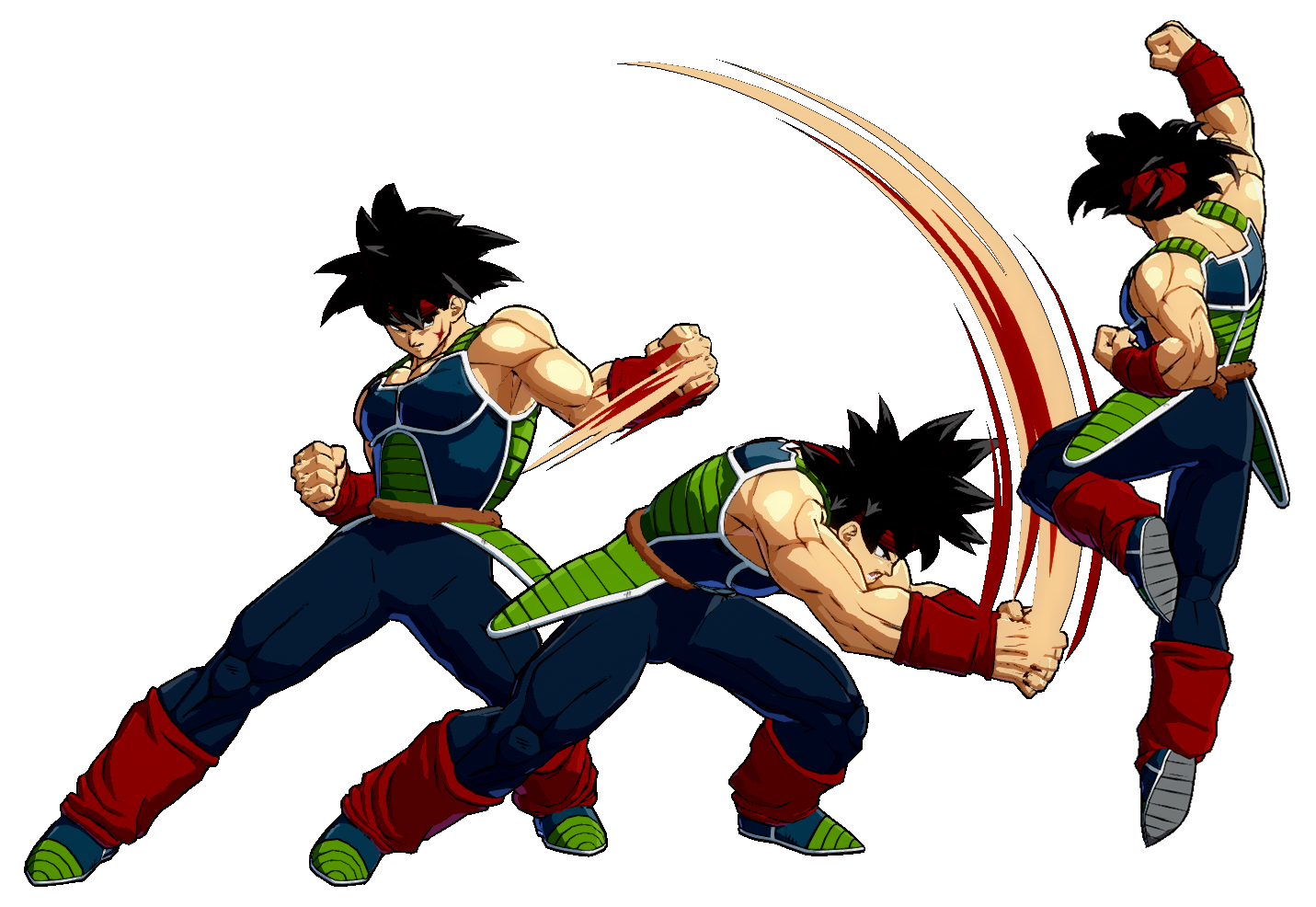
Many modern fighting games have been integrating auto combos for the past 10 years or so. BlazBlue Cross tag battle and dragon ball fighterZ have auto combos on 2 different buttons even.

An auto combo is a string combo attached to a single button. Pressing that button will produce a sequence of attacks that combo, some of which may be unique to the auto combo sequence. Sometimes finishing an auto combo will produce a super attack if you have meter.

Auto combos have historically been controversial because they’re so much easier to perform than other combos, giving players who don’t know how to combo access to easy damage.

Continue reading

Tabletop Game Designers Know What’s Up

This blog has attempted for years to articulate what game design is for video games. It was born out of a frustration in video games discourse that the discourse was so vague and distracted by the narrative, the setting, the immersive illusion created by video games. For the past decade I’ve aimed to discuss the raw mechanics of games and what makes gameplay good, because I’ve gone across the whole range of people talking about video games and no one else has been doing it.

There have always been hints of this raw mechanical talk in competitive video games. I’ve always recommended that people trying to learn game design study competitive games, because the way those communities talk about their games directly addresses the mechanics and doesn’t get lost in the fiction.

Continue reading

SF6 is the Intro Game the Genre Needs

Street Fighter 6 is the “Beginner’s First Fighting Game” I’ve been looking for.

I’ve been harping on for years that fighting games shouldn’t be getting easier, they should do a better job teaching you how to play them. We’ve seen some improvements in tutorials over time, such as Skullgirls, Xrd Sign & Revelator, Under Night In-Birth, and Them’s Fightin’ Herds, but all our most of the above have been brief system tutorials for the most part with very little on fighting game fundamentals.

Continue reading

Frame Data Patterns that ALL Game Designers Should Know

Terms:
Startup, Active, Recovery, Hitstun
Frame Advantage, Frame Disadvantage, Combo, Unsafe
Frame Trap
Pushback

Frame: Also called “tick”. The smallest unit of discrete time in a video game.

Startup: The period of time in an attack animation up to the first hitbox (collider that hits other objects) appearing.
Active: The period of time in an attack animation across which a hitbox is present and capable of hitting other objects.
Recovery: The period of time in an attack animation after the hitbox has disappeared, before the character returns to a state where new actions can be input, or they return to an idle state.
Hitstun: An animation that plays when a character is damaged by a hitbox, during which the character is incapable of acting until the animation has completed.
Blockstun: Like hitstun, but for blocking. The stunned animation played by a blocking character when they are hit by an attack. Usually shorter than hitstun in duration.

Advantage/Disadvantage: The difference in time between when an attacker recovers from their move, and a defender recovers from hitstun or blockstun. Establishes who gets to act first, like a head-start in a race. When a player is at advantage, it is their “turn”.
Frame Advantage: When the attacker gets to act before the defender does, allowing them to perform a move with a head-start over the defender. Also called, “plus”.
Frame Disadvantage: When the defender gets to act before the attacker does. The attacker has handed over their “turn”. Also called “minus”.
Combo: When a move has so much frame advantage on hit, that another move can hit the defender before hitstun ends. A sequence of moves that each hit the opponent while they are still stuck in hitstun.
Block String: A sequence of moves that each leave the attacker at frame advantage (plus) on block. If there is no gap, it is a “true” block string.
Unsafe: When a move has so much frame disadvantage that the defender can hit the attacker before their move recovers, punishing them.

Frame Trap: When a move leaves an attacker at frame advantage, allowing them to launch another attack that will catch any action the defender makes, besides blocking. If the defender tries to attack when the attacker is at advantage, they will get frame trapped by the attacker’s next move.
Pushback: Each attack pushes the defender backwards. Attacks tend to obey a rule where longer ranged attacks have less frame advantage, and longer startup, so frame traps get looser as the defender is pushed further back.

This Dustloop page is a helpful companion to this article.

Every attack has 3 phases, startup, active, and recovery. Startup is time before the attack has a hitbox out. Active is the time that the hitbox is out. Recovery is the time after the hitbox is out before you return to idle.

Attacks inflict a stunned animation on those that they hit, either hitstun or blockstun. This stun animation will interrupt whatever animation is currently playing, even if that animation is stun. In most games, the hitstun and blockstun animations are different durations, with hitstun being longer than blockstun.

If the hitstun animation is longer than the recovery frames of the move, then the attacker will be able to act first, before the enemy who was stunned. Frame Advantage means it’s your turn, and the amount is how much of a head start you get.

Continue reading

Blocking is Cool Actually

It is easy to focus on a myopic view of skill in video games as pushing a button to hit a tight timing window. It’s a common skill test. It’s a very obvious demonstrable skill. Most laypeople can easily recognize that it takes skill. However, there are a lot of other skills that are common in video games, and the purpose of these skill tests is not just to test skills in a vacuum, which is easy, you could go hop on human benchmark and do that all day, but to create a larger system of choices and interactions that test a variety of skills at once, and creates variety in the way each skill is tested.

Continue reading

Sekiro is not a Souls-like

I have previously written on what I feel makes a game souls-like or not. I think Sekiro has a lot of the same feeling that Souls games do, being made by the same developer and having a world that reacts similarly to your actions, but I don’t think it’s a Souls-like game because the combat doesn’t emphasize the same skills. I think Sekiro is closer to Batman Arkham Asylum than the Souls games.

Demon’s Souls was a critical innovation in combat systems compared to other 3rd person action games because of a few key decisions: Slow player attack speed, uncancellable attacks, shared stamina across running/dodging/blocking/attacking, a realtime healing animation. Sekiro has 1 of these, realtime healing, which is the least essential. Instead, Sekiro has fast attacks, it lets you cancel them for a significant portion of the startup of the move, and it does not have a stamina system, only a guardbreak meter.

Continue reading

The Traveling Soulsman

So, I’ve been playing Elden Ring lately, and taking some notes. In the process of drafting up my thoughts on it, I ended up with a long tangent about non-linear interconnected maps in Metroidvania style games, and how the souls series tackled this precisely once with Dark Souls, and never again, because they made every bonfire warpable. I decided this tangent was long enough to deserve its own article.

The open world of Elden Ring creates a level of non-linearity and interconnectedness that hasn’t been seen in the series since Dark Souls 1. Ordinarily, fast travel to every bonfire would ruin this, but I think it works fairly well in Elden Ring’s case. Areas aren’t connected by corridors like the Soulsborne games, so you end up doing a lot of exploration anyway, instead of just teleporting to the level you want to go through. Given the distance between locations, going without fast travel wouldn’t really have been viable, because you might end up needing to travel a really REALLY far distance.

The benefit of nonlinear games (like Demon’s Souls) is that you can complete content in differing orders, making it so that no two playthroughs repeat content in the same order, adding a degree of depth. Nonlinear interconnected games (like Dark Souls) expand on this by having you traverse mixed portions of content forwards and backwards, even after you’ve beaten it, meaning you don’t just experience content out of order, but in a varied stitched together order many times over, while also having to engage in pathfinding challenges. In a nonlinear game, you might simply select the content you want to complete as need arises (eg. figure out what level has the thing you’re after, warp to it, progress through the level until you get it).

Continue reading

Emergent Gameplay in Fighting Games

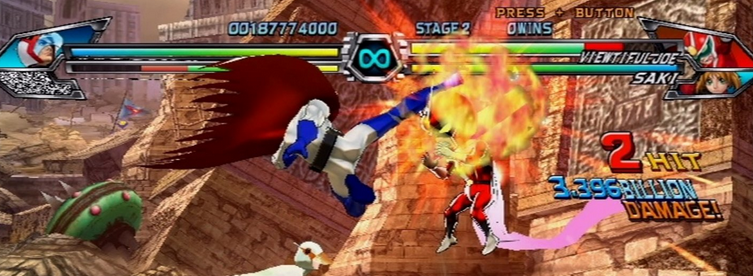
A bunch of different videos have popped up lately in fighting game circles, about “Emergent Gameplay”. I’ve watched a number of them and they’re grasping at concepts they can’t totally describe. They use a lot of vague terminology and almost say what they want to, but not quite. The gist is, old games had Emergent Gameplay, new games don’t, but why?

Continue reading