Were you ever like the top pleb depicited in this image complaining about games you don’t understand?
I used to think a very long time ago that fighting games didn’t involve a significant amount of skill because mid to low level players could be beaten with button mashing. I thought that Smash bros was more legitimate because I felt more in control of all the things I was doing in that game and it felt more natural to operate for me. I felt like in smash bros that I was actually intelligently making choices and couldn’t tell why there were so many different normal attacks in street fighter and what they were even good for or how they were meaningfully differentiated from one another. That and the control scheme was awkward to me, having no jump button and holding back to block, and the way that you couldn’t move during most of your attacks, no IASA frames either. That was some weird shit to my perception.
Eventually I got a PS3 and at a loss for games to pick out for it, got SF4. One day a friend came over and asked me to play in it, so we tried out some characters, and had no real idea what we were doing. He picked like dhalsim one time, and I couldn’t beat the stretchy limbs. He also picked bison and I couldn’t beat the sweep attack. I was like, man, why do you keep picking characters that have these long range attacks? I just didn’t get the game.
So I sat down and tried to figure it out. I knew there were huge tournaments for the game, I knew Daigo was blowing people up as Yun at the time, and I had seen evo moment #37 in my first year of high school, understanding instantly how incredible it was. I knew there had to be a higher level game there, I just couldn’t see it yet. I went into online play and got mercilessly destroyed by all manner of people and looked up beginner tutorials and strategies and other things to try to figure out how the hell the game worked. I tried the combo trial mode and got completely confused about how combos worked at all, or how people even figured out what combo’d into what. It seemed really arbitrary to me what would even combo.
At the time I was connected to this site that is now called Learn to Counter, and I played a bunch of games on supercade with them, which helped me get an idea how to play at all and let me in on a ton of classic fighting games.
This background in fighting games allowed me to see games in general in a new way. It’s like how learning to draw will teach you how to actually see the world around you. I’ve said for a long time, if you want to really deeply understand games on a fundamental level, you need to play fighting games. I know it sounds imperialistic from me, who is practically still a beginner at fighting games, yet people talk of me like I’m some aficionado. Like I’m trying to force my favorite or preferred genre down other people’s throats, but it’s a simple truth. It’s the way of the world.
3D action games with freely rotating cameras need a way to focus on objects of interest, otherwise characters moving around enemies can cause the camera to lose sight of their target. It’s difficult to operate the attack buttons and camera at the same time. It’s also difficult to aim characters facing direction accurately when the camera is at their back, so Zelda: Ocarina of Time came up with the compromise of Z-Targeting, which is known in many games as Lock-on.
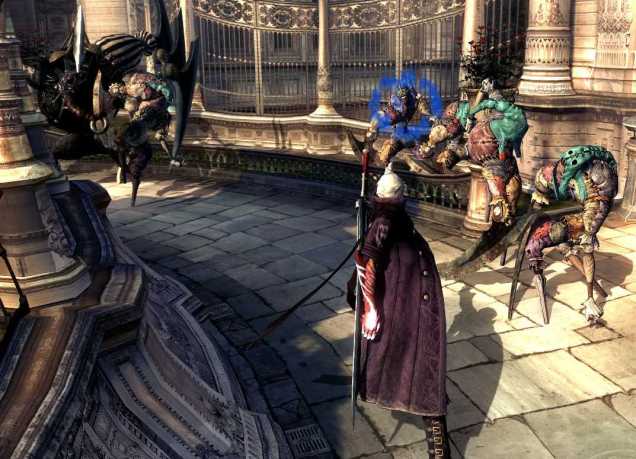
There are three types of Lock-On; Hard-Lock, Soft-Lock, and Camera Lock. Hard-Lock is toggled by holding or pressing a button to typically orients the character and camera to face a target. Hard-Lock can be found in the Devil May Cry series, Bayonetta, Dark Souls, Legend of Zelda, and Metroid Prime. It’s notable that in DMC and some parts of Bayonetta, Hard-Lock functions independent of the camera, so you’re not forced to look at the enemies you’re locked onto, which helps prevent multiple enemies from getting lost off camera. Soft-Lock functions automatically by orienting the character to face enemies when they attack at a close range. Soft-Lock allows players to move in any direction unrestricted, but always attacks accurately. Soft-Lock is used with the guns in DMC when you’re not locked on. It can also be found in Metroid: Other M, Metal Gear Rising, and DmC. Camera lock is when the camera is fixed to look in one direction, but the character’s actions are unaffected by the camera. This can be found in Metal Gear Rising, which allows you to lock the camera, but Raiden’s actions are unaffected by where the camera is locked. Raiden still soft-locks onto targets as normal.
So what type of lock-on is best? In my opinion Hard-Lock provides the most benefits, especially when the button for lock-on is held instead of toggled. It’s helpful to have the character face their target, enabling them to strafe. It visibly identifies which enemy is being targeted, as opposed to soft lock which has no visible indicator of who you’ll attack. The player can lock-on and lock off and manually choose new targets as desired. It also allows the obvious boon of being able to use directional inputs with other buttons, by orienting the character relative to the target. Games without a lock-on in a 3D perspective have no absolute directions because the camera can change orientation. The player can only get relative directions such as in the case of Bayonetta where tapping the directions “forward, forward”, and then the attack button or “back, forward,” and attack uses certain moves like stinger. Bayonetta also had a Hard-Lock in addition to this input method. It can be hard to tap the directions with the correct timing, and even harder to tap those directions the right way to successfully hit the exact enemy you want. With a Hard-Lock, the player can just hold forward and press attack at any time. Dark Souls has a Hard-Lock, but the kick and jump attack commands are designed to work without it. They can be difficult to manually operate as a result, since they’re input similarly to a smash attack in Super Smash Bros rather than the easier DMC method of holding a direction and pressing attack.
The trouble is that once Hard-Lock is engaged, combat becomes about the line between the player and the opponent. It becomes 1 dimensional, literally. The only thing that matters is how far your attacks reach and how far both of you are from one another. Game elements have to be introduced so that there is a value to rotating the camera in 3D space for the player otherwise it stop being 3d in function. If the Hard Lock is perfect the player will always face the player’s opponent and will only need to move to avoid getting cornered. To prevent this, many games lock the aim straight forward or slow the character’s rotational speed or make movement slower. This encourages the player to lock on manually only for precision or special directional inputs, and lock off when they don’t need it.
For this reason there is a draw to combat without lock-on. It’s enjoyable to play Dark Souls without lock-on, and it’s technically more efficient for a lot of tasks as it allows the player to run and dodge in any direction unlike during lock-on. Bloodborne was effective by having the quickstep active in lock-on mode and roll active when not to differentiate the two modes. Non-lock-on combat tends to work better in games with isometric or top-down camera angles like Wonderful 101 since the player can clearly see which way the character is pointed but this will affect level layout. To have complex 3D environments and architecture that players walk up, down, and through some type of camera centering button and/or camera lock function quickly becomes necessary for simple navigation.
This video and others by the same guy can show how useful it is to lock off in Dark Souls.
A Soft-lock camera like in MGR remedies a clumsy camera but when multiple enemies are involved, locking the camera onto one of them can be a death sentence. The MGR camera is so close that enemies frequently get up behind the player and it’s practically biased to force you into corners because it pushes off walls so hard it faces straight into them. I feel like no lock-on combat is more successful in Dark Souls due to better camera design and the attack buttons being on the shoulder buttons, so you don’t need to pull your finger off the right stick to attack.
I want to see future games have characters move more to evade attacks rather than using specific dodge moves to invincibly pass through them, which will mean they need to not use cameras that are incredibly close to the character or low to the ground, so players can see where their character and enemies are in relation to each other. I think Dark Souls is very fun when fighting multiple enemies without using lock-on or when fighting bosses without the use of lock-on, but keeping lock-on as an option makes some actions and situations easier, so it’s more of an optional tool to be utilized rather than something necessary to keep the combat functioning at all (though it probably would be unreasonable to not include it).
Freely moving around enemies has troubles though because when you move away from them, you are no longer facing them. Your attacks will go the wrong way completely. Soft-Lock systems attempt to allow players to move around freely, then attack the enemy accurately regardless of rotation. Unfortunately soft lock is unreliable for targeting, because you can’t tell what you’re going to attack before you hit the button. At worst, Soft Lock ultimately reduces combat to just being about the distance from your opponent in much the same way as too good a Hard-Lock. The other trouble is that in a soft lock system, you can’t just hold a direction and press a button for a command move, because every direction is forward, none are back or sideways. In the future it might be interesting to build an automatic camera AI that is attracted to points of interest like enemies that you’re actively engaged in combat with. This can potentially be annoying to players though because they may not want this functionality, they may misunderstand what the camera prioritizes or actively dislike the camera’s choices of focus.
To build on the intelligent camera idea, my initial thought is that elements should be given a ranking, a priority in the camera’s AI. The player character obviously has absolute priority, so it is always in frame (or of course the camera flat out rotates around the character, so it’s not an issue). Next, a point projected ahead of the player character should receive more and more priority based on how long the character has been heading in that direction (much like how cameras autocorrect to the way you are going in existing games). Enemies should be granted priority based on proximity to you, whether they have caused harm to you, and whether you have recently caused harm to them. Further, elements of the environment can be given priority at the discretion of the designer. The idea is that in combat, the camera will orient to fit all combatants into the scene. When running away from enemies it will orient ahead of you as the priority of the enemies you were just fighting falls off and the priority of the direction ahead of you gets stronger. And when passing through without fighting, the camera priority will already be strong and enemy priority needs to build before they are a significant effect on the camera. Maybe the final effect can be visualized like a heatmap, where the camera points to the area with the most heat? Well, it’s more of a linear algebra thing really.
To break off my camera tangent: Moving around enemies, having them all clearly represented on camera, doing it from a close-to-the-character or behind-the-shoulder perspective most of the time, allowing the character to face towards the enemies without reducing their relationship to a one dimensional one or move without changing facing direction. This is tricky with our current controllers.
The thing is, if it could be pulled of, this would enable a game to have a lot more of moving across a 3D plane, and avoiding 3D enemy attacks, while simultaneously attacking them in 3D. There’s a very high level of depth that could potentially appear in a system that can pull this off. Having something be variable across space/time in a meaningful way is one of the easiest ways of giving a mechanic depth.
Think of a movie, movies can depict complex interactions in space like this very easily. The director can simply choose angles that capture everything relevant at any given moment in the frame. Because movies are not possibility spaces of potential events, choosing the right camera position for any one moment is easy. This is why handing camera control to the player is obviously the easiest solution to most camera problems, but players can’t operate cameras without sacrificing access to the face buttons, which sucks. So a good automatic camera is necessary. The problem is, our intuitive human judgment of the best place to put the camera is very hard to express algorithmically, such that in all possible situations the camera will be in a place that captures everything going on. Furthermore, in a movie shot, the actors can be placed to face any direction and simultaneously move while facing any direction, and rotate arbitrarily as they move. The direction that attacks are oriented is tremendously important to making 3D combat work.
To pick an example from a completely different genre, a game like Smash Bros gets away with having characters face away from one another because you have the C-stick that allows you to instantly attack in the opposite direction and you can jump or wavedash which temporarily fix your facing direction one way while moving. Imagine if there were twin stick action games in the vein of twin stick shooters, where you could use a second stick to control your facing direction. This would require automatic cameras, and if those simply locked directly to the enemy then the point would be lost anyway.
Implementing this into 3D space like DMC, Bayonetta, or Dark Souls is a control nightmare. With current controllers, I think you need to make sacrifices in some area or have an automated system handle the camera suitably (still having issues with the attack facing problem), you can’t have it all.
Fixed perspective games like Ys Origins or Oath in Felghana have good combat by means of avoiding all the camera and lock-on problems altogether, but at the cost of simpler combat systems and environments. This affords them the ability to mimic bullet hell games and have amazing weaving through enemy attacks at the cost of being mechanically simple.
Lock-on can be a tool and a hazard. If implemented too perfectly (such as in the 3D Zelda series), then none of the actual animations of attacks matter except their range and startup time. If not implemented at all, then players can quickly lose sight of enemies, especially when they need to press face buttons to attack, or aren’t used to using 3D cameras. It’s up to developers to implement camera and lock-on systems that help players stay on top of targets without trivializing what can potentially be an interesting part of combat. Hopefully future developments and refinement will allow for smoother camera systems and better gameplay in the future. Half the battle of developing a 3d game is framing it.
Which game should game designers look at when crafting the mechanics for a FPS game, fighting game, and hack n slash/beat em up game respectively?
They should each look at all of the other ones you listed. They should look at the games from the other two genres that aren’t in their own, specifically how elements in those genres make players make decisions and strategize and create counterplay. Try to figure out what sets of mechanics they can outright lift and adapt.
Like for FPS, maybe consider lifting how in the other two genres, attacks interrupt your opponent, preventing them from hitting you, allowing you to fight without taking damage instead of it being a war of attrition. For Fighting Games, maybe consider how beat em ups have different hitstun types frequently and how enemies sometimes still have options in hitstun. For Beat em ups, maybe consider ammo limitations and super meters a bit more, as resources that people are building up and spending for various purposes (though I guess they already do this a fair amount, but there’s still a lot of room to explore).
Then remix it up and try to give it its own twist according to the standard formulas I always reiterate. Consider each element that makes the thing what it is, consider how it can be different, based on motion, area of effect, velocity of the projectile, character, environment, target, etc. Consider how you can make something have multiple outcomes depending on when it’s input, how long it’s input, how perfectly it’s input, what other factors are in play when it’s triggered, position, velocity, meters, how much of the characters/hitboxes/projectiles overlap. Change these all up, find a mix that hasn’t been done before and work out how to put it in balance with everything else so it’s not the only thing the player does and so it’s different from all the other things the player does.
What are the key components when designing challenging enemies and bosses?
Give them options for every scenario, give them a way to punish the player no matter what they’re doing and force the player to never consistently repeat a pattern. Give the player multiple ways to respond to every option the enemy or boss has, make it so some options are more effective against some responses and less against others, so that no set of options overlap, they are distinct from one another. Create synergy and interactions between the behaviors of different enemies to produce a more wide set of resulting states. Enemy options should simultaneously attempt to limit the player’s options and open up a chance for the player to fight back and in turn respond dynamically to various responses to create more possible states. If there is a fastest or simplest way of doing anything, it should be the hardest way.
Make sure at all stages that the behavior of the enemy or boss is telegraphed in a way that the player has at least 15 frames to react to whatever is going on when they are in a situation they can fairly anticipate a certain response (like if they’re waiting for something to happen but don’t know what time it will happen) or 30 frames minimum if they don’t know what to expect. If there is something below these thresholds, signal it in another way outside these thresholds.
Use clear audio and visual cues, double up on them if you can, but don’t make them demand so much attention that they overshadow other important feedback. There are all sorts of hidden pieces of information that are hidden for absolutely no good reason.
Consider the areas, zones, fields, concepts that the enemy threatens the player in. Consider how these can be changed, consider how they can be blocked or evaded. Consider their synergy with the environment, and how the environment can give the player a chance to counter them. Consider where they are vulnerable, when they are vulnerable, to what they are vulnerable. What can shut down or interrupt their attacks.
For example, consider a game that rather than just hitting enemies at startup and recovery of their attacks, they had super armor on startup and recovery, and you had a shield that blocked attacks as you were attacking, so the thing you really want to do is trade hits in order to safely attack them, because they’ll take damage on startup and recovery, and attacking on recovery is still pretty safe, but if you hit on startup you’ll get bashed in the face. This means that rather than try to avoid attacks and hit back, you’re staring them face down trying to line up your own in addition to the usual avoid attacks and hit back business. I was inspired for this by the thunder hammer in Ys Origins.
Consider enemies constantly emanating positively charged bullets or something that sticks out in the environment, but can’t affect you most of the time, then when they melee attack, you can dodge that, becoming unaffected by their melee attack, but opening you up to damage by the bullets hovering around. So many ideas.
DXHR. I played the original prior to DXHR’s announcement, and predicted DXHR would be a complete failure prior to the leak. The leak changed my mind on it, and in time since I think DXHR is actually the better game despite its more narrow focus.
My primary issues with the original Deus Ex are that the gunplay isn’t good, enemies aren’t interesting, the stealth isn’t good, the hacking/lockpicking are one dimensional, there isn’t a significant platforming/area traversal element. Dialogue basically never constitutes a good gameplay challenge, and Deus Ex isn’t an exception there.
On the level of simply the game living up to what it. The game doesn’t really care if you go lethal or nonlethal in any of the missions (after the third one it stops tracking the difference completely). The overall story arc is completely linear, you always have to betray unatco, you always get captured by gunther, you always break out of unatco, go to hong kong, infiltrate versalife, etc, etc. There are tons of invincible NPCs in many of the levels, especially the early ones. You’re required to kill multiple NPCs to proceed (even if there are clever workarounds for all but one of them).
I went into Deus Ex thinking, “Wow, I can do anything.” After successive playthroughs and learning more about the game, I realized, “Wow, I can’t do anything.” My opinion on the game changed over time as my opinions about what made a good game or not became more refined. Deus Ex is complex, but it isn’t deep. There’s a lot going on, but none of it is interconnected, meaningful, or challenging. This is what lead to my change in opinion.
DXHR, it fell flat in a number of areas, lacking features of the original (melee weapons) and having smaller more constrained levels generally, but it had stronger stealth, better gunplay, an actually involved process for hacking, and did pretty alright with the level design in of including multiple paths/approaches, and goodies hidden around. Kinda sucks that the entire world wasn’t like detroit and that SO MUCH CONTENT was cut (upper heng sha, montreal, india).
Plus I’ve speedrun both of them, DXHR is an awesome challenge, Deus Ex is boring cheese. Deus Ex is one of the easiest speedruns I’ve done yet (primarily about memorization of the order you have to do things in and not forgetting steps), DXHR has hard tricks, is a super fast stealth run (one of the rare stealth games to actually have a speedrun about being stealthy instead of just running through every blockade), and it’s tricky to avoid enemies while trying to pass through them ASAP on low/no resources.
Deus Ex still has a crazy complex system, which made for good fun in Illiterate Child’s Glitchy Walk Through, but none of the game is designed to be particularly challenging or mentally involved, so a lot of that ad hoc complexity goes to waste.
Do you think there is any advantage to having hitboxes and animations/models not being 1:1 (or close to that)?
Yes. I’ve looked a lot into hitboxes/hurtboxes and experimented with them. More than anything I’d say it’s a matter of the KISS principle. When you make the hitboxes and hurtboxes 1:1 with the model, you end up with values that fluctuate wildly between frames, such as when characters flail their limbs as they are wont to do. This is especially likely to happen when you have a lot of concave and convex surfaces making complex geometries, weird shit is super-prone to happening and you don’t know what the fuck the result will be frequently. Why do you think clipping out of bounds is so common in so many games? It’s usually a result of the hitboxes or the environmental collisions getting distorted so something goes inside something else. When you keep things simpler, the odds of unintended or flat-out weird interactions that nobody can understand go down, especially for collisions where objects affect the position of other objects, like in environmental collisions.
The scale of the hitbox needs to be appropriate to the interaction too, relative to the size of each entity interacting. For example, in Wonderful 101, does each Wonderful one really need a 1:1 accurate model for collision? This also varies depending on the pace of the game, because the fidelity of our perception changes based on the speed of the game, smaller areas that barely make contact are hard to notice, so you can afford to be more forgiving and general in making hitboxes for faster games.
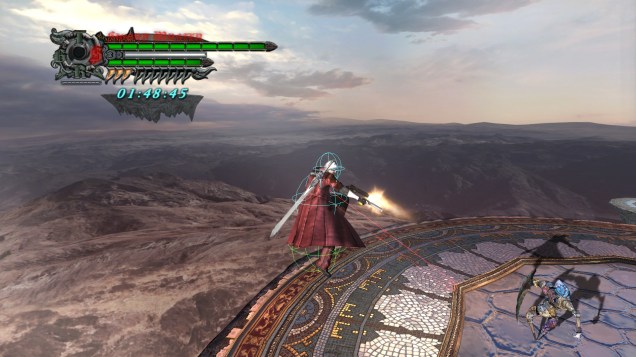
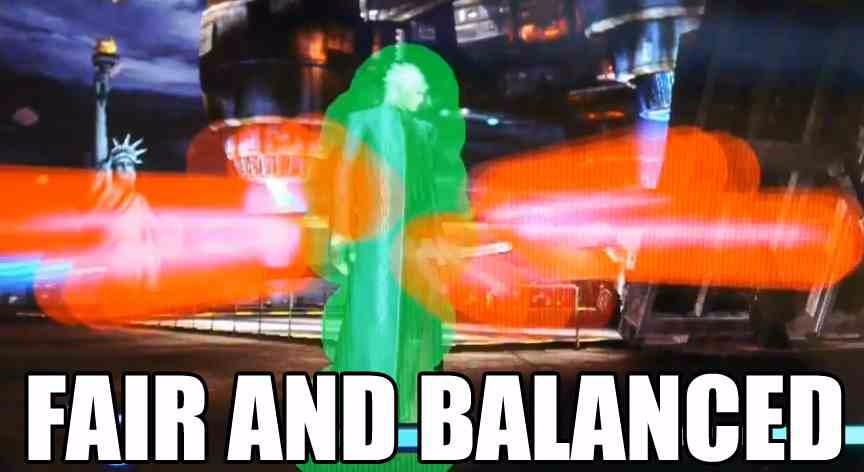
This is why Devil May Cry uses 3 spheres to represent Dante and Nero and no hitboxes on the limbs. Marvel 3 has similarly simplified hitboxes. I’ve seen hitboxes cleanly miss in smash that people swore should hit, and vice versa.
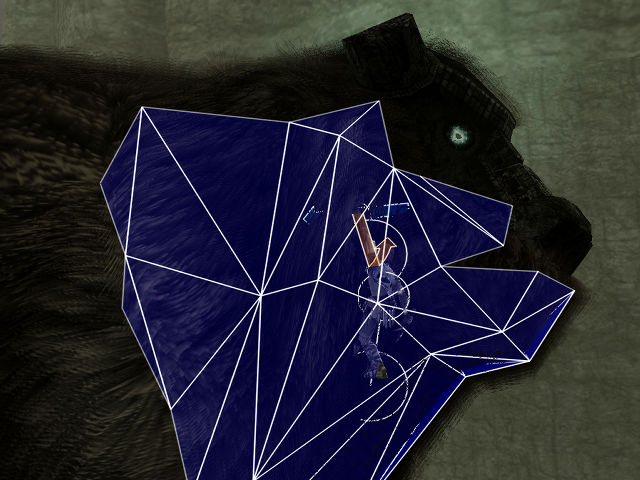
In the opposite extreme, Shadow of the Colossus has extremely detailed hitboxes for its Colossi and extremely simple ones for Wander. The Colossi need complex geometry in proportion to their scale. Wander doesn’t fight enemies around his size, the colossi have much larger implements to hit with, so it only needs to track his central body mass. The Colossi need to be climbed up accurately, the Wander is like a small implement probing a large surface, like the hook dentists use on your teeth. If Wander sticks a limb out and that ends up in your entire body getting crushed then you’ll be shouting about how bullshit that is. You need to be a bit forgiving to make up for difficulties in perception. Also players generally like it better when their hitbox is smaller than represented and an enemy’s is bigger, like in Shmups which took this principle to the extreme. Same for things that the player collects or interacts with, they like it better when their area to interact or collect things that help them is bigger.
In Smash bros there’s this term, Roy-Zoned, for when you’re so close to the opponent that your attacks miss them because they’re on the far side. It’s called that because Roy has a sweet spot close to him, so Roy players try to sweet spot so hard they frequently miss entirely. When someone punches, how much of their arm should actually be the hit area? Just the fist? The entire length of the arm? Some way into the body? Remember, Roy is a character with a sword, he doesn’t exactly have small hitboxes, yet I’ve had silly things like two marths Fsmashing at point blank range and we miss each other. Or try to grab each other and miss. And if you’ve ever seen Marth’s grab box you’d know how silly that is.
It gets sillier when you have the legs given individual hitboxes and someone does like a kick or something where the hitbox fits inbetween the legs, and it’s like, “Seriously? there’s no way that should miss.” I’ve seen this sort of thing happen a LOT in all sorts of games.
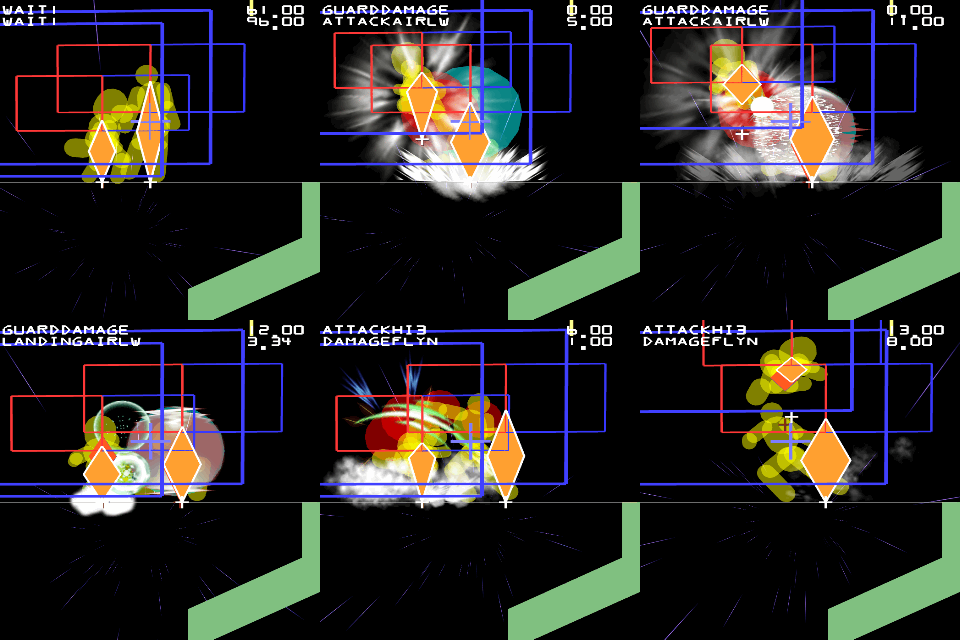
You have to think about the hits being the very edges of each hitbox’s range, and would a hit in those regions be acceptable or look weird relative to the animation? Especially true for grab animations, because when you grab the character gets dislocated, teleporting to the held position. The obvious example is Mewtwo’s grab in PM 3.02, because part of the box was inside him, people barely brushing his back would be grabbed and teleported in front of him where he held them. I took a picture of that and have an animated example.
The intention is clear, they wanted crouching characters to go under the hitbox in front so they could get around the grab, but people closer into mewtwo to not get roy-zoned, but it had this unfortunate consequence.
Because environmental collisions in particular are so finnicky, most games don’t use anything close to the character’s model for that. Smash uses a small diamond shape, Dark Souls uses a big pill shape. Mirror’s edge has a cylinder. If you use something more complicated and don’t have a complex animation engine based on inverse kinematics, you’re going to run into trouble there. Even with one you’re going to run into trouble, because GTA and other games like it do.
Would you classify the Souls games as metroidvania?
Only really Dark Souls. To me, metroidvania means that the areas are interlinked and you’re required to pathfind, find the shortest route between two points.
Dark Souls lets you from firelink shrine go through the undead burg, undead parish, new londo, valley of the drakes, blighttown, dark root basin, dark root forest, the great hollow, the lake of ash, the catacombs, and tomb of the giants.
Without fighting a single boss you can from firelink shrine access all of the following bosses: taurus demon, gargoyles, capra demon, moonlight butterfly, Sif, quelaag, stray demon, and pinwheel.
Tastefully, dark souls limits its warp points to a few of the most interconnected or important locations, and they’re only available in the latter half of the game when you’re required to quickly travel between the far ends of the game.
Demon’s Souls doesn’t really fit for me, because there are 5 paths that you can progress on linearly, but they are not interconnected, and there is no connection between later levels in an area and earlier ones. Also you can warp between all the major checkpoints, so there’s no point in pathfinding on an area to area level.
Dark Souls 2 has a similar issue because it’s littered with bonfires and you can warp between ALL OF THEM. Not to mention that much like demon’s souls, all the areas are just one way branches off a central path, they don’t reconnect, and there’s only one loop connecting different ends (the eagle and boat which both take you to the lost bastille) So you can pretty much warp to any point you want to.
Bloodborne follows from Dark Souls 2 and Demon’s souls in that you can warp to every single checkpoint. The world is actually really well interconnected all over the place, but the problem is that all the connections need to be unlocked after going through the area that is connected, so the world only really becomes nonlinear after you’ve already gone through it in a linear fashion. The numerous warp points make the nonlinearity further pointless.
Lesson: If you’re gonna have warps, use them sparingly, include looping level design, don’t make it one way to a dead end all the time with shortcuts.
Why is Dante such a lame fight in DMC4? His attacks are so fast and he’s easily cheesed by pistol > buster.
It’s not that he’s faster than you necessarily, it’s that protagonists of 3d beat em up games have fast attacks, while enemies usually have slow attacks. This makes fighting Dante unsatisfying in much the same way as fighting bots in fighting games is unsatisfying. Furthermore, the movesets of dante and nero aren’t given clear counters or other weaknesses like fighting game movesets are. In fighting games, most moves are less than 15 frames of startup, which make them difficult to react to, so players need to predict what their opponents will do in order to fairly combat them. In most action games like DMC, most enemies have attacks or sequences that start up like 30-60 frames in advance of when they actually hit you, so you have a fair time to dodge or stuff their attacks.
When you have a bot choosing options and all those options are as fast as all of your options, you can’t predict what they’re going to do and you can’t react when they do it. Fighting games have a leg up there in that everything is designed with a counter, it makes you vulnerable in some way. In action games, you only really have dodging and attacking. The hitboxes of dante and nero make them insusceptible to whiff punishing, because they can only be hit at their centers.
The solution is really to establish some clear tendencies for the AI and give players a number of ways to counter those behaviors, some of which are more effective and some of which are less effective, some of which are harder/easy, higher chance of success/lower chance of success, and to have them vary based on circumstance so that you can’t repeat the same thing over and over again without risk. Then you have to make all these factors obvious to the player so they can see into the machine a little and fairly predict what will happen based on their input.
The reason pistol > buster works is because they went overboard in making dante’s behaviors rigid and not really respond to circumstance. They should have had a number of different behaviors to respond to shooting from far away, like readying the pandora charge shot quickly (even though it would break canon), or using a stinger after a taunt so you had time to react. For the clashing pistols, he probably should have tensed up more over time and as you got closer, in like his posture or something via animation blending, something obvious the player can see, before breaking into a counter attack, so that in the case they’re both shooting at each other’s bullets the player needs to be careful about how quickly they move in to punish that action (and it opens up the possibility of baiting out the followup and punishing that). Just to give some basic examples of possible ways the fight could be varied up and cheese could be removed while keeping it fair.
Have you read or watched Berserk? Is so, what genre of game would fit best for it?
I’ve done both of course. It’s one of my favorite manga series. I think that it would fit best as a 3d beat em up game, somewhere between the souls games and say devil may cry. In terms of game structure you could very easily adapt a lot of manga chapters to fit.
Following from the souls games I think that combat should be about finding the right time between enemy attacks to land massive heavy weighty hits. I played through Demon’s Souls, Dark Souls and Dark Souls 2 for the first time each using the zweihander type weapon. First the dragon bone smasher, the zweihander, then the greatsword. I think that missed hits should probably be cancelable into roll dodges, and blocks should either be done two handed, letting some damage through, or no blocking at all, just dodge everything. The hard part will probably be capturing the agility of Guts in combination with massive heavy sword wielding, which is why I propose the roll cancel on whiffed attacks (inspired by monster hunter).
In line with Dark Souls, having faster lighter attacks as contextual actions after rolls would be a cool touch too. Following from DMC, having a bunch of command inputs, like forward + slash, back + slash would be helpful. If there are two attack inputs, one should be for horizontal slashes, the other for vertical slashes, the latter being more powerful, and probably slamming enemies to the ground (because I loved that about the zweihander). I think using a stamina system would make a lot of sense (it’s what prevents you from repeatedly slamming enemies to the ground over and over in an infinite) even though that’s clearly more of a souls influence. I think that if command inputs are used, that lock-on should be toggled based on the R1 button, meaning that the attack buttons would be among the face buttons instead of triggers. Some ranged attacks can hang out on the triggers still though.
The game could follow directly the story and battles as they are in the manga, or during the golden age arc and later during the black swordsman arc, open you up for a mission-type structure or open world structure respectively. I think that leveling up and so on should be left out of the game ideally, with new abilities and weapons presented at the appropriate point in the story arc. Maybe a light resource management aspect with throwing knives, arrows, and cannonballs. If there is an open structure then people tend to respond poorly to side quests or optional missions unless there’s a reward at the end of it I feel. Maybe a healing item could be introduced in the open world half of the game and side missions unlock dispensaries. Side missions could maybe also unlock warp points or shortcuts through the world. In the golden age campaign, you could have it so there are many paths to victory and different missions push the enemy back across the map or something, closing off some missions so it’s essentially branched progression forwards, pick your favorite percentage of missions to advance
Okay, let’s imagine an alternative universe where you are indifferent towards or enjoy Yandere stuff (you don’t hate it). Imagine if in that universe for some bizarre reason you were hired to handle the mechanics and gameplay design of yandere simulator. What mechanics would you implement? Why?
Come on, if you’ve been following me at all you should know that I have a militant indifference to the theme of a game. What matters is how it shapes into mechanics, and as a theme, yandere has some potential in my opinion.
My first thought is have a low profile mode and a high profile mode. Part of being yandere is hiding that you’re crazy. The main thing I’m thinking of is movement though. I’m really tired of the “You have to move at the absolute slowest crawling pace to avoid generating sound” tradeoff we usually get in stealth games. Give the girl a decent speed, then give her a high profile creepy run that is really fast, and lets say if you use 2/3rds or half of your stamina or more you run out of breath (move really slow) when the run is over, and stamina generally comes back really slowly so you can’t spam run to bypass everything, you have to pick your moment to dash, and suffer running longer distances. Meanwhile, no ultra slow ultra stealthy mode, just make the regular walking mode stealthy, or hell, add a stealth mode that makes no sound but will immediately alert anyone looking at you (since it’s stealth based on suspicious actions like hitman/asscreed) and consumes stamina at a slower rate, no movement penalty.
The main thing about the game is what qualifies as suspicious/not suspicious and in what contexts. So there needs to be an established parameter for what areas it’s okay for you to be in, at what times, when making noise triggers alerts versus just being innocuous, and so on. Like after school, footsteps are probably suspicious, I imagine a girl alone in the classroom going through her desk hearing/seeing you, turning around, screaming, and pushing you away (high priority over your actions) to make their getaway easier. Maybe have some contextual actions to fit in during afterschool hours, like digging through locker for HW as an alibi.
Should probably be a system of lures and other events to draw romantic rivals out, like leaving notes, stealing their belongings, passing around rumors, etc. divide and conquer, etc. Stabbing people should leave blood on clothes/floor/etc to leave signs for people and add more counterplay between stuff.
Dunno if wooing senpai should be a goal or not. I imagine it would be funnier to have him not realize you exist, but you treat him like he’s your true love. Would also keep gameplay systems cleaner, avoiding having to deal with him. Having him pop up at inconvenient times to almost witness your yandere tendencies would be a good way to reinforce central stealth systems.
Other people should probably only chase you in numbers or if they’re adults, so high profile actions make individuals flee or cower. Should probably be some way to attract people to a given point, though I can’t think of it. Maybe leaving school supplies/candy on the floor? Maybe you drive people away into corners by leaving creepy things around?
Out of characters, hope this is interesting enough
In Dark Souls I love them, in Metal Gear Rising I hate them. In Dark Souls I feel like it’s my fault, in MGR I feel they’re nigh unavoidable.
Good idea is to have auditory cues for offscreen enemies, or some other type of attack indicator. I prefer audio, we can do 3d sound fairly well these days, and audio I think can be a bit more clear about the pacing of the attack, and I feel like it’s the “right” level of feedback clarity directionally.
The big thing is, players need a fair chance to perceive that they might be threatened from offscreen. In Dark Souls, this usually only happens if you rush past enemies and let them surround you. Enemies are not easily missed in Dark Souls. When I am engaging multiple enemies, I know there are multiple enemies and I keep a mental map of where all the enemies are. I really enjoy fighting multiple enemies at once because the game makes it possible. In MGR, the camera is practically biased to force you into walls, so enemies are always coming from offscreen until you are down to 1 enemy and can finally camera lock them without ignoring the rest. Many enemies have ranged attacks that need to be blocked up, or they’ll dash into you as they attack. Dark Souls has no soft-lock, and the jumping attack and kick commands can be done in any direction. MGR has a soft lock, so if you do the stinger move or the wide slicing trip move, you won’t hit inbetween the two/four enemies where you aimed it, you’ll hit one or the other/three of them but not the fourth.
Cheating a bit and altering enemy aggro/attack speed when offscreen is perfectly permissible in my book. Just don’t do something silly like Amnesia where the monster practically can’t hurt you if you look in the right direction and relax those restrictions if the player engages in combat with one of them, because then they’re asking to get smacked.
God Hand gives the player a Radar, given the camera is like a tank and mostly fixed, this is probably necessary for that game, it seems like UI clutter or overkill for many others. God Hand AI cheats like I mentioned, except on LvDIE.
The idea is, either make sure the players know about all the enemies around them before they turn their back, or give them a warning they can see or hear before an unknown offscreen enemy attacks in a way that gives them a chance to react correctly. Or both.
![CCwyksvUMAA8c3f[1]](https://critpoints.net/wp-content/uploads/2015/05/ccwyksvumaa8c3f1.png)


![CDEUMEsUkAEgE1d[1]](https://critpoints.net/wp-content/uploads/2015/05/cdeumesukaege1d1.jpg)
![Iu2M93m[1]](https://critpoints.net/wp-content/uploads/2015/05/iu2m93m1.png)
![nhSug8g[1]](https://critpoints.net/wp-content/uploads/2015/05/nhsug8g1.gif)
 Celia Wagar's CritPoints