I end up writing a lot about depth. It’s the only universal constant for games far as I can tell. Everything always comes back to depth, so here’s one such writing on what depth is.
Depth is in some ways the raison d’etre of games. Many people have varying definitions of it, but my personal one is the number of non-redundant game states possible within a game. Non-redundant being used as my catch-all to eliminate game states that are essentially the same for all practical purposes.
A game in which jumps are only possible at specific contextual points and always cross the gap perfectly without allowing player input in the process has less depth than a game which allows a player to jump in a perfectly fixed arc when they press the button, which has less depth than a game that allows the player to control the character while that character is in the air, which has less depth than a game which allows you to also vary the jump height by the length of time the button is held, which has less depth than also inheriting your ground velocity in the transition to the air, which has less depth than allowing another jump in midair.
To resimplify the example, imagine you have fixed jump arcs and you can press jump again to jump in midair at a specific point in the jump, this creates 3 possibilities, jump in the normal arc, jump in the normal arc with another jump at the point specified, or don’t jump at all. Lets allow you to press jump at any arbitrary point in the first jump, this creates additional possibilities based on the number of points that actually exist in that jump arc. Allowing the player to modulate the height of each jump by the amount of time they hold the button down creates a number of possibilities relative to the amount of points at which holding or not holding the button down creates divergent game states, and this is then multiplied by the number of points at which they are allowed to double jump. In an exponential fashion, each of these factors creates between them an even larger number of potential game states.
The tricky part is with obsoletion or dominant game states/strategies. Some techniques, such as correcting for bullet spray in counter strike, obsolete some game states. If you know how to correct for bullet spray, you always will. Is this depth? Are those obsoleted states redundant? I would personally answer no, they are not redundant, and yes, this technique is something that contributes to depth, but in relation to it is dominant play styles. In some games, particular options or play styles obsolete others, such as Yun and Chun being the best characters in SF3, and completely destroying the rest of the cast so badly that in the current metagame many characters simply aren’t played. A similar situation exists in smash bros, where lower tier characters get snubbed by balance issues. In some games there are simply strategies so good that everyone does them and it prevents a much wider range of strategies from playing out, such as planking in Brawl, which eliminated a ton of the on-stage game. Do these things result in a loss in depth? Compare to a game where the characters were balanced and all of them could be seen playing at a high tournament level? I’d say yes, the dominance in these play styles results in a loss in depth for the game, though it is hard to say where exactly those extra game states that are lost to this dominance go. I have no term for precisely describing it and my definition of depth is thereby insufficient.
Super Monkey Ball is a simple game to understand and to play. It has relatively few complexities in its operational methods, one of which being that special diagonal movement can result in faster acceleration, yet the particular physics system and composition of the levels creates a large number of ways the goal can be attained, representing a type of depth.
On the other hand, some games have elements that I completely feel are redundant, not just accomplishing the same goals, but doing them by methods that are close to identical. Deus Ex featured lock picking and multi-tool use, but both of these functioned identically, allowing the player to wave a lockpick or multi-tool at a given node, having a bar move and after waiting a bit, the object would activate, opening a lock or otherwise. Hacking was similar, pressing a button then waiting for a bar to finish. The sequel by comparison had all locks be little minigames with a variety of scenarios possible within that mini-game. They lost some elements of level progression related to resource management, but also eliminated looking at bars move across the screen while doing nothing or holding a button down, which represents a net gain in depth, as an additive to the depth in the rest of the system. More depth could be gained if these elements were somehow integrated with the rest of the system, becoming a multiplicative depth gain instead of an additive depth gain. I have no proposal for how this is possible in this particular example, it’s just how depth works.
Many turn based RPG games feature a number of abilities that overlap each other with only slight differences, differences in elemental type, effect, attack power, and generally function is rather common, but does little to make the game a more complex thought process as many of the results of each action are just damage and modifications to damage rates. In order to have depth, a game needs more variables in flux than just HP, such as positional values on characters, acceleration, velocity, states, and occupation of those states. A common and easy means to achieve that is through physical information, information related to the spatial positioning and dimensions of the object. Thus turn based RPGs may be complex or have many game states, but few truly have depth (and I’d like to call out SMT Nocturne as being an exception and competitive pokemon, even if the latter is a silly clusterfuck).
Dialogue is also usually a poor representation of depth or challenge, as it lacks physical information, such as spatial positioning, time sensitivity, velocity acceleration, temperature or other possible analog varaibles. By contrast, most dialogue is just a set of choices leading to other sets of choices with variables occasionally remembering prior choices, altering the outcome of future ones. In comparison to something like mario or civilization, this usually represents a low level of depth, and probably always will until better conversational AI is feasible on a commercial level (or at all).
Difficulty is important in relation to depth, as a system may have a lot of depth, but without difficulty it won’t be brought out. There will be no reason to explore it and learn what’s possible. Games are the art of challenge, and depth is a means to a more varied as well as intellectual challenge. However without difficulty, suboptimal strategies may be good enough for many players and hard counters or ideal options for specific situations may become soft or nonexistent ones. Normal pokemon may have a lot of depth, but only competitive pokemon really brings it out by forcing players to develop and learn strategies in order to overcome others who may use those strategies against them. A similar example would be many speedrun games like mirror’s edge, where many of the advanced techniques have incredible depth in of themselves, but without the pressure of going fast, are never necessary or even practical in the normal game. One example from Mirror’s Edge is the kick glitch, which has variance based on the angle relative to the wall, the time running on the wall, the angle facing away from the wall, and is completely impractical for anything but getting through levels more quickly, despite being one of the deepest and most interesting things in the game. Speedruns give many of these techniques a reason to exist, and a pressure to use them competently in order to perform well. Difficulty is related to the prior issue of dominant strategies, and again I have an issue with whether it is redundancy going on here or not, and I think there is a more precise term. It is the dominant strategy problem in reverse, where instead of having a strategy that obsoletes or represses others, many strategies are possible, but pointless.
Here’s my big 4 criteria for whether a game, or a specific mechanic in a game has depth:
1. Does the game feature a variety of options all with their own niche? Alternately does this specific option occupy its own niche?
2. Does this/these option(s) have a variety of applications in the game?
3. Does this/these option(s) allow the player to leverage it to get more or less out of it, or different results that may have value relative to the situation?
4. Can this/these option(s) combine with other options to either create new states entirely, or to generally form a type of synergy?
Not all options in a game need to have all 4 of these traits. Not all games have this type of structure where this criteria is even applicable. You will have to judge a bit for yourself, but this is a good starting point for analysis or design, meaning they’re important for game reviewers, game critics, and game designers. I write more about these traits here.
Mirror’s Edge’s kick glitch fits the bill perfectly. It can only be used when wallrunning on a wall that goes off a ledge. Some traversals are only possible with the kick glitch, and others are just more efficient with it, thus it has a niche. It can be used to cross gaps, move more quickly, fall further distances, and chain together other wallruns, thus it has a multitude of applications. Players can use it more well or poorly, getting more or less speed out of it, controlling the angle differently, and coming out of the wallrun at different points, thus it has variance in its application relative to the situation and to more effective use. Double jumping or variable height jumping are other perfect examples that I will leave you to deconstruct.
I think having an understanding of what depth is and what elements in a game add to it or harm it is an important thing for absolutely anyone talking about games critically.
Different Types of Depth
I think a good semantic here is, “Potential Depth” or “Absolute Depth”, referring to the possibilities inherent in the system regardless of who is looking at the system or not, and “Relevant Depth” or “Accessible Depth” to refer to depth as it applies to the playerbase. Both can be referred to more simply as depth, and both are consistent with how most people use the word depth in a broad sense.
Another dichotomy that can be drawn is between depth and breadth. This is another component of how a system can be complex, but not deep. Dynasty Warriors has a lot of different characters, but all of these characters only have a few attacks, so there is a limited range of expression with each individual character. There is a little depth added by having so many characters, the characters are like options unto themselves, but if each one is shallow or occupies an overlapping design space, then the depth gain is small.
Design space is also an important thing to have relative to this. There may be two options, but if both are the same option, they’re redundant, or overlapping as both game states and in design space. Design space is an abstract conception of a game as a collection of elements or niches. Different characters in fighting games typically occupy different design spaces, between rushdown, keepaway, grappler, shoto, or other archetypes. Different weapons in FPS games typically occupy different design spaces, between machine guns, rocket launchers, grenade launchers, snipers, shotguns, or other weapons. In games like Call of Duty or other realistic shooters, there is typically a big overlap in design space. Like in Vanquish, the Assault Rifle, Heavy Machine Gun, and Boost Machine Gun all have an overlapping design space, they’re all rapidfire machine gun type of weapons, and generally are good at the same things. This is a good general weapon type for many encounters, so having an overlap like that can work out rather well, because it means you’re able to carry multiple of a good general use type of weapon, making it just a bit harder to run out of ammo. The downside of overlapping design spaces is that as options are more similar in their function, the differences between the options tends towards creating a clear best between them. This is the Boost Machine Gun in Vanquish, and the SCAR in Crysis for example, or Toad/Peach/Yoshi in Mario Kart 64. Mario Kart 64 – Analyzing and Tiering Overlapping design space can serve a role in a game, but it doesn’t exactly lead to depth necessarily, unless the elements themselves have depth. It is possible to balance overlapping elements, and it is a lot easier usually than balancing elements that exist in disparate design spaces. A shortcut to balancing out a disparate design space is typically to homogenize the elements so they can be easily compared to one another, while also creating overlap and redundancy, reducing the potential depth of the system.
When it comes to design space, there is also the matter of something much like a nested tree, or a russian Matryoshka doll. Design spaces can be nested inside of design spaces. An example could be characters, each character represents an element in a total design space, having their own niche they play to (like peach, jigglypuff, marth, and fox in smash bros), but then within each character there is another design space, where the options they have all have their own niche (like Marth’s Fair, Fsmash, Dair, Dtilt, counter, and dancing blade), then there are submodalities of options which have their own design space, like how the dancing blade can vary the speed of its swings and also select between up, down, and forward attacks. And all of these design spaces and elements thereof nest inside each other, while also defining the niche of the design space above them. So collectively, all the small elements add up to all the larger elements, which each cement the position in design space of those elements.
To cover overlap a bit further, in order to prevent overlap, there must be room in the overall design space for more than one way of defining an elements characteristics. If the only property that a given element has is its damage, and absolutely nothing else, then every turn, you just deal damage and whoever exhausts the other entity’s damage pool first wins. If all the different options just deal different damage, then no option can occupy a non-overlapping design space with any other option. Most games create a varied design space through the inclusion of physical or temporal differences in the options, such as different periods of time over which an option is active, different movement through space, occupation of different physical dimensions. More abstract properties are also frequently assigned to avoid overlap, such as elemental typing, super armor, invincibility, buffs/debuffs, or other factors.
And returning back to depth versus breadth, the essential formula is based on interactions between the elements. If the elements are segregated then the depth gain is additive, if the elements are integrated, then the depth gain is multiplicative. A game may have many elements side by side, such as a large number of characters, or a combat mode next to an exploration mode, next to a race mode, next to a puzzle mode, but unless these each have depth unto themselves, or integrate with each other in some way to create a greater depth than any individually. Ideally you want a few nested design spaces that each contain a number of elements with unique characteristics. The other big deal is how much options are not just separated from one another but irrelevant to one another. In Quake, you have 8 weapons, in Call of Duty Ghosts, you have 52 (counting explosives and side arms). Many of these weapon options overlap each other, there are only 11 weapon categories in Call of Duty, and to further compress the range of expression available, only 3~ weapons can be equipped at once. This decision to only have a certain number of weapons equipped at one time creates two levels of design space, a broad high-level one with all 51 weapons (because these are selected typically before the match and are long term decisions), and a very narrow low-level one with only 3 or so (the weapons you actively can switch between, each with very short term consequences on individual shootouts). Specifics such as what weapon types can be simultaneously equipped can further compress what is possible in the low level design space, as does the huge overlap within weapon types. Meanwhile in Quake, all the weapons are available simultaneously, and there is a very short delay in weapon switching, allowing multi-weapon combos to be very viable. The higher level the choices, the less that the choices can hard counter other ones and remain fair (you don’t want to lose just because you picked the wrong character or weapon loadout), leading to differences between them becoming more arbitrary and more stylistic. Thereby, Quake has a huge Depth, and Call of Duty has a huge Breadth. Dark Souls has a large Depth, where Skyrim has a large Breadth. Breadth does contribute in part to depth, but doing a lot of things in a shallow way cannot compare to doing a few things in a deep way. It is like stacking a linear curve next to an exponential one.
Please explain frame inputs to me. I always see people saying that a move starts on frame 2 or has a 3 frame input. But a frame is 1/60th of a second… so how the hell do people even react to that? Can a button even be physically pressed in a frame?
Average human reaction time is 13 frames. This means we have a blind spot of 215 miliseconds before we can react to something that we are expecting in advance and have a planned reaction to. This time is shorter for reactions to things we hear, but we can only hear one thing at a time (we can select what among multiple things we’re listening to).
In DDR, to get a Marvelous (better than perfect) you have to be really close to frame accurate. But I just said that we have a human reaction time of 13 frames, so how can this be? It’s because we can get much closer in accuracy when we have something external as a guide, then we can calibrate our internal sense of timing to match the guide in our blind spot. Furthermore, for a lot of actions, we don’t just do it one time, we practice it. When you practice it, you develop a better sense of how long the thing takes and at what points you should act, so your internal record of the timings for that action improves. When you practice one of that sort of thing, you get better with others, so you don’t just get good at frame perfect combos in street fighter, you get better at them in say vampire savior too.
Many beginners at fighting games don’t know the inputs, but they know the motion their hand went through to get the result it did. Many people actually remember tough timings in a similar way, except they also know the inputs too. I was doing JC grabs wrong in smash bros for a long time, because I had this reflex of quickly sliding my thumb and index finger off the X and Z, and this used to work for me, but over time my muscle memory (internal timing record) for that thing had gotten so faulty that the motion was horrifically inconsistent, even though it’s very easy to perform. So I had to restart from scratch and very carefully and intentionally do the motion each time.
I had a similar issue relearning DACUS in Project M. I learned to do DACUS in Brawl where the window was so lenient you could hit them with your dash attack and still DACUS. In PM, the window is 2 frames, 1 if you use the Z button, which I do, and I knew I could not unlearn (otherwise I’d need to use a custom control setup and none of those were conducive to how I play). I would grind it out in training mode but still get nowhere. I analyzed the way I was pressing the C-stick down, then the Z button, and could not understand what was wrong until I realized that my thought of it was, “press C-stick down, then Z.” Because I was thinking of them one after another, it didn’t matter how fast I was trying to do them, I was putting in a delay. Instead I changed my thought to, “Do these both simultaneously” and suddenly DACUS was coming out. Because 2 frames means they’re almost right on top of each other.
Shorthopping is a similar thing in Smash Bros. You asked if a button can even be pressed in one frame. Sure, but not released! To shorthop in smash bros, you need to press the button and release it before your character goes into the air. So with a character like Fox, he only squats 3 frames before going into the air, you need to press the button and release it within 3 frames. A lot of people have trouble with this. I’d guess that people have a huge issue pressing and releasing buttons over a 1 frame period. There is a trick in Link to the Past any% (no exploration glitch) where you need to hover over a pit, by pressing the button to dash forwards, dashing 1 pixel, then releasing it and repressing it again within one frame. I heard that this pit takes 27 frame perfect inputs to cross, one of the hardest in all of speedgaming.
I still remember how much trouble I had (and technically still have) doing links in SF, I would sit there in the trial mode confused over how on earth it was ever supposed to work. It became a matter of developing this reflex, to want to act, to do the next action in sequence at the very first possible frame, as soon as possible from when you’re allowed to again. Now that I’m a bit better at that, I’ve gotten accidental link combos on characters I don’t play.
The fact of the matter is, people do things in video games with relatively small timing windows all the time, because they’re partially predicting what is going to happen. To jump accurately in Mario requires releasing button within maybe 6 frame windows to get mario to jump the height you want him to.
2D Fighting games are essentially a big game of rock paper scissors, except the players have a lot of options and there are multiple games of rock paper scissors going on all at once, and each of these is affected by the timing, positioning and move choice of both players. Understanding fighting games is a matter of understanding your character’s options, and how they interact with the options of your opponent.
Controls
The first thing to understand is the basic controls. In Street Fighter, the character you choose is controlled using 6 attack buttons and an 8 way directional pad (like an arcade stick). Moving closer or further is done by pressing forward or back. Pressing any of the 3 upward directions will have the character jump in a fixed arc in that direction. Pressing the downward directions will have the character crouch. While jumping the character has access to different jumping attacks. While crouching the character has access to different crouching attacks. These movement basics are the same in every traditional 2D fighting game.
Blocking attacks is important to survival. Blocks are performed by holding directions relative to the way your opponent is facing you. Holding back or downback while your opponent is attacking will cause you to go into a blocking animation. All attacks are broken down into 3 categories, Mid, Low, and High. Most attacks on the ground are mid, and can be blocked with either a high block or a low block. Crouching attacks, especially kicks, are usually low, and must be blocked with a low block. Jumping attacks and a few rare ground attacks called Overheads are blocked high. Since the majority of ground attacks are either mid or low, most of the time on the ground you can block low and keep out most attacks by crouch blocking (holding downback). When your opponent jumps or winds up an overhead that’s a signal to stop crouch blocking and block high instead by just holding back. Overhead attacks are a few rare ground attacks that can hit your opponent high, these are typically designed to be slower than other attacks so that you have time to react to them and block high, or interrupt them with a faster attack. One example of an overhead is Ryu’s forward medium punch. Some aerial attacks have hitboxes that are close enough to the center of the character to still hit you when that character has crossed you overhead. These need to be blocked the opposite way of a normal attack, by holding the direction forward of where your character is facing, which is now away from the person attacking you. You’ll see your character block while facing away from the opponent if done successfully. These are called Crossups. You always block by pressing away from the direction your opponent is, no matter what side they’re on.
In Street Fighter specifically there are 6 attack buttons. These are broken up into punches and kicks, and each scale up in power from light, to medium, to hard. So all 6 buttons are light punch (also called LP or jab), medium punch (MP or strong), hard punch (HP or fierce), light kick (LK or short), medium kick (MK or forward), and hard kick (HK or roundhouse). The names like jab, fierce, and roundhouse are old names for the attacks on the original arcade cabinets for street fighter. They’ve stuck with the game since and are still used by some people. These 6 attack buttons are the convention specific to Street Fighter. Other fighting games tend to use their own convention, though a couple rare ones use the same 6 buttons.
Pressing an attack button will, of course, produce an attack. The attack produced is relative to the movement state the character is in. If they are standing a different attack will come out than if they are jumping or crouching. A few attacks are also accessible by pressing a direction and a button, like Ryu’s overhead forward medium punch. These are called command normals, and they tend to have special functions. In general, punching attacks hit higher up tending to be a bit faster and stronger than kick attacks, while also being shorter range. Kick attacks are usually the ones that hit low while crouching, and have long ranges which make them great for pokes on most characters. Jabs and shorts (LP and LK) are fast short range attacks, good for getting an opponent off you if they’re too close. Medium kicks tend to be the best poking tool for hitting opponents who are further away from you. Crouching hard kicks sweep your opponent, knocking them off their feet. Crouching hard punches tend to be angled upwards, making them great for hitting people trying to jump in at you. Normal attacks are important to success in Street Fighter as they tend to be quick to come out and quick to recover, making them more safe than the flashy special attacks.
How to Do Specials
Special attacks are performed with specific commands involving multiple directional presses, like Ryu’s quarter-circle-forward punch for Hadouken or quarter-circle-back kick for his whirlwind kick. The quarter circle forward motion consists of pressing down, downforward, and forward in one fluid motion, then pressing the button as you reach the forward position to activate the special. Quarter-circle-back is the same thing starting from the down position and moving to the back. Importantly, specials will do a tiny amount of damage to people even if they block (called block damage or chip damage), so people can’t just block specials forever without getting chipped out.
The Hadouken can be performed with any of the 3 punch buttons and the whirlwind kick with any of the 3 kick buttons. In Street Fighter, special attacks will vary depending on the strength of the button you press. For example projectile attacks like Hadouken will move faster or slower depending on whether you hit hard or light. The whirlwind kick moves further across the screen and will do more damage if performed with a hard kick instead of a light kick. Remember that you don’t always want to do the strongest or fastest version of a special attack, because they typically have other drawbacks, and the slower or weaker versions usually have their own advantages.
Other types of special command inputs include half circle back or half circle forward, which are similar to quarter circle motions except they start from the front or the back position and move through the downward position to get to the other, making up the bottom half of a circle.
Massively important is the Dragon Punch motion (DP or Shoryuken motion), Forward, down, downforward. It looks a bit like a Z and it can be tricky to perform for new players, who might mash out something similar to a super input. It’s worth it to learn the dragon punch movement because important moves like the Dragon Punch are usually tied to it. Ryu and Ken’s Dragon Punch are powerful moves that do a lot of damage and can hit the opponents out of the air, and beat most ground attacks too, however don’t use them unless you’re sure you’ll hit, because it leaves you extremely vulnerable afterwards.
How to perform the dragon punch cleanly, notice how it goes directly from forward to down
Last are the charge inputs, these are on characters like Guile and Chun Li. Charge inputs involve holding a direction, like down or back, to “charge” your special, then pressing the opposite direction and an attack button. Guile has 2 charge attacks, back to forward with punch, and down to up with kick. Holding back then pressing forward and punch will produce Guile’s Sonic Boom attack, much like Ryu’s Hadouken. Holding down them pressing up and kick will produce Guile’s flash kick, much like Dragon Punch for Ryu. Charging for charge characters has no onscreen indicator, so players need to learn the charge timing internally. In all Street Fighter games, the charge timing is exactly 2 seconds, though looking at the clock will not help you very much. Charging for charge moves is constantly going on at all times you’re holding the back or down directions. This is true even if you’re jumping or doing other moves. You can even charge both down and back simultaneously by holding downback to have both a sonic boom and flash kick ready to go. Charge characters can be a bit tricky to understand for beginners, but some people might find their inputs easier than regular command characters.
Next are throws. If your opponent is blocking, then you can try to hit them high and low to get around it, but a good player can react to either and keep you out. Throws are fast short range attacks that do a lot of damage and cannot be blocked. If your opponent is blocking and not attacking, you can walk right up to them and throw them, usually knocking them down and dealing a lot of damage. Because throws are short range, they typically lose out to longer range attacks. In Street Fighter 2, throws are performed by holding forward or back, and pressing any medium or hard attack button. If the game detects that you are close enough to your opponent to throw, then both your and your opponent will be locked into a throw animation. In SF3 and SF4 throws are performed by pressing LP + LK. If you are close enough you’ll throw, and if not you’ll do a failed throw animation. Throws can also be done in the air with specific characters, like Ken, Cammy, Chun Li or Guile. Air throws can only be done against aerial opponents and ground throws can only be done against grounded opponents. To avoid getting thrown, it is usually best to use a throw of your own, hit them before they can get close enough to throw, use an invincible attack like a dragon punch, or to jump so you cannot be thrown by a ground throw (beware of people who expect this and anti-air you).
Supers are powerful attacks that can only be done when your super meter at the bottom of the screen is full. Super inputs are different for most characters, but the most common is 2 quarter circle motions, like quarter circle forward, quarter circle forward punch on Ryu to do his Shinku Hadouken. Super meter fills every time you hit your opponent or use a special move. Super attacks are powerful, but also extremely vulnerable once they finish. Many beginner players get distracted once they get a full meter, which lets more experienced ones bait out a wasted super attack that they can punish hard.
Now that you know how to control your character, I would advise trying out the various moves they have until you know generally what they all do and you can use your special attacks consistently. SF2 is a great game for starting out simple, but it’s also a lot more exact in how it reads inputs, demanding you perform absolutely correctly. SF3 and 4 are much more non-standard and they have advanced systems that might be a bit overwhelming for beginners, but their input read algorithms are more flexible, which makes specials easier to perform. SF4 is the most lenient of these to the degree that it can lead to bad habits, accepting mashed inputs as correct, which could lead to poor consistency when switching over to other games, and using the wrong move at a critical point in a match. If you go with SF4, always try to input the moves as correctly as you can. Training mode’s input display is a big help in this.
Normals
Understanding what your moves are actually good for and being able to identify the properties of a move is one of the first steps to playing any fighting game well. I went over some basics on normals earlier, but I’d like to go into a bit more detail. In Street Fighter you have 6 buttons for normals, Light Punch, Medium Punch, Hard Punch, Light Kick, Medium Kick, and Hard Kick. These are abbreviated LP MP HP LK MK HK, or also known by their older names, jab, strong, fierce, short, forward, roundhouse. Some characters have different versions of standing attacks depending on how close they are to their opponent. Close versions of attacks generally have better properties or are sometimes useful for alternate purposes, like anti-airing opponents. There are generally 3 versions of each of these, standing, crouching, and jumping.
In general the big differences between various normal moves is how fast they are to start up, how quickly they recover, how big an area they hit, what range that area covers, how much of the character is made vulnerable by it, whether they’re allowed to cancel into special moves or super moves, how much frame advantage they get on hit or block, and of course how much damage it does. If you’re unsure what a move is good for, or what the weaknesses of a particular move are, try looking at these properties for an answer.
Frame advantage or Advantage time is a term for when a move’s hitstun animation inflicted on the opponent lasts shorter or longer than the time it takes the move to recover. When a move has positive frame advantage, meaning the hitstun lasts longer than the move’s recovery, you get a chance to act before your opponent does. If you can start up another move during this time and it hits your opponent before your advantage time is over, the opponent will be hit by the second move without a chance to retaliate or even block. This is called a combo. Canceling moves means that the recovery animation of the move doesn’t play, yet the hitstun animation on the opponent remains the same, so you effectively get more frame advantage from canceling moves over waiting for them to end. This is how special moves can be slower to start up than normal moves in many cases, yet still combo when canceled into. If you hit someone with a move, let the move fully recovery, and then hit them with another move, this type of combo is called a link, it’s considered one of the harder types of combos. Frame advantage allowing opponents to attack first effectively makes your attacks slower, meaning the opponent will beat them out if they attack first.
Light attacks typically start up the fastest, and many of them self chain, meaning you can mash the button and do them over and over again really quickly. This makes them good as a panic button, for getting people off you. They also do a small amount of hitstun, usually enough to last until the move has fully recovered, so you have a small amount of advantage time.
Medium attacks are typically less fast, but still pretty fast, however they do a lot more damage (usually at least twice as much, sometimes 3 times as much or more, light attacks are really weak to offset their self chaining ability), usually have more range, and frequently get the most frame advantage in a character’s moveset. Medium punches are typically always cancelable into special moves or supers, where medium kicks usually can only be canceled with their crouching versions. Because of Medium Attacks’ range and fast startup times, medium attacks are typically great pokes, especially kick attacks. Their relative frame advantage and cancel-ability makes them useful in combos.
Heavy Attacks typically have the most range, but the least frame advantage, and longest startup. This makes them less suited as pokes than medium attacks in many cases. This varies by character of course. Heavy attacks are also the normal moves least likely to be capable of canceling into special attacks or supers. This makes heavy attacks more specialized than medium attacks, which tend to be general. Some characters however have amazing heavy attacks, like Akuma’s standing heavy punch or Bison’s standing heavy kick in Street Fighter 4, so feel free to experiment and find out what’s right for your character. Worth noting is that on most characters, crouching heavy punch and crouching heavy kick have a special function. Crouching heavy punches typically uppercut upwards, making them good anti-air moves. Crouching heavy kicks are usually sweeps, meaning they will knock the opponent down if they hit. Sweeps in most fighting games are uncancellable, and if blocked, have massive frame disadvantage, enough to allow your opponent to hit you back before you recover. If you encounter an opponent who loves to sweep, then block it and hit them back for all that you’re worth (or just sweep them instead).
In general moves to look out for are good pokes, counter pokes, anti-airs, whiff punishes, combo moves with good hitstun on hit, and pressure moves with good hitstun on block. Common tradeoffs are that moves with long range typically have poor hitstun and cannot be canceled, moves that are closer to you have larger hitboxes, more hitstun, and can be canceled. Pokes are long range moves that prevent the opponent from moving into your space where they can get a combo off. Counter pokes are moves that go around pokes to hit the opponent. Anti-airs are moves angled upwards in the direction opponents will jump in at you. Whiff punishes are frequently like pokes, except they hit the opponent’s outstretched limb after they have poked. Many moves can be used to whiff punish, and it is highly dependent on the matchup, so it’s worth paying attention to where your moves overlap your opponents. Moves that start up fast are best for whiff punishes because they make the timing easier. Same for moves that stay close to you, like Ryu’s standing hard punch, because they don’t require you to stick out your vulnerable limb at your opponent. Combo moves usually are cancelable and have good hitstun, as well as not pushing your opponent far away from you. At a low level, it’s best just to know what moves you can cancel into special moves, doing 2 move combos with a normal to lead into a special.
When jumping, you have 6 options for attacks, though most of them are useless on most characters. The factors to consider about a jump-in move are mostly where it hits. Good air to ground attacks hit diagonally downwards in front of you, like Cammy’s jumping MP in super street fighter II turbo. Good air to air attacks hit the area in front and above you, like Ryu’s jumping MP attack in every game. Another type to look out for is crossups, which can hit the opponent from behind, because there are hitboxes behind your character as well as in front of them. Ryu and Ken’s jumping MK moves both do this, as well as Guile’s LK, and Zangief’s body slam, which was designed for this purpose. Additional factors to consider are how long the move stays active and how much hitstun it gets. Heavy jumping attacks can get a lot of hitstun if used low to the ground, but staying active for a long time like medium or light attacks often do can help them cover more of your opponent’s options.
Pressure
Pressure in fighting games is something you’ll eventually run into or need to do for yourself. Pressure in fighting games typically revolves around blockstrings, mixups, attacking people on knockdown (called Okizeme), and tick throws. Each of these are taking advantage of your opponent’s disadvantage to attempt to get past their block and deal damage.
Blockstrings involve hitting someone who is blocking your attacks with a series of attacks that are safe on block, meaning they have frame advantage, or push your opponent so far away they cannot retaliate. If all the moves in the blockstring stay positive on block, then you can effectively combo their block, forcing them to keep up their guard. Because normal moves don’t do damage on block, this isn’t as helpful as real combos, however Blockstrings can still deal damage in multiple ways. By getting frame advantage on their block, you can attack before they do, hitting them as soon as they come out of blockstun. If they try to attack or escape, then they can get hit by these, since they don’t have enough time to act, they get trapped by the next attack coming in. This is called a frametrap. Frametraps are formed by either delaying the links in your blockstring (or combo if you like giving up free damage or have a way to reset the combo), or using a move with just barely less frame advantage than the next move’s startup, so the window between them is so short that your opponent cannot start up a move. Escaping blockstrings usually means either waiting them out until the opponent is too far away to continue the string, or performing a fast move to beat the opponent out during the gaps. Invincible uppercuts are especially effective here, because their invincibility will prevent the second attack of a frametrap from hitting you. Many opponents also choose to frametrap using unsafe moves that have larger consequences for you if you don’t block them, but which are punishable should you successfully block, such as sweeps. These types of moves can become safe however if spaced correctly, so that the tips of the moves’ hitboxes hit you, pushing you out of range. Always be ready to punish improperly spaced unsafe moves during a blockstring.
Mixups are usually a component of blockstrings, but are a more general concept. The idea behind a mixup is to attempt to get you to change your block zone to the incorrect one. The most common type of mixup at a low level is jumping in with a high attack, then performing a low attack. This is so common, it practically isn’t a mixup. Other common tricks are to use frame advantage to jump overhead for a crossup, or to use an overhead immediately after landing from a jump-in attack because they’re expecting a low attack, because it’s so common. Using the frame advantage of a blockstring to cover a mixup is usually an effective tactic. When the opponent expects a series of mid and low attacks intended to frametrap them, it can throw them off kilter to see an unexpected overhead attack. By design, overheads always have more than 15 frames of startup, to give the blocker time to react and block high. By jumping and attacking instantly off the ground with a jumping attack that can reach down at your opponent you can perform high attacks faster than the normal 15 frames of startup, however because you can only attack once per jump, this means sacrificing your offensive momentum to mixup your opponent for a little extra damage. This technique is called an instant overhead. Mixups more generally refer to any scenario where there are several possible things you can do, and you switch between them in the hopes of catching your opponent off guard to break their defense.
Tick throws are like the opposite of frame traps. They involve getting frame advantage on your opponent, then throwing them the instant they come out of hitstun (or depending on the game, the instant they’re allowed to be thrown after hitstun). Because you’re throwing them so fast, typically they can’t get out an attack before being thrown. Modern games added a short throw invincibility period after hitstun and knockdown to help make sure jabs or other fast attacks can beat tick throws. Unlike frametraps where the answer is to do nothing but block, tick throws need to be actively defended against by either jumping (to get off the ground where the throw cannot affect you), attacking (depending on the game), or throw teching (if the game has throw techs, otherwise throw them first). Tick throws are typically done off jabs or jump-in moves because of the low push-back on them and low amount of hitstun, making it easy to time the throw for the first moment of vulnerability. If you’re playing a game like Third Strike where command throws have a delay before activating, this is likely to help time them to hit at the first point of vulnerability when canceled off of jabs or other tick setups, even if it makes them lose to regular throws.
When someone is knocked down, they’re temporarily invincible until they get back up. Because the knockdown period is so long, this generally lets their opponent set up with whatever move they want unopposed, even long startup moves like overheads are now safe from being stuffed with a jab. If you can knock your opponent down, then hit them with something that knocks them down again it’s possible to keep your opponent from hitting you by continually knocking them down. The idea with Okizeme, or attacking people who are waking up from a knockdown, is to time your attack to hit them at the first possible moment they get up to prevent any type of retaliation or escape, essentially force them to block the hit correctly or eat it. In addition to this, if you time it so the last active frame of your attack hits, you get more frame advantage than normal, enabling more combos or blockstring pressure setups than otherwise possible. This is called a meaty attack because of the extra hitstun on the attack. If your opponent has a move that is invincible on startup, like an invincible uppercut, a teleport, or a super move, then if they use that the instant they get up, they can extend the invincibility time of the knockdown, allowing them to also beat out whatever attack you’re doing. This is called a reversal. If your opponent is doing this a lot, you can beat their reversal by simply blocking it, or standing out of range, then punishing the long recovery that is common among reversal moves. General advice is to almost always block low when you’re waking up, especially if you’re new to the game. Most big combos are started from mids or lows, and overheads don’t do as much damage by comparison. Dragon punches can help you get momentum back, and deal good damage in the short term, but more experienced opponents will bait that shit out and if they do it’s as bad as not blocking at all.
Special Moves
Special moves are typically a lot more extreme than normal moves, possessing special properties like invincibility, knockdown, projectiles, movement across the stage, or incredible range. The advantages and disadvantages of special attacks balance them against normal attacks. To get their powerful benefits, there is an appropriate amount of risk. If a special attack ever seems too good to be true, check out its properties, it likely has a long startup time (fireballs), or is extremely vulnerable on block (Cammy’s spiral arrow, bison’s psycho crusher, most uppercut specials), or a point of vulnerability (chun li’s lightning legs and blanka’s electricity can be sweeped and have a limited range).
Special moves can be nearly anything, however some common types include invincible uppercuts (or other high priority anti-air moves), fireball moves, self projectiles, teleports, special overheads, divekicks, and high startup block pressure moves.
Uppercut type moves usually start up quickly, and have amazing hitboxes in the area above them, so as to beat out opponents in the skies. They often have limited forward range and coverage very low to the ground, but their invincible startup guarantees that up close they can beat most other ground attacks. The idea is that they can beat anything right now, but have such a long recovery that they are extremely vulnerable later on.
Fireballs exist to control space. Because they operate independently of the character and they don’t have a hurtbox, they can beat out any melee ground move. Fireballs force opponents to either jump, throw their own fireballs, or use another move to get through them or absorb them. Fireballs can vary in speed, with slower ones controlling space for longer and frequently allowing pressure followups on top of the fireball, and faster ones allowing quicker punishes at a range. Using a slow fireball then a fast one can frequently frametrap people at mid-screen. Fireballs get different amounts of frame advantage depending on where they hit the opponent on the screen. At point blank range they’re extremely negative, but at midscreen, the character has usually entirely recovered by the time they hit. It can be useful to cancel into fireball to push opponents out of range and get a little block damage on the opponent.
Special overheads are nice because they can be canceled into, making them more disorientating to block, and allowing the frame advantage of the first move to cover their startup.
Self projectiles typically have great hitboxes, beating out many other normal moves in neutral, but are unsafe on block.
Divekicks are awesome and occasionally just plain broken, getting large amounts of frame advantage and allowing quicker high attacks. They don’t get as much range as normal jumping attacks typically though, and are usually vulnerable to standing punches or regular anti-airs.
Teleports, ground dashes, and other movement tools can help characters escape the corner, move in for pressure, cross up, and other such things, with the additional benefit that they can be canceled into.
High startup pressure moves are fairly rare in street fighter, Hugo’s clap being one of the most prominent examples. These moves set up for big combos, but are risky to start up at close range.
Counters
On the most basic level, fighting games are like rock paper scissors, it’s a question of what beats what. From a neutral starting point both you and your opponent have a number of different options you can take, and there are different options that will beat your opponent’s options.
All the time everywhere
Attack > Throw > Block or Dodge > Attack again
Resets or wakeup games
High, Low, Crossup, throw, bait
Ryu’s basic game
Anti-air > Jump in > Fireball > Anti-air
KoF
Hop Attacks > Low Kicks > Standing Punches > Hop Attacks
There are a lot more examples like these across fighting games. Figuring out what move can beat what move is the first step in taking down opponents. Then realizing what they can do to beat that, and how to do it safely, or beat their counter-option and so on. These types of counters don’t always go in a smooth triangle, like Ryu’s basic game, if defused, typically doesn’t lead into more fireballs, it leads into a mid-to-close range ground game instead, with the threat of his basic game ever-present. No matter what, everything in fighting games always has a counter of some kind. Opponents can force you into situations with no options except taking damage, but you need to screw up first to get there.
In Street Fighter, the basic game for a shoto-type character, like Ryu or Ken, typically consists of throwing fireballs, and anti-airing people who want to jump in. Learning how to effectively do this, and how to break down others trying to do this is usually the first step in learning to play the game. Also understanding when to properly read or react is critical.
In Street Fighter, jumps take a long time to get over to your opponent. If you jump forward, it’s like asking your opponent, “are you paying attention?” If they answer, “Yes,” then they get free damage on you. The counter to jump-ins is to be doing nothing when they choose to jump in, because then you can anti-air them when you see them in the air.
Fireballs are useful because if your opponent can’t threaten you up close on the ground, then the fireball can control all the space in front of you, and force the opponent in turn to either get rid of the fireball by throwing their own, get around it with a character-specific move, or jump. Jumping is the most ready option, and what a lot of beginners stick to. However because it’s so easy to anti-air people, jumping forward is typically a risky option. Less risky is neutral jumping. If you jump straight up, then it’s a bit harder to get over the fireball, but the fireball will still be on the screen when you land, preventing your opponent from launching another one until it leaves the screen. Neutral jumps have the added benefit of being in a great place to beat earlier jump-ins, and people advancing on the ground.
To successfully punish a fireball though, you will need to read your opponent throwing the fireball and jump forward. There is a short recovery time after the fireball is thrown where the opponent can be hit. The goal is to jump almost exactly when they throw the fireball to catch this recovery time. If you space it so you land outside their anti-air range, then it’s even safer if you mess up the timing.
When you throw a fireball, you must keep the same things in mind. Is your opponent close enough to jump in on you? Are they close enough you can anti-air them if they do? Is it safe to throw a fireball right now, or should you wait to anti-air them when they try to jump in?
To anti-air you should use a move that hits upwards at the air and doesn’t expose the character much. This can vary from character to character, and may depend on spacing. For Shoto type characters like Ryu and Ken, as well as many other characters, crouching hard punch is the go-to normal move for anti-air. Characters with invincible uppercuts have an even better (and riskier) option for beating jump-in opponents.
Because normal anti-airs are only one button, they’re much easier to do in a pinch, where dragon punches with their special move input, although more powerful and higher priority, can be harder to do on reaction. A basic trick to anti-air more consistently is if you have a read on exactly when they’ll jump, input the directions for the dragon punch, then check if they’ve jumped, and press punch if they have, don’t press anything if they haven’t. If you don’t know exactly when they’ll jump, but know they’re going to, then you can crouch and keep your eyes on the sky, pressing the punch button when they jump. Beware of opponents who purposefully try to bait out anti-airs. Using these tricks to anti-air on reaction will help prevent making yourself vulnerable.
Once you can shut down your opponent’s fireballs, and keep them out of the air, you’re both forced into the ground game, which many people call “Footsies”. To beat someone in footsies, there’s a number of ways. If you expect your opponent is going to throw a move out, you can throw one out first, or in the place they’re about to move into, in order to catch them when they open themselves up. This is called a Poke.
Pokes are usually characterized as relatively fast, long range moves. If you think your opponent is going to poke, then you can yourself poke them before they poke you, or try to poke them in a way that you won’t get hit, usually called a counter-poke. One example is if they use a standing punch, you can hit them with a crouching kick, another is hitting them with a hop kick or long range standing kick if they try to do a crouching kick. Alternatively, you can attempt what’s called a Whiff Punish. When someone attacks, their limbs have hitboxes too, so by attacking, they’re increasing the range you can hit them at. A whiff punish is when you read them attacking, move out of range of their attack, and use a move that will hit their outstretched limb. It’s like baiting. Whiff punishes can be hard for beginner players and take a lot of practice. In low level games, it’s more common to rely on poking your opponent before they can poke you, or counter-poking them.
If your opponent sees you waiting for a whiff punish, trying to bait something out, then they can walk up to you and if they get close enough, then they’ll throw you. To beat this, you need to poke them, throw up a hitbox in the space they’re moving into, because they need to get close in order to throw, and most hitboxes outrange throws. In this way, the counter triangle of poke > whiff punish > throw comes back to poke again.
Of course, up close instead of throwing, they can attempt block string pressure. Block string pressure usually revolves around doing combos on block which put the opponent at frame disadvantage (into blockstun), then either throwing them, or hitting them as they try to mash out. Very common in beginner games is if two people get close, one will throw out a bunch of normals, and the other gets hit by all of them as they try to mash out. Or they get hit by one, and feeling like it’s now their “turn”, eat another move in the face.
One of the basic rules of all traditional fighting games is you cannot throw someone who is in blockstun, and you usually can’t throw someone who is in hitstun, unless it’s a special throw, or they’re in a special throw-able type of hitstun. However one thing you can do is hit them with a move while they are blocking, then throw them as soon as blockstun ends, this is called a Tick Throw. To avoid getting tick thrown, one must either tech the throw by throwing back, do something invincible out of blockstun, like a shoryuken, super, or teleport, or jump to avoid being on the ground where they are ground-throw-able. To make the throw unpredictable, most people vary the number of times they attack on block, which can push them back from the person blocking, requiring them to walk forward a little before they throw. This can also give the opponent a chance to get the thrower off them by attacking. To catch opponents like this, frametraps are employed.
A frametrap is essentially dropping a perfect blockstring or combo to allow the opponent to come out of blockstun or hitstun, giving them a chance to attack, then hitting them with an attack so fast it catches them in the opening frames of their next attack. Link combos with delayed timing become frametraps. If opponents are trying to poke you or jump when you go in for a throw, or just don’t understand whether it’s their turn to attack or not, then frametraps can help shut them down. Block strings are also useful for leading into mixups, as once an opponent learns to stop attacking into frametraps, you can mix in overheads or jumps.
Spacing
Another important element is keeping the right amount of space between yourself and your opponent. Your options change significantly based on how far away you are. The speed of normal moves generally correlates to their range, so using the normal moves that hit closest to you are generally the fastest response to someone that’s in your face. Faster moves trump slower ones. Learn the range of all your moves relative to how fast they are, and the range of all your opponent’s moves relative to how fast they are. The goal is to move into a range where you can hit them, but they can’t hit you. This means using pokes effectively.
Pokes are usually your longest range moves. The idea with poking someone is to keep them out of your personal space. You want to throw out pokes when people try to move into your personal space, catch people when they walk forward. This says to them, you cannot get close to me or you will take damage. However as discussed earlier, pokes are not free, you can be counterpoked or whiff punished. If your opponent expects you to poke then they can poke you trying to poke them by attacking first. If they have a longer range poke, then they can poke you before you can get in range to poke them.
Your movement is also critical here. Many players move back and forth because they are trying to jockey for position on their opponent’s next move. Moving forward decreases space between you and your opponent, it functions as pressure, because by moving forward, you gain access to better attacks, and puts pressure on them to push you outside melee range. Moving away functions as bait. You can get out of range of attacks and whiff punish over extended attacks from here, but you’re giving up position and slowly pushing yourself into the corner. Watching your opponent’s movements as you move is important, because they’re also trying to pressure and bait you, and the range both of you are at when one of you decides to attack will change what the most effective attack for that range is, and what the appropriate counter is. If both of you move away from one another, then you deescalate the amount of risk in the engagement and make it easier to react to one another. If you both move towards each other, then you both increase the level of risk, allowing each other to use harder to react to options. It’s good to watch for the pattern the opponent moves in. If they walk towards you, then you can frequently move towards them at the same time to surprise them with a faster option. Much of the time however, both players try to keep just outside each other’s poke range, moving into range to bait out the poke, trying to get out before it actually hits and whiff punishing it.
Other ranges to watch out for are mid-screen and fullscreen versus characters with projectiles. Midscreen is where projectiles become dangerous, with frametraps and being so fast they’re tricky to deal with on reaction, however they’re also vulnerable at that range to jump-in attacks. Past that range and at fullscreen you can easily react to any type of fireball and neutral jump it, or even forward jump it without much threat of reprisal, but you also can’t punish your opponent for it.
Jumps in traditional fighting games have a fixed arc, meaning they have a specific range too, which is usually landing on the opponent at about mid-screen, usually a bit less. At close range jumps can land behind your opponent and cross up. Beginner players frequently love to use jumps because jumps hit high, so it seems like an obvious way to change their opponent’s block zone and get in for pressure or a combo. In most fighting games, but especially street fighter this is really dangerous, because once you decide to jump, you’re locked in, and the majority of the cast has time to react and anti-air you basically for free, as covered above. This means spacing your jumps can be important. If your opponent likes to use normal anti-airs, or only has normal anti-airs, it may be beneficial to space your jump to land right in front of them, then actually attacking after their anti-air move comes out to whiff punish it.
Notes for expansion:
Also focus on spacing
keeping in your characters optimal ranges to maximize the amount of good options you have, keeping out of your opponent’s optimal ranges to minimize good options they have, movement in combination with the threat of your space control to force the opponent to make decisions
Other good resources include (in order of advanced-ness):
Any fighting games you would recommend for a beginner looking to get into the genre?
I’ve been trying to work out the best fighting game for a beginner for a while now, and I’m honestly still unsure, lemme explain my candidates and reasoning.
First, I think the street fighter series is probably the best starting point because it’s generally pretty simple and sticks to fundamentals without anything too curveball-y.
I want to avoid SF4, because even though it’s popular, it has input shortcuts which teach bad habits. Going in online to get beaten up for a while in SF4 can help you get on your feet though.
SF2 would be my top pick, because it’s probably as fundamental as fighters get. It has all the basic character variations. Downside is that a bunch of things are random, input windows, damage, stun, throws on the same frame, a few unblockables. And the inputs are just plain hard. I feel like it’s a good thing for a beginner to be able to do special moves, like at all. SF2 HD Remix makes it a lot easier to input, so it’s naturally a better pick (avoid the SNES version), but there’s no input display in training mode, which is dumb.
I tried out SF Alpha 2, feeling that SFA3 would be too far off course, though I think the inputs are just as hard as SF2. It has a strong cast though and less random weirdness and still sticks to the fundamentals, so it’s good pick otherwise.
SF3 3rd Strike has an input read algorithm that I feel is as flexible as needs to be for beginners to pick it up, and avoids dumb stuff like input shortcuts. It’s just hard enough to input, maybe a bit too rigid compared to games like guilty gear. The downside is that although I like the game, I feel like the cast is a bit weird, and there are a ton of system features that can be overload for someone who doesn’t know what they’re doing. That and people tend to get a bit fixated on parries which fucks with the learning process. Somehow the training mode for online edition doesn’t have input display either.
Skullgirls is a left field pick, I think it doesn’t really stick to fighting game fundamentals that well, but it has an amazing tutorial mode, good input read algorithms, and doesn’t really teach any bad habits to my knowledge. Might be a bit complicated though. Has one of the best training modes ever made.
I prefer KoF 98, others prefer 2002. KoF before XIII is generally pretty simple, and apart from shorthopping and rolling it’s pretty fundamental, but it can be tricky to play a team of 3 characters when you don’t know anyone in the game.
Try out whichever sounds and looks most appealing to you.
Literally what is a game? Why do we play? What urge does play satisfy within us? Why would it be beneficial for animals to play? The current popular theory for why animals play is to simulate actions they will need to be good at to survive. So to condition themselves to perform well as adults they simulate facsimiles of the acts that their parents do. Humans are intelligent enough to create more organized and goal oriented versions of play that we refer to as games.
So what are games? Games are organized systems of play. They are challenges we create for ourselves (similar to puzzles or contests) out of our innate fascination with systems that produce varied outcomes that we think we have a control over.
We have invented many devices to amuse our aesthetic, auditory, visual, olfactory, and gustatory senses. We’ve invented forms of entertainment that stimulate our senses of humor, empathy, curiosity, sexual desire, and other emotions. These senses all developed in a natural way to acclimate us to an environment that required these things out of us, but evolution is a blind watchmaker. These things each exist to seek stimulation, but they are not terribly specific about the means or end results.
To that end we’ve created what are referred to as supernormal stimulus, a stimulant that triggers a response greater than what the sense originally evolved to respond to and motivate us towards. We have a response towards sex, for example, to motivate us to reproduce, but evolution doesn’t know that the act of sex causes reproduction. This means we have little problem using condoms or other contraceptives because we don’t have an instinct towards the end result, just the acts that get us there. In nature sugar and fat are rare resources, so there was a premium placed on the response to those, leading to us making exorbitant dessert foods that are tastier than anything nature could provide, without a real care for the end result of these because stimulus triggers evolve without information on what end they exist to further.
Naturally in the course of our desire to stimulate our various mental faculties we’ve invented games to fulfill our love of challenges, systems that produce positive outcomes inconsistently which we believe we have a control over. This is because to survive we had to respond to inconsistent outcomes deemed positive and attempt to make them consistent. In response to these events there is a release of the chemical dopamine. The dopamine hit gets lower as the action becomes more consistent, either negatively or positively.
For example: once one figures out how player 1 always wins or ties in tic tac toe, most people lose interest in it. A rat given a lever that produces a food pellet will pull it when they are hungry, given a lever that has a chance of dropping a food pellet, they will hammer the lever over and over again. The behavior is typically not much different in humans, which is why slot machines are currently the highest earning form of gambling and why many mobile and social games employ random chance the way they do. Related, if you always beat your friend at ping pong, you’re likely to seek harder opponents and your friend is likely to give up, because neither of you will be generating dopamine hits from the game. People with perfect consistency typically move to a new environment or challenge where their consistency is imperfect or quit altogether. People who obtain no positive results either move to an environment where they can obtain positive results at all (move to easier opponents for example) or quit.
What’s challenge? We determine what is challenging through consistency and the quality of results. Tasks which have a low rate of consistency and which return low quality results are challenging relative to us. Better consistency means we are improving at the challenge. This perception and response to challenge may exist to make us better hunters or better at war with other tribes and ultimately better at surviving through specific tasks that were common in the ancestral environment, but the stimulus response is not specific to any particular activity, it is equally responsive to something like computer programming or drawing as it is to sports even though the former two have no analogue to any natural activity.
Interestingly, challenge has a similar variability distribution to randomness and our minds aren’t conditioned to recognize the difference innately (though we can train ourselves to separate the two). Things that are random produce similar reward responses to things that are challenging, even though we may have no influence over them.
Notes for future expansion:
So how did we come to make games? Where did games come from?
Different genres like different flavors
We made games by recognizing systems that we have difficulty with, read: perform inconsistently at.
I saw a video by Extra Credits talking about how to make fighting games more accessible to newcomers. Do you think that modern fighting games are accessible enough, too accessible, or not accessible enough?
I think that episode was genuinely HORRIBLE. The whole thing was made by someone who doesn’t seem to know what fighting games are. Like slowing the whole game down and flashing “Reversal opportunity!” betrays a massive lack of understanding on their part, considering reversals are such a basic option that people playing should know, and they don’t even have one player knocked down in their example picture, what were they even thinking?I do think that fighting games have an accessibility problem. I got into fighting games only about 5 years ago, and I have tried really hard to hold onto that feeling of “I don’t know what the fuck I’m doing” that I had when I first picked them up, I felt like fighting games were clunky, handled weird, and so on, and only like Guilty Gear seemed to feel natural to me (because guilty gear is awesome and still is), probably because guilty gear had the double jump and air dash options instead of, you jump once, pray to god your opponent doesn’t anti-air. I don’t think changing fighting games from what they are is an acceptable solution to this problem. Not all games can necessarily be structured to be perfectly accessible. You can’t make all fighting games like Smash Bros without losing something vital about them.
Here’s a proposal for an interactive tutorial mode design that vastly outclasses the extra credits one. http://sonichurricane.com/?p=5849 I would add a basic AI to Maj’s proposal that does 3 things, fireballs, anti-airs, and jump-ins. Or only the fireballs and anti-airs, throw fireballs and anti-air if someone jumps in. And the key thing is, have a little glint or something before they throw the fireball, so people can know what the right time is to jump, because to successfully jump-in on a fireball you need to intuit the exact moment they will throw it basically. Making the animation longer will only mean people learn the wrong timing or wrong visual cue, adding a glint or something, like punchout, can help give people the sensation of jumping after reading their opponent. Considering fireball > anti-air > jump-in is such a basic part of gameplay, it’s something rather critical.
I think that to really help bring people into fighting games, you need to make some simpler tutorial games for people to play, maybe even let people design tutorial games for other people a la portal 2 or some such thing. Skullgirls did a great job of this in my opinion and I still love playing through Skullgirls’ tutorial mode. Imagine if people had a simple setup to make combo tutorials that tick off as you do each move like the skullgirls tutorial does? It would make practicing combos a lot more clear-cut and “gamey” than sitting in the training room for an hour.
The trials in third strike are pretty cool too, as are the challenge AI battles. Same with the missions in guilty gear accent core. Imagine having those except against AI tuned to teach you specific concepts of gameplay, like footsies.
Really the key thing I think is, when someone picks up a fighting game, they have no idea what all the moves are good for. I found myself mashing random normals without any real idea why I’d use one normal over another. Create like limited stripped down versions of the game where they can only use certain normals against opponents who can only use tools countered by those normals. Create stripped down versions of the game where they only use some specials. If you present these as minigames then it could definitely help people. Like imagine a whiff punish/footsie trainer in the style of Juicebox’s explanation, that instead of using a pre-recorded training dummy, it had an AI that approximated similar motions, maybe even being as overt as, “whiff punish this move” The little jabs he has the character do are similar to my “glint” visual language thing. You’re simulating the act of making a read (valuable training room technique or trick for teaching first timers yourself).Another thing is, a lot of mechanics like canceling moves into each other or using reversals, aren’t really clear from just playing the game randomly. People found out how all of street fighter works mostly from random experimentation and some concepts like that need to be explained flat-out and that job usually falls on internet tutorials. If you could help beginners by loading some of that into the game, you’d have a leg up on getting people more into the game. Imagine these types of things instead of a story mode, or instead of an arcade mode.
That and fighting game developers should be more up-front about how their whole game works. It means a hell of a lot less people having to scrounge through internet forums just trying to figure out “how do I combo?” Letting people make their own combo trials could help beginners get access to legitimately useful combos for their character from internet folks who know what’s actually optimal instead of the typical combo trial combo that is so impractical it’s only good for practicing general technical skill.
How important are controls? Do you deal with awkward control schemes or is that something you have no patience for?
It depends on the game. Awkward control schemes can be annoying to pick up, in general it makes more sense to stick to something standard. Mastering an awkward control scheme can be rewarding, but fighting with an awkward control scheme is a pain in the ass. You want to make the action as direct as possible, so players can put their attention on the game rather than necessarily the controls.On the flip side, a weird control scheme can work for some games in ways that a less awkward one just wouldn’t. Like God Hand, Mirror’s Edge, and Dark Souls. Dark souls wouldn’t make sense with its left hand right hand thing without putting the various weapon and shield options on the shoulder buttons in my opinion. God Hand doesn’t really work without the tank controls given how the movement options work, it creates this feeling of commitment that you don’t get in a lot of other action games.
Awkward control schemes that I don’t think worked include The Witcher 2, I think their weird softlock, directional sword swings, and other business was more confusing and communicated information poorly than functional. MGS3’s crawling controls seizing up along the ground and the difficulty between stance changes made things irritating (though I generally like the game otherwise) Also having the button for holding someone in a CQC lock be pressure sensitive and have you slit their throat for pressing too hard, I just don’t think that was a good idea at all. Another bad design decision was having to press both R3 and L3 in MGR to go into jack the ripper mode. Makes it annoying to do in the middle of attacks.
Sometimes a nonstandard control scheme can help define a game, and sometimes it ends up being awkward and hard to adapt to. You want options to be readily accessible to the player and for it to flow from an intuitive model of the game’s operation, not to have them get confused and forget where things are, or press the wrong button in the wrong context. At the same time, the controls will be dependent and reflect on how the game operates, choosing to have the player defend themself by a button press and smashing the stick in the direction of the incoming attack is a unique control decision that helped define and set MGR apart from other action games. Same for how they forced you to commit to that defense. Similar deal in Mirror’s Edge with the large number of contextual actions for each button, especially the jump button, and requiring turning around as an actual key to make their movement system work, then having complicated wallrun chains with all the turnarounds. Doesn’t flow from prior understanding, but it’s necessary to the design of the game.
You dislike 2D beat-em-ups, but enjoy 2D fighting games?
Absolutely. 2d fighting games have high and low blocks, they have crouching, they have attacks that hit at different heights and moves that go above and below each other. 2d beat em ups have none of these elements, in exchange they have a Z axis that lets characters move forward and back, and no attacks that really move along the Z axis. Characters can’t face forward or back in most of these like you could with an overhead game like zelda, so they can’t attack into the foreground or into the background, so they don’t make use of space.
I’m curious about what you said to that guy about spatial dynamics and 2D beat-em-ups lacking them. In what way do 3D brawlers have these dynamics, and before that, what are these dynamics in the first place?
it’s it obvious from my explanation? In a purely 2d sidescrolling game game, like metal slug, you have all this shit going on on the 2d plane. you have bullets that move across it, the character can jump and crouch around various obstacles. In a 2d overhead game, like Zelda, Ys (the 3d Ys games too, like Ys Origin), or a shmup, you have a similar thing going on, you can have all these different enemy sizes, projectile sizes, the characters can move at different speeds, a lot of different stuff can go on.
In a 2d beat em up, every character is like a flat piece of cardboard, characters aren’t square or circular, they’re more like a line drawn on the ground projected upwards. moves aren’t high or low or mid, they’re all a line projected a fixed distance in front of the character. More than that, the characters can never face backwards in any way. They don’t have 8, 6, or even 4 facing directions, they have two. They can only attack two ways, forward or back, and all their attacks only vary in startup time and strength. They can’t attack across the Z axis at all. Even though 2D beat em ups allow jumping, the lack of spatial dynamic in the rest of the game makes the application of these jumps limited where a game like Ys Origin or Oracle of Seasons can actually have a semblance of aerial combat.
In a 3d brawler game, you can fully move around the 3d environment, the character can attack in any direction and face in any direction. the attacks are capable of having specific hitboxes rather than being a projection of a line stemming off a projection of a line.
I don’t get your point about spatial dynamics in 3D brawlers. Spatial awareness is very important in something like VF. Distance is what defines a 2D attack, but in 3D you’ve got stances and positions, e.g. is that roundhouse kick coming from the L or the R. In response you must react or position accordingly.
Aaaagh! No. Virtua Fighter and Tekken get it right! I swear I need to draw some diagrams to demonstrate what I mean. Virtua fighter and Tekken completely have the character’s hitboxes represented in a three dimensional space. I’m saying that in the camera behind the back type of games, if you have a perfect lock-on system that never ever faults, then the only factor that matters is 1 dimension, distance between the two opponents. When you have something like a 2d fighter, you can have 2 dimensions matter, distance + height, which exponentiates the number of possible interactions you can have.
Virtua Fighter and Tekken let you move back and forth in 3d space in addition to this, and have moves that sweep across or track the person left, right or both.
The trouble is, this is still kind of a shallow 3 dimensional interaction, rather than it being relative to 360 degrees of possible rotation, you have kind of a left/right/mid thing in addition to the full 2d plane. However when you move into a behind the shoulder type of 3d camera, a common occurrence is you get these lock-on systems, like in the DBZ fighters, or Rise of Incarnates (some shitty PC soul calibur spinoff I played the alpha of) where everything is perfectly locked onto the opponent. Imagine if in a 3d fighter every single move had full left/right tracking, there would be no point in making it 3d or having side-stepping anymore because everything effectively exists everywhere on the Z axis. Extreme lock-ons in behind the shoulder type of fighting games have a similar effect, it converts a 3d game into a 1d game.
Like, compare to Dark Souls, that game’s combat ends up being mostly 2d, because there’s almost no jumping in the middle of combat, especially not over people’s attacks, and there’s almost no ducking under attacks either except in extremely rare situations, there’s also a lockon system, which makes it so you always face your opponent, so dark souls is ALMOST a 1d game in that similar way (barring like terrain shenanigans), but characters become unable to rotate when they start swinging their weapon, so in that short period of time you can move around them. This is why a lot of dark souls matches end up being circle strafing, because if someone swings, the other guy moves around it while one is locked on. So it adds this great dynamic to sometimes not lock-on, and instead free-aim the direction of your slice, making dark souls slightly more 2d than it would be otherwise. In multiple enemy combat, you of course have multiple enemies all in different positions, so that’s very 2d.
Here’s a picture I just drew up. I didn’t have time to include examples like DBZ, Dark Souls, Naruto, or Chivalry. (Also those are harder to draw with good perspective.)
You can jump over and under moves in those games to. It depends on how defined the combat system it. In Naruto everyone has a sort of generic hitbox, if you will, whereas in VF/Tekken, the characters have very detailed models with specific points and areas on their bodies.
Yes, the naruto point is exactly what I was addressing, happens in the DBZ fighters too, everyone feels like they have a very generic hitbox, probably because they do, and because that lock-on prevents the hitbox shape from really mattering.
What I really want to see is someone conquering the whole 3d fighting game thing (not because current fighters are insufficient, but because it would be interesting in its own right), to make a fighting game in full 3d where all the hitboxes matter and you can have that intense level of articulation, but that’s a very tricky thing to do from a control standpoint. I think Chivalry really comes closest to that type of ideal, but it’s simple and awkward in a lot of ways. Blade Symphony works in a similar vein, but both have a weak type of counterplay compared to what you get in traditional fighters and that’s a tricky design problem to solve on PC. DMC or Bayonetta would run into a similar problem if it were made multiplayer, along with the lock-on being too accurate, you’d have to introduce more moves that shoot off into the diagonals or sides to really take advantage of all the space around the players, having them avoid things on the 2d plane that is the ground, as well as try to diversify the block zone thing, because you block omni-directionally, which is lame.
In DMC though, you’d at least get away from the lock-on problem in the up-down thing, like when people jump, because characters don’t angle their attacks upwards or downwards like in DBZ or rise of incarnates. So you can go over other people’s attacks by jumping over them, so you get 2D gameplay on a plane composed of the distance to the other player, and your height. Only Chivalry has distance on both axes, and height involved so far.
I’m not convinced by your argument against 2D brawlers. How many have you played? All the things you accuse them of not having are there. What does “you can’t face backwards” even mean? Look at GH, that game is basically a 2D brawler in 3D.
No it’s not. God Hand’s gameplay, if you imagined it from an overhead perspective, does end up being pretty 2D, but it doesn’t abide by nearly the same limitations to its moveset.
Here, I ended up drawing a picture to try to illustrate my point.
How do you feel about life systems? There seems to be this idea that they don’t belong in modern console/PC game design since they’re a hold-over from arcade games. I’ve feel this idea that there are certain things that just shouldn’t be done anymore to be shallow but I’d like to know what you think
It’s completely dumb. Life systems are just another way that games can checkpoint themselves. The only reason life systems are looked down on is that most modern games featuring them make them superfluous by only setting you back a small amount for losing all your lives, like NSMBW or NSMBU, and the others don’t exist.
The transition away from lives as a type of currency against an overall failure, or being set back multiple checkpoints is concurrent with a transition away from the concept of overall failure and checkpoints that set you back much further than a few feet. Very few modern games, excluding roguelikes, want you to suffer consequences for failure. Suffering severe consequences for failure means the likelyhood of you seeing the ending is very small, when the likelyhood of you seeing the ending in games without severe consequences is already very small.
The other thing is that lives are not immersive. They’re anti-immersive. They’re very blatantly artifice. The industry wants to move away from reminding people that they’re playing a game. The two most common representations of lives are like a shoot ’em up, where you lose a life and the character instantly respawns and you keep going, such as space invaders, touhou, ikaruga, dodonpachi, or a run and gun like contra or metal slug. Losing all your lives will mean restarting the game from scratch or from the beginning of the stage if it’s more of a home console game. Or like in a platformer such as megaman or mario, where you have a limited set, losing a life will send you back to the beginning of the screen or to a mid-level checkpoint, but losing all your lives will send you back to the beginning of the world (mario) or the whole level.
Seeing your character die and instantly come back like in Shmups or Run & Guns, doesn’t make any sense from an immersive point of view. In a game like say an RPG or an FPS, you load from a save, you recover from the last checkpoint, and it’s sort of implicitly taken that the session where you died didn’t really count. The “story” of the game that sticks with people is that the character miraculously defeated swarms of thousands of enemies single-handedly, leading to Gordon Freeman being taken as a messiah in HL2. The alternate takes get cut, those are your story, not the character’s story, and the developers silently hope you forget that story. If you’re dying and respawning, then all illusions that you’re watching and vaguely participating in a story instead of yourself acting are shattered. Arcadey games are the ones most separated from immersion because early games were heavily influenced by the artifice of Pinball. They operated on a more limited narrative syntax, had scores, flashing lights, lives (also carried over from pinball actually, pinball even coined the term 1up).
Modern creators don’t want to create games, they want to create worlds, and in order to do that, lives have to die, no matter what merits they may have.
Re: live systems. Sorry, I didn’t get what you were calling “completely dumb”. Life systems or the industry looking down on them?
The industry looking down on them. I don’t mind life systems at all. It’s just kind of funny that people reject them so hard lately. I really think it’s because of a collective push for immersion, which I’m frankly not a fan of.
Right after answering that I tweeted about this concept: Imagine when you die in a game you get a commander or something pulling you out of the field, and debriefing you, in the process telling you how many chances you have left to complete the mission. Maybe you earn more chances by performing well.
I’m sure that, if written and presented well with a bunch of unique lines of dialogue so people don’t become overly familiar with the commander’s lines, the crowd that dislikes lives would still like this presentation; even though it’s exactly the same mechanic, just a different wrapping paper. The thing they dislike about lives is literally none of the actual operation of lives, it’s the fact that it’s game-y and an artifice. They don’t dislike the concept that you have a counter that ticks down every time you run out of health and undoes one of your checkpoints sending you back to a further one when the counter runs out. They don’t even consider it that way. They dislike that our collective presentation of this in video games is so blatantly artificial and not fitting into the concepts of the fictional worlds in question. “Megaman collects a copy of his own head allowing him to come back from being literally destroyed? Why are Megaman heads littered everywhere? How is he storing his heads? What device is being used to resurrect him?” There’s no answer to these questions but contrivance and these people get mad over that.
I don’t see why lives would matter outside ‘arcade-style’ games. In an FPS you have a checkpoint system, so having lives would be pointless. I mean, say you were playing Half-Life, and ran out of all your lives, what would happen? Would you restart the entire game? That would be terrible pacing.
Most games where you had to restart the entire game when you ran out of lives were games that were only 30 minutes long if you won, like shoot ’em ups or run & guns. The exception is Mario 3, which I think had limited continues, and once you ran out of those you had to start from the complete beginning. Even then, there was a life counter in addition to a continue counter.
You’re thinking too far in the bounds of the games you’ve played before. Most first person shooters create a presentation style where there is no view of a continuous game. You have these save states you can save and load to at any time. Imagine if the presentation style was a bit different for a first person shooter, like how Quake has episodes. Imagine you started a quake episode with a limited number of lives, you couldn’t save or load in levels, and there was a dialogue between levels that automatically saved what level you were on and let you quit out or continue. All restarts were from the start of each level, and when you die it asks if you want to retry the level you were on sans one life or quit out of the episode. When you run out of lives, you have to try the whole episode and the levels inside it over again. Only real issue there is that episodes are maybe a bit long for this type of thing.
In a game like Half Life, all the areas are continuously connected, there’s no overworld or dialogues between levels, from a presentation standpoint it’s not clear where you’d go back to when you die in the first place (made further ambiguous by the crazy save-state system you can use at any time), let alone with a life and game over system in place. In these types of games, you’d need to implement a more clear checkpoint system for it to really make sense. Like how Borderlands and Far Cry have checkpoints you revive at when you die.
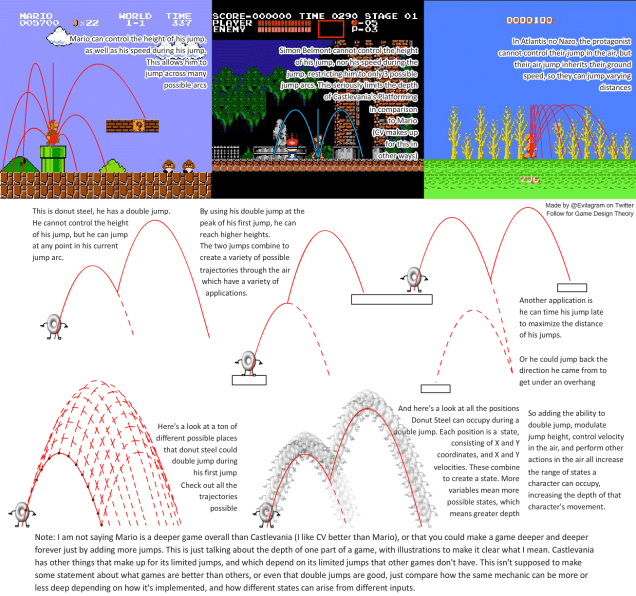
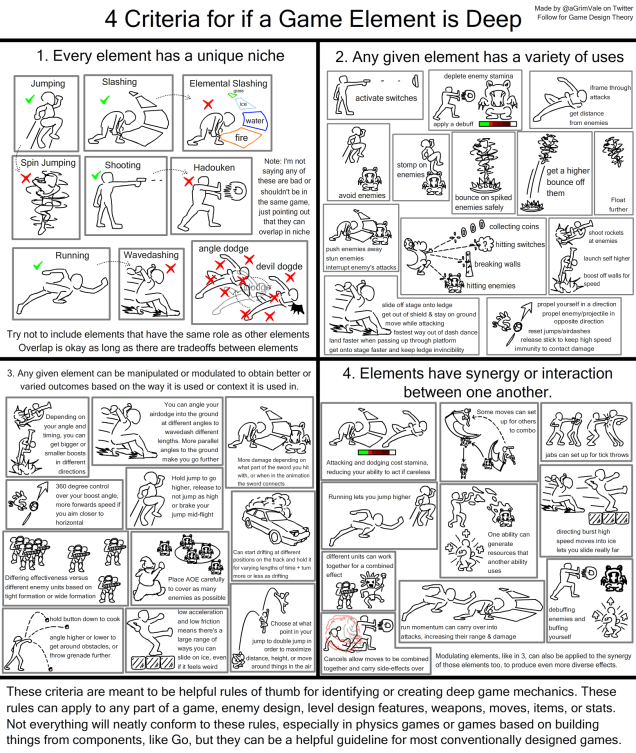
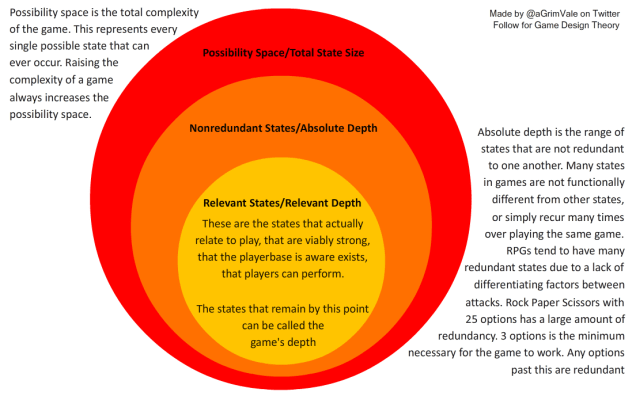



 Celia Wagar's CritPoints