Against Immersion: The Holodeck Must Burn

This is not a place of honor. No highly esteemed deed is commemorated here. Nothing valued is here.

For a long time I have been opposed to the idea of immersion in video games, to the idea that people become “immersed” in fictional worlds. I believe there is no specific mental state that can be referred to as being “immersed” in a video game or work of media. I believe the qualities that people describe as immersive are contradictory, limiting, and self-defeating. I believe that sincere belief in the idea of immersion from both a design perspective, and from a player perspective, is harmful to the creation process of video games and the enjoyment of video games. I don’t think we should make appeals to the idea of immersion, or use it as a guiding philosophy for game development.

As research for this article, I’ve been collecting statements for years about what people think immersion is, what traits they think are immersive, and what breaks their immersion. Through this, I hope not just to argue against the conceptualization and prioritization of immersion, but also to show that what I am arguing against is representative of the idea of immersion in the broader public consciousness.

Continue reading

Boosting Enemy Stats is not “Artificial Difficulty”

I’m sorry for choosing the annoying meme for the banner.

Hollow Knight: Silksong has revived an annoying line of discourse about “Artificial Difficulty”. Artificial Difficulty is ostensibly things that make a game appear more difficult, without actually engaging player skill. However in practice, most people claiming that a game has “Artificial Difficulty” are just complaining that the game is too hard for them, and this isn’t their fault, but the game’s fault. It did difficulty “wrong” in some way.

If we were to take the language of Artificial Difficulty at its face, then we’d consider whether or not a game is engaging in a fair test of skill with you. And in this way, some obstacles in Silksong aren’t fair actually, such as the bench in Hunter’s March that is rigged with a trap, which will damage you when you try to sit on it (I fell for this one). There is a very short tell, the bench depressing like the pressure plate traps in the prior section, giving you a brief opportunity to get off the bench and dash away. Disabling the bench trap requires going through a hidden tunnel and pressing a hidden switch. Silksong has a number of moments like this, which I believe were intended to be funny, because I found them funny and I know other people did too.

Continue reading

10 Years of Critpoints

10 years ago (and 2 months, but who’s gonna nitpick that?) I started this blog, Critpoints. Before that, I had been writing for Gather Your Party, a modest blog that aimed to challenge the establishment of professional games journalism with a staff of volunteers, no advertising, some of the early crop of gaming video essayists, and the tagline, “Honest Gaming Journalism”. For a lot of fairly predictable reasons, we burned out and eventually the site shuttered.

While I wrote there, I authored a column called, “More Than Mashing”, which showcased and explained different advanced video game techniques and play. This translated into a few YouTube Videos, most of which have been lost to time. I later ended up reviving this concept as a Facebook page, which did great until I got bored of it, and ran out of clips. Currently, that idea survives as a channel in my Discord Server, and as the banner in this site’s layout.

Since GYP, I’ve been involved in a few different projects, including Design Oriented, a group of game designers who were interested in exploring a more mechanical angle to video game design. I ended up leaving due to differences in point of view, but one thing I held onto was the name, “Crit Points”, which I had suggested as a potential name for the DO project. I tried combining the different ideas of “critique,” “hit points,” and “critical hit” into one short name. The tagline under the website name is intended to reflect the triple entendre. (Similarities to ActionPts, someone I used to work with, and ContraPoints are coincidental (I didn’t hear about ContraPoints until 2018) ).

Critpoints became my new brand, and I started this blog in March 2015!

Continue reading

It’s Not the Yellow Paint, It’s What the Paint Represents

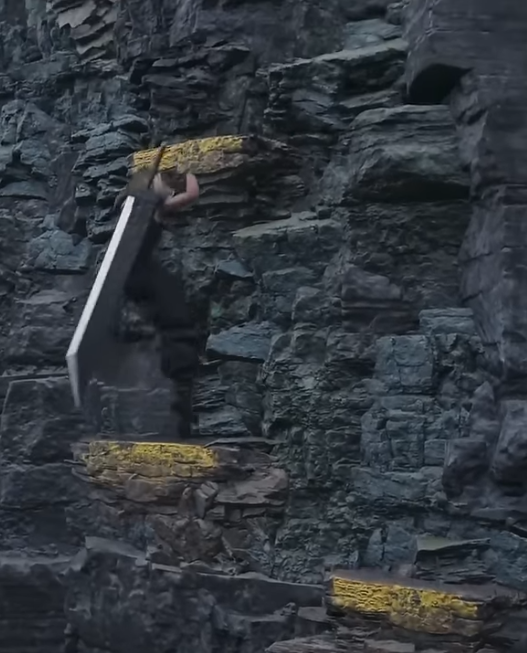
Recently footage of Final Fantasy VII: Rebirth was released, and it contained a shot of The Yellow Paint that we keep seeing to denote objects in the environment that can be climbed or otherwise interacted with. Kayin wrote an article on this, and it inspired me to write my own take.

What’s wrong with Yellow Paint?

So, why do people kneejerk hate the yellow paint? People hate the yellow paint because it “breaks their immersion”, since there’s no diegetic reason why every single ladder, cliff face, or vaultable cover would be splattered in the same yellow or white paint and because it makes them feel like they’re being treated like a child, needing to have the interactable part of the environment highlighted so they can progress.

Continue reading

Cost Granularity in Card Games

In Charmed Chains, I chose some early restrictions to emulate some of how Yugioh plays, and over time I’ve been shifting towards different ideas of what I want to do with the game. I chose these restrictions because there are a lot of indie and industry collectible card games that emulate Magic The Gathering (Force of Will, Hearthstone, Lorcana, Final Fantasy, Digimon, etc) in whole or part, and very few that emulate Yugioh (Dual Spirits). When I started making this game, I was really into Yugioh (I’ve recently been swallowed whole by MtG Commander), and I was very much inspired by different facets of Yugioh’s design that I felt could be pushed further (having a defined grid and effects that are based on columns), as well as some aspects of Magic The Gathering (blockers getting a choice in whether to take damage with their creatures, or let it hit them directly).

However, these limitations have lead to some issues with granularity, which I’ve previously discussed. I’m worried that low granularity in creature costs will lead to homogenization in people’s decks, unless I either adopt a resource system more similar to most card games, or start to enforce more strict archetypal synergies, like Yugioh did.

To understand the issues I’m facing, first I’ll need to explain how the resources in Yugioh and Magic The Gathering work.

Continue reading