How do you make hitscan enemies both fun and fair to fight against in a game where you don’t have regenerating health?
I think I’ve answered this before in a question regarding Vanquish. I think the answer is to mark the spots that enemies are targeting, then have you dodge the reticules (or laser sights obviously). Another very fair hitscan enemy is the Vortigaunts in Half Life because they have a very distinct audio and visual cue for when they’re about to fire and appear in environments with cover nearby. Not to mention they can be stunned by gunshots before they fire.
The idea is, you need to provide a reasonable method for the player to avoid taking damage. This means the sources of damage must move predictably, detectably, and within reaction time.
I don’t think your solution to hitscan is very interesting, it becomes the same as projectiles, only that lamer, as they don’t fill space and time. Hitscan as it’s usually implemented promotes spacial awareness–you need to know where enemies are and move perpendicular to their line of sight– and it promotes taking cover. They may not be very interesting in themselves, but they serve a different function from projectiles, and making them totally predictable eliminates that difference.
Becomes the same as a laser beam or a contact damage enemy really instead of continuous damage anywhere in sight of the enemy (imagine if an enemy emitted light that damaged you if you weren’t in shadow, it would have a very similar effect to common implementations of hitscan if you think about it. Someone should make a prototype of this. The hit detection would be easy to cheat with raycasts as long as you could get dynamic light sources and shadows working).
I mean, if we could have projectiles in every game, that would be fine. We use hitscan because it’s realistic, not because it’s necessarily good. My solution is just trying to preserve the theming in a way that’s fair.
Every form of projectile promotes spatial awareness. Every attack does. Moving perpendicular to their line of sight (circle strafing them) doesn’t affect hitscan enemies except at extremely close ranges. Unless they’re human that is, then it can be effective. It has no effect on AI enemies, which is where hitscan damage is actually harmful.
I don’t think hitscan bullets promote very much spatial awareness, because circle strafing and moving in general isn’t a very good strategy against them. A good strategy is killing whatever’s about to shoot at you before they can, and popping out of cover occasionally to take a potshot before going back into cover. Also occasionally moving up.
It certainly promotes taking cover, but that’s about it. It makes it so you continuously take damage when out of cover, which necessitates either extremely careful healthpack placement or regenerating health, the latter of which causes all sorts of other problems. Cover is useful versus Vortigaunts too and those are more fair than your average FPS enemy.
Maybe my solution isn’t the most interesting thing in the world, maybe there are better solutions, however we’ve only arrived at a fair implementation of hitscan enemies in modern shooters by sacrificing everything else. The design space of the game is limited by this element. It becomes more difficult to implement a wider range of options because of this element and its dependencies. Yeah, maybe it creates a unique dynamic unto itself, but we’ve had dozens and dozens of games that have explored this dynamic already.
They can, but they usually don’t, and that’s usually not the point of puzzles. I think puzzles and puzzle design is a step removed from game design, even though they’re seen on similar terms by most people. Puzzles tend to emphasize singular solutions over dynamic challenges. Games like Catherine or Tetris have more possible solutions and are more freeform in a gamey type of way, which is why I think Tetris isn’t really a puzzle game at all (I haven’t played Catherine, but I know some sections emphasize specific solutions and there’s a more free-form versus mode).
I think Puzzles should be judged by their own standards separate from the standards used to judge games because there’s definitely something different going on with them, and it’s not really my interest to figure out what or try to come up with some type of cohesive framework for that medium.
Personally I’d encourage game designers to avoid puzzle-like design in their games unless they’re making a puzzle game or are using it for content framing purposes, to organize blocks of content with some overarching light puzzle structure.
The primary difference between games and puzzles is that on hearing the solution to a puzzle, it’s usually trivial to complete the puzzle, but static solutions don’t exist nearly as often for games. There’s a spoiler effect. Once you know it, the challenge disappears. Puzzles don’t generate inconsistency in individual players like games do, they block success, then cease to block thereafter (unless you forget the solution). In a game, you might succeed 1 time out of 10, but it takes another 10 tries until you can succeed again at the same challenge.
This recent claim of yours (you never said it before?) that puzzles are almost not really games is weird. They certainly deserve the title more than pure execution skill games, with nearly no choice making–at least they showcase high-level possibilities within a complex system. They’re different from action games in that they’re expository, rather than combinatoric, so they can be spoiled as you say, but someone who reads a puzzle solution can be said to be playing the game as much as someone who is being told each move in a board game. The actual game is understanding the system. They may not actively challenge on subsequent playthroughs, but the thought process they entail is similar as that required by action games. Ostensibly, any puzzle game could be turned into an action game by making some tweaks here and there, so that it becomes combinatoric.
You’re right, I’m flipflopping on this one. It’s just that puzzles clearly share different characteristics from games and can’t be readily understood in the same ways. If you want to go by a strict definition, related to succeeding at things inconsistently, at overcoming challenges, they definitely fit in the same family. I’m just hesitant to call them games outright. Something seems off about that.
I don’t think the same can be said of pure execution skill games, though other academics have previously separated these into a category they call, “contests,” rather than games. I’m more inclined to call pure execution skill games as such because of the lack of the spoiler effect and because they do have a state space, even if it’s a small one.
I don’t think you can turn every puzzle game into an action game, like for example, Antichamber and Professor Layton.
My base point is more that to understand puzzle games, it would require very different thinking than for regular games, which is outside my scope personally.
Which of the Souls games do you think had the most successful (PvE) healing system overall, and why?
I think Dark Souls 3, all things considered.
Demon’s Souls is out because grass had to be farmed, could be stocked up really high and had a fast healing animation.
Dark Souls 1 is a strong contender because it invented the Estus system which is a really good healing system overall. Let you improve how much was healed with rare items, only 6 of which were in a given playthrough, and increase the number of heals in a way that was tied to each bonfire by expending resources, which carried over across playthroughs. However it allowed infinite, albeit slow, healing through Humanities, and limited per playthrough healing that was fast via elizabeth’s mushroom and divine blessings.
Dark Souls 2 is right out. Starts off with a gimped estus flask that eventually gets better, and pours lifestones in your face, which can be grinded for and bought, and regenerate health slowly. Lifestones weren’t strictly bad as far as healing systems go in general, better than Demon’s Souls’ grass, but still a low point for the series.
Bloodborne imposed a hard cap on the number of heals you got, they scale based on your max health, and can be increased with runes. Downside is you need to grind for them from time to time. The healing animation is fast, but if you’re shot during it then you’re put in a parry state. The system isn’t as unchecked as Demon’s Souls, but the grinding to restore blood vials is still a pain in the ass, even if Joseph Anderson made a decent case for it.
Dark Souls 3 starts you off with a weakened estus flask, but not completely gimped, lets you upgrade how much it heals and how many times. Far as I’m aware, there’s no other way to heal, except using embers, which can only be done once if you’re not already a host of embers. For an added dynamic, you can trade how many heals you have for FP regeneration.
I think Dark Souls 3 is the best simply because it’s the Dark Souls 1 system without any compromises. It’s good to minimize grinding, limit how much health can potentially be restored to a maximum, have that maximum grow as levels get longer, enemies do more damage and the player’s health bar gets bigger, and have the actual healing animation last a reasonably long amount of time to make it a risky option during a fight.
Can you explain why DMC4 has more depth than Ninja Gaiden 2 despite NG2 having dramatically larger movesets and more weapons?
Y’know, I could pull out my copy of ninja gaiden 2 sigma (I don’t have a 360, I know sigma 2 sucks, but it’s all I have), and try out all the moves available and write down their unique effects, but I’m going to take a gamble and refer back to my bayonetta answer for this question.
Most of the combo sequences in Ninja Gaiden aren’t very different in function, because you only get access to unique moves at the branching points between the combo trees, which is usually at the end of the combo chain. This means that you get access to functionally unique moves at the point when you’ve already hit the guy into a combo, so it doesn’t matter as much that it’s functionally unique, because they’re not doing anything anyway. What’s the functional difference between many of these moves? The speed across which the combo takes place and the damage. You need to start with the same openers for the majority of these.
Beside that, many weapons overlap in movesets, having similar moves as the other weapons, except with the range, speed, and damage slightly modified. You also are not capable of changing them except by going into the menu, so you are bound to 1 weapon’s moveset at a time, meaning that the depth of these multiple weapons increases linearly, rather than exponentially. Depth ideally increases on a logarithmic/exponential scale, akin to how we measure sound amplitude in decibels. Increasing the amount of content leads to linear increases in depth, increasing the interaction of content creates exponential increases in depth.
What does this mean? This means that functionally, many of the NG2 moves are redundant or close to redundant. There isn’t a significant differentiation in states. Do you question which combo you will use when you play? Are there significant differences that draw you to certain combos over others situationally when they have the same opener? I did not encounter this when playing Ninja Gaiden 1, I do not anticipate this being different in Ninja Gaiden 2. Some combos were clearly more efficient, occasionally less efficient ones had a useful purpose (like guard breaking), but I found that only a small handful of the range of combos available was really useful.
In DMC4, there are very few combo chains. Most moves are activated in one button press. You have access to all of your weapons and styles simultaneously. This design style allows moves to be extremely diverse in functionality without having to all trace back to one root move. It’s like how fighting game combos work. Rather than just having pre-determined sequences that combo, characters in fighting games have a ton of moves they can use at any time that have a variety of applications in the neutral game, then rules for how they can be fit together in a combo. You can use the shoryuken at any time. You can super at any time. Ramlethal in Xrd has some preset combo sequences on P and K, but other moves that can be used at any time too. NG and Bayo lack this and suffer for it if you ask me.
Uh, wow. I’ve heard Icycalm once say that DMC is just about rotating the moves you use, but I didn’t think anyone else believed that was all there was to it. Sure, you can do that, and that is an efficient way to build up style points, but first off, that doesn’t always combo, and second, you don’t always want to rotate moves like that. Especially in DMC4, where you have a lot more options with Dante at once than the 4 or so necessary to avoid staling the style meter. Like, just because rotating the moves builds style meter doesn’t necessarily mean you want to just rotate the moves. I have beaten NGS1 by the way, and done half of NGS2.
The thing with DMC is, you don’t have many combo strings. You have a bunch of moves that you can use at any time. Every weapon usually has like 2 or 3 ground strings, but what makes it cool is that you have these moves you can access at any time, usually forward + attack, back + attack, and a modified version using a style, plus forward and back on the style too. Because you have all these moves you can pull out at any time, building combos in DMC is more a question of, “How can I get this move to fit into this one?” and “what other moves can I get this move to lead into?” Where building combos in Ninja Gaiden is more like, “Does this combo string launch at some point in it? Yes? Throw shuriken right then, and do a different combo string, or the same one again.”
So then you get situations like someone using million stabs, which normally launches enemies away at the end of the move, then canceling it with royal guard before it completes, so they can do another million stabs like 5 times in a row. In the air, you can use aerial rave with dante, but it has a natural ending to it which you can’t combo after. You can extend your combo here by switching to darkslayer style and hitting them once, but not twice because the second hit launches, and then switching back. Or with vergil, you can launch enemies, but time a summoned sword to hit them exactly after they’re launched, which halts their air velocity, so they’re not pushed too far away for your next move. You get situations where people literally fly through the air, never touching the ground as they fight enemies, purely through air dashes, teleports, and jump cancels.
Here’s 3 combo videos for comparison in the different styles of play between these players:
Rebellion: 14
Gilgamesh: 13 (not counting how you can charge individual moves of the standard ground combos)
Lucifer: 11
E&I: 5
Coyote-A: 6
Pandora: 7
Trickster: 5
Royal Guard: 7
Darkslayer: 4
These add up to 72 individual moves. DMC3 has a lot more, but no switching, so I don’t think it can be counted as neatly. It also has more overlap between moves. I don’t think there’s really any repetition between these in DMC4, except that the ground chains can be kind of similar across weapons.
DMC allows more ready access to individual moves, and more ways to interrupt moves with other ones, thus there is more interaction between elements, as per my 4th rule of thumb criteria for depth. I’d also personally say the moves are more differentiated, there is a reason to use all of them and none of them totally overlap. This is a bias towards the moveset design, the enemy design in the NG games is clearly fantastic, but I tend to focus on player character mechanics first because it is simply how I lean.
DMC3 has more moves total than DMC4, because it has more weapons and styles, and the styles have more options, some were outright removed from DMC4. DMC4 just has more simultaneously, which was rectified recently with the style switcher in DMC3. The weapon switcher is coming I hear, which will make DMC3 great, except for the simpler enemies. Can’t win ’em all.
I personally consider God Hand the best 3d action game in the canon just because it has the best balance of moves to enemies and no significant fuckups. DMC is where I’d like the character movesets to be, Ninja Gaiden is where I’d like the enemy aggression to be (though diversity in function could use a little work).
Mirror Neurons. People have a natural capacity to understand and predict other people. This same capacity does not exist with machines (though one time I beat a rock paper scissors neural net with 5 wins, 7 draws, and 0 losses, presumably because it was acting on data from real people). Machines can be way more perfectly random than people. People are very bad at being random.
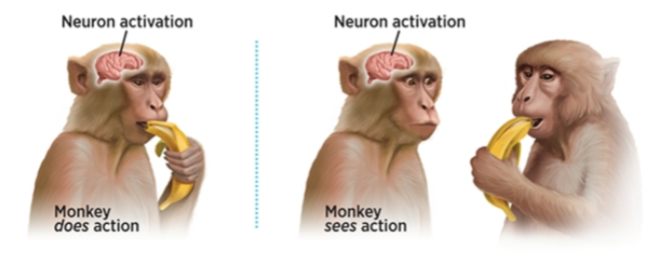
It’s been shown that humans have a limited ability to predict the actions of other humans under observation, believed to be facilitated with Mirror Neurons, Neurons that fire both when you do something, and when you see someone else do something (or even if you think they’re going to do it, but don’t realize you think it yet). When you expect someone to do something, neurons in your head fire, but you don’t have conscious access to these, rather they bubble up into your conscious mind as a prediction.
There are some people who have no ability to predict other people, and just choose what they think the most unlikely thing is, like Mew2king. There are others who get inside the other person’s head, like PPMD, Mango, or Daigo. Fun fact, autism is suspected to be at least partially connected to a deficiency in mirror neurons (Editor’s note: History hasn’t borne this one out. Mirror Neurons are mostly considered kind of a dead-end these days).
A mind game is about watching people’s responses to situations, then choosing the response that beats theirs in that situation. A mindgame is about conditioning another player to respond a certain way to a situation, then changing it up on them at a critical moment. Repeat conditioning causes people to act pre-emptively and worsens their reaction time for unexpected stimuli.
Mindgaming is about knowing common reactions to certain situations and preying on those or setting up those situations at a critical moment to eke out a win. The thing is, when you’re playing someone else, they’re adapting to you too. So you need to update your log of opponent reactions as they change their pattern or anticipate when they’re going to change their pattern based on what you know about the player’s adaptation speed.
The difference between a read and a reaction is speed. When you read, you act pre-emptively. For this reason, reads are stronger than reactions, because you have more time to get stuff done, but you sacrifice accuracy. When you read, you’re flying blind.
Emukiller was the dude who taught me to react more in Smash. A lot of scenarios have 100% solutions, but only if you react. If you read pre-emptively all the time, then you’re liable to get screwed up when you could have covered all possible outcomes by just reacting. It’s up to you to figure out what the limits of your reaction time are to determine what’s reactable and what’s not.
This combo video is good for emphasizing mindgames. Notice how Darkrain moves preemptively of his opponent’s action. He’s there ahead of his opponent. He knows what they’ll select.
And this is probably the most clear example of a mind game you’ll see all day: https://www.youtube.com/watch?v=qF2S9KeaO2M (for those wondering what it did, it made Combofiend afraid to act and more defensive, allowing Mike “Mike Ross” Ross to get in and pressure him for the KO)
Try playing someone worse than you and beating them just using basic options. I frequently beat beginners using nothing but light attacks in street fighter, or only sweeps, or only crouching strong. If you know exactly when to throw a move, then unless there’s a pure counter for it, you can win every time, even if it’s a bad or unsuitable move. Knowing when to throw it involves reading. Try this versus a friend who is bad to see what I mean.
How would you design a game with stealth elements from the Thief series, mixed with the parkour system with all of it’s advanced techniques found in Mirror’s Edge?
Interesting idea. I wasn’t sure how this could work at first, but I think I might have an idea based on an older concept I thought up, of a stealth game based on speed. The idea is that as you go faster, you’re less visible/audible, so stealth is about trying to keep up speed and not let it drop. Keep on moving, don’t get tripped up.
Mirror’s edge has a system that supports this, a lot of the game is about avoiding getting tripped up. Many things like climbing up ledges or over fences have varying standards of success. Do it higher and more smoothly and make less noise, and go faster. This could also be applied to fall damage. Landing without a heavy fall is optimal, rolling is less optimal, then two levels of fall damage that make less and more noise. More perfect sideboosting could create less noise too.
A basic thought is, how do you inform the player that they’re being loud or quiet? One idea is that loud sounds can be lower pitched and more bassy where the quiet sounds can be higher pitched, softer in tone, and less bassy, so players can clearly distinguish them, yet still receive auditory feedback.
It would make sense to have footstep sounds change radius at different speed thresholds, so that things like wallboosts and the like can temporarily push you over the normal speed threshold, making you quieter until you slow down. It would also make sense to add a sound for hitting a wall at high speeds.
There should be a more mundane stealth system based on going slow on top of this, because it’s hard to go fast without knowing the level layouts. So you have the high level, gottagofast stealth, then the low level stuff. The low level could function more like thief, the high level more like mirror’s edge. Throw leaning on Q and E, move use onto F. Implement the fancy lighting system. Add a blackjack that can disable guards who don’t detect you.
The hard part is the level designs, the enemy AI. To make something suited for this would be difficult. You need to design around the fact that the player doesn’t know where stuff is in advance. How do you plan guard patrol paths that players zip by without getting a chance to study them for flaws? You could give players wallhack vision like everything does these days, show guard vision cones too. Whatever.
The levels probably make more sense being linear than open if speed is the focus, but you gotta provide a lot of paths to get around guards, otherwise the game doesn’t really make sense. I dunno what the final product would look like, would require a lot of thought to put together, maybe research into similar games, if any exist.
How would you design activities which emphasize team work in Coop games? Most team events in games are kind of boring (Usually it’s stuff like hold button to help partner open door or move block, partner does something while you defend him, or something else)
Compared to the questions you asked leading up to this one (how would I make multiplayer games deeper?), this one is a lot better.
In my mind, it’s a matter of giving the characters’ various tools more applications that can potentially help a team mate. Team recoveries in Smash Bros are built on the simple principle that hitting someone in the air always restores their airdodge and Up B (unless they’re Yoshi or ROB). Some Up Bs like ganondorf’s and falcons naturally reset if they grab someone, so they lend themselves to team recoveries.
Overwatch naturally has a bunch of team-work things too. It’s a matter of creating synergy between moves, and not having those moves on the same character. Skullgirls has a similar principle. You’ll never find a character with both a shoryuken and a good horizontal projectile.
Some basic uses for team mates are healing each other, reviving each other, buffing each other, getting enemies off one another (left 4 dead), holding enemies in place for friends to annihilate, opening paths for one another (tower of power, mei’s bridges), trading resources with one another, pushing each other around, sharing information
Perhaps some things can have special arbitrary bonuses if you do them on top of what a team mate does, or special effects for actions performed in synchronicity.
Of course creating the potential for team work is not the same thing as emphasizing it, or forcing people to work together, but if you do that then you probably end up with situations like you described.
L4D forces team work by having it so special infected can do really quick specials on the survivors that instantly disable them, which they can only be saved from by another survivor. If you die, you can only be pulled out of a closet by a team mate, you can only be revived by a team mate, you guys can all pass healing supplies and guns around.
And as usual, depth is about making sure everything has a niche, multiple uses, variable outcomes, and synergy with other elements.
Do arcade-like game design have a place in the modern era?
Okay, what’s Arcade-like design? Lets have a look at some elements I think fit:
-Low Persistence. Almost nothing is retained across sessions, or built up over time. You always start and end in the same place. Even across levels few things are typically carried over, so there is no worry about things like running out of ammo.
-No Direct Tutorials beyond a 30 second video (at most) at the beginning of play
-Pick up and Play, get into the action instantly due to low/no investment and short play cycles.
-Short Session time. 30 minute or less session times.
-High Difficulty, likely to die or take damage at any time.
-Fairness, all damage can be avoided, no need to manage attrition over time.
-Small numbers. Anything that’s a resource usually is dealt with in small chunky integers that are easy to keep track of. Like health being lives or icons, and granting mercy invincibility when you’re hit.
-Temporary powerups that are picked up and have a big effect. No 2% bonuses versus undead here. Quad Damage or go home. Powerups replace typical resources and are nonessential to progress.
-Lives, sometimes instead of Health. Lives change how checkpointing works, so you have big checkpoints (for when you continue) and little checkpoints (for when you lose a life). Sometimes lives are basically just health and the character respawns on the spot when they lose a life.
-Continues. When you run out of lives or health, you can put in another credit to continue, sacrificing your score, but getting all your health and ammo or whatever back. Lets you destroy the difficulty of the game in exchange for currency. But if you’re better, you can spend less money. Sometimes you’re asked to repeat some sections in exchange for continuing so it’s not completely free.
-Scoring. Scores give people a higher standard of play to work towards, and encourages 1 credit clears. Scores can institute their own systems of risk versus reward, track more carefully how perfect player perform certain actions, award players for conserving resources, milking enemies and the environment, and consistent performance. Scores are superficial, not used as a form of persistence. Gives people a reason to come back to games even when they beat them, and to not credit feed.
-Lack of exploration. You never backtrack, the way forward is always obvious. Branching paths may exist.
-Time Limits. Progress either continues automatically, or actual time limits penalize players that do not progress. Progression is inevitable. The only thing preventing progression is death.
-Local only. Everything happens at that one machine or set of machines.
-Twitchy fast action. No Puzzles. Usually nothing that could potentially be memorized or more accurately, trivialized through memorization.
What’s arcade design in a nutshell? “No Bullshit, go right at it, enjoy.”
I think there’s an audience that wants this, but developers and gamers keep getting distracted by other stuff. Not that it’s all bad, there’s a lot of games that you can’t really do in the arcade, like Dark Souls of course. However I think there’s something to be said for each of these design elements.
You’ve talked about how a lot of Melee’s advanced mechanics were intentional. So, how do you determine, in Melee or any game, whether or not a mechanic is intentional?
Only a couple are truly intentional honestly. Like L canceling is undeniably intentional. Edge canceling and teeter canceling are arguable but unlikely. Wavedashing was discovered and left in. Multishining is almost certainly unintended.
How do I judge? I look at how the mechanic works, what the developers definitely did implement that lead to the trick, how hard the trick is to perform, changes in the sequels.
Like L canceling, you look at that and it’s almost certainly intentional. There’s no other mechanic in any fighting game I know of or heard of that can increase the speed at which an animation plays. That’s the type of thing you’d need to specifically set up. Having a 7 frame window beforehand is even more unlikely. Having a buffer to speed up the next animation, that’s the type of thing that doesn’t appear by accident.
Wavedashing I largely argue is intentional because I’m stubborn and the sakurai interview. Wavedashing works because air momentum is inherited into ground momentum, and airdodging imparts momentum. Those are things the developers had to set up, but if this were any other game I wouldn’t argue wavedashing is intentional.
Jump canceling in Devil May Cry, that’s something else that can only be intentional, because it’s in every game in the series, and it’s too weird to allow the character to jump in midair without the normal midair jump effect (the magic circle beneath his feet) and reset all his air options.
Kick Glitching in Mirror’s Edge is weird, same with the other fall height resets. When the animation ends, you’re set to a grounded state. There’s no real purpose for this. One might presume that maybe this fixes weird collision issues with the floor, but it doesn’t. It’s there, and there’s no reason for it to be there. Maybe they just goofed in development and set the state to standing rather than falling after a kick, roll, or fence damage?
(description reads: “It would’ve been so easy to fix for the developers, it’s almost like they put it in the game on purpose.”)
Another one is Charge Partitioning in 3rd strike. It’s so weird, it’s hard to judge if it’s intentional. First they clearly build a timer that allows you to act while retaining charge, but it starts at an effectively random point. Maybe it’s there so you can do standing normals and cancel them into charge moves? Maybe it was improperly implemented? Who really knows? Since the timer meter exists, I’d point towards intentionality with bad implementation.
All the soul duping glitches in Dark Souls I’d argue are unintentional. They typically involve buffering actions, then replacing the item that’s used. The system is set up to perform the action associated with the animation, but decrement the counter of the item current slotted. Similarly, dropping the item before the counter can be decremented is an obvious abuse.
hitscan vs projectile? Even for fast ones like bullets, what would be better for gameplay? I think dodgeable bullets would be much more interesting.
Okay, if the projectile is so fast, it’s basically a bullet, then there’s really no difference between a physical projectile and a hitscan ray.
I absolutely agree that dodgeable bullets are more interesting. I think you can draw a basic relationship on how dodgeable bullets are between the speed/size of the bullet versus the movement speed/size of the character. When characters move faster, it’s more realistic for them to be able to dodge faster projectiles. When they are fast enough (about CS:GO speed and higher), it’s more realistic for them to be able to move out of the way of hitscan bullets by staying ahead of the other player’s ability to keep their reticule on the target (though of course, not to dodge bullets coming directly at them).
Basically, as a character is slower, the projectiles too should be slower to compensate and allow the player to dodge. As the character is faster, the projectiles are allowed to be faster because the player can adequately dodge them. At the threshold mentioned above of about CS:GO speed, a player can move and change their momentum fast enough to stay ahead of someone’s reticule (this is because of human reaction time).
Regrettably, we’ve seen the opposite relationship between projectiles in games, slower games are more likely to have hitscan rays, and faster games are more likely to have slow projectiles.
This is because the world is fucked up and there’s nothing we can do about it.
As a follow up to the hitscan/projectile question, is there a place for hitscan weapons in games? Are the best kept as low-tier weapons such as how quake 1 handles them, or how q3 handles them as either high spread or low power?
Yes, absolutely.
I think you’re forgetting that in both Quake 1 and Quake 3, the Lightning Gun is one of the best weapons you can get.
The thing is, when you make a weapon projectile-based, even with relatively fast projectiles, such as Q3’s plasma gun, it gets harder to aim it. So the Plasma Gun doesn’t see the same type of use as a DPS weapon like the Lightning Gun, even though the Plasma Gun has a higher DPS than the Lightning Gun. Instead of being used to DPS opponents, it’s more used for covering fire and controlling space when you don’t see your opponent, or outside LG range.
Hitscan weapons are fine because ideally if both you and your opponent run out into the open and shoot at each other with LGs, you’re not both going to hit each other dead on until the first one to get shot dies, because you’re both going to miss a lot, because it’s hard to keep your reticule trained on someone who keeps weaving back and forth, and aiming better when your target is moving in ways you can’t predict, while simultaneously weaving yourself takes predictive skills.
It’s sort of like how in fighting games, you can’t see what move your opponent does until after it hits you. Reactionary blind spot. Similar deal in RTS with the fog of war. The winner isn’t determined strictly by efficiency, it’s determined by who throws rock and who throws paper. Efficiency in FPS games isn’t strictly who has better aim and target acquisition speed, it’s who can predict where the other will move and shoot as well. So hitscan weapons can’t consistently DPS, so it all works out as long as you’re not so slow these things become trivial.
Hitscan is fine, as long as it doesn’t dominate the game in one way or another.
Are you a fan of hitscan weapons? Why or not?
Uh, I like them when I like them? I dislike when a game is ENTIRELY hitscan weapons, like most modern shooters. It’s nice to have a mix of projectiles and hitscan. There’s only so much varying functionality you can get out of exclusively hitscan weapons.
I only really have an issue with when enemies have 0 startup hitscan weapons, that’s where trouble comes in.
Hitscan works fine in multiplayer because players need to predict which way their opponent will move, so it’s not totally a “who sees who first” thing, unless you die practically instantly and move slowly like modern shooters.
It also works fine in multiplayer because it doesn’t really matter if the player has unfairly overpowered weapons relative to the CPU, only that enemies don’t have unfair weapons against the player, because they can’t participate in the same mindgames as two human players can. They can at best approximate it, and have their efficiency cranked up or down.