Isomorphism & Asymmetry

Isomorphism is a concept in Graph Theory, where 2 graphs, if they have the same nodes, connected by the same edges, are the same graph, no matter how they’re shaped. Basically this means that if two seemingly different systems have the same shape, they’re actually the same system.

One of the most popular examples of this is the Rest system in World of Warcraft. MMOs are known for being addictive. You pay a subscription to them, so there’s only so much time before your subscription runs out, and you want to get the most out of it. To avoid encouraging players to play constantly, many MMOs implemented penalties for playing continuously, to incentivize players to log off. Naturally players didn’t like having their xp gains drop to 50% as they continued to play during the WoW beta, so the developers tweaked the interface so that the “unrested” penalty became a rested bonus, granting 200% xp gains. The actual numbers didn’t change at all, but player reception to them did.

Continue reading

Kill Your Sacred Cows

A long long time ago, I used to like Zelda, Okami, and Mad World, among others. I thought they were good games, and I never really questioned it. I remember before I played Ocarina of Time how much everyone said it was the best game of all time. There were memes back then of the OOT box, with a warning label, “Warning: Playing this game will make every game you play following this a slight disappointment.” I played OoT and somewhere at the back of my head thought, “huh, it’s not the greatest game I’ve ever played”, but I completed it, and all the sidequests, and never looked back.

I never really questioned liking the Zelda games until Tevis Thompson’s essay, “Saving Zelda” released in 2012. Dark Souls and Zelda: Skyward Sword had released around the same time the previous year, and I came home from college and played them both over winter break, jumping back and forth between them. I was completely on the hype train for Skyward Sword. I’d played a demo of it at New York Comic Con. I pirated that demo shortly before release, and I was hyped to see motion controls finally get their moment in the sun after being disappointed with how Twilight Princess used waggling as a substitute for the sword button. Despite that, with the actual game in my hands, I found myself playing a lot more of Dark Souls and I didn’t really know why.

Then “Saving Zelda” dropped a couple months later, and I read it, thinking, “This is ridiculous, Zelda’s a great series. Everyone loves Zelda. Skyward Sword is amazing”, but it planted the seed of doubt.

Continue reading

Designing AGAINST Speedrunners

Speedrunners are terrible. They ruin games for everyone, and love to talk about how your coders are buffoons when they perform intricate tricks with elaborate setup and tight inputs that no ordinary player would ever think of doing, let alone be able to perform. Here’s how to drive these pests away from your games.

First, make an inaccurate ingame timer. Include load times (multiplied by 2, so now everyone needs to buy an SSD), cutscenes, character creation, time since the game was launched. Hide it until they beat the game so they can’t reliably check if it’s accurate without cross referencing another timer.

Next, make file management annoying, or impossible. Utilize cloud saves, have events in one save affect events in a new game. Store savedata in the game binaries, encrypted, so they’re difficult to access, and difficult to modify. This makes starting completely fresh annoying.

Continue reading

Designing for Speedrunners

One of the most powerful tools speedrunners have to save time is Skips. Games are usually designed where goals are supposed to be completed in a certain order, a skip is where you complete later goals without completing the prerequisite ones. This can mean completing story flags out of order, or simply going to an area before it’s supposed to be accessible. The thing that makes such skips possible is usually level design in the shape of a horseshoe, where the start and the end are close to each other in physical space, but are separated by a wall inbetween. The Valve Developer Wiki helpfully has some examples of this, which they call Loops and Bounces. Hub areas that unlock into more areas also tend to facilitate skips, if you can find a way to get past the gates blocking you.

John Romero, one of the level designers of Doom, remarked on the Horseshoe level design in the Hangar map in this lets play, as well as some of the benefits of it. You get to see where you’re going, you’re not traveling in a literal straight line, even if you only have one way to go, and you can cut across the horseshoe to the end.

Continue reading

How Dark Souls Changed Combat

Most games with 3rd person combat have enemies with slow reactable attacks, and player characters with very quick unreactable attacks, such as Ocarina of Time, Devil May Cry, God of War, Batman Arkham, Witcher, and so on. The Soulsborne series made a bold decision with regards to this. The standard attack speed of most weapons is roughly the same speed as enemy attacks. This means that attacking after an enemy does generally means they’ll hit you first, interrupting you, unlike other series where your attack will come out first. This means you can no longer react to an enemy’s windup with an attack of your own.

By slowing down your attacks, the souls games put you on the same timescale as enemies. Enemies need to be slow so you can react to their attacks and defend against them, and slowing down your attacks to match theirs means there’s more of a risk that they’ll interrupt you before you interrupt them. This means that enemies can afford to rely on hitstun less to be threatening. Overall, it creates more of a neutral game between you and your opponents, where you jockey for position and try to use attacks strategically. Because you’re less sure to hit first, whiff punishing becomes more important to safely hitting enemies.

Slowing down attacks also means that attacks could be more diverse in the time at which they hit, and thereby exhibit a wider range of tradeoffs between damage, range, and speed, which Dark Souls leveraged to create a diverse assortment of weapons. Nioh then leveraged this further by attaching a bunch of moves to the same weapon, and finding ways to distinguish them all using the stance system.

There isn’t a lot to say about this. Slowing down attacks while keeping your defensive options fast is a simple effective trick for emphasizing more of the neutral game in any game with 3rd person combat. It makes individual enemies more threatening, and multiple enemy fights more dynamic too. Obviously not every game should work this way, but it’s cool in the games that use it.

Wonderful 101’s User Experience is a Nightmare

I started replaying Wonderful 101 Remastered recently (I’ve bounced off this game before), and the User Experience (UX) of this game is REALLY REALLY BAD. Here’s a quick introduction to User Experience for people who don’t know. User Experience is a field of design descending from User Interface design that incorporates a lot of different aspects that users run into in the process of trying to interact with a software product or service. In a game, User Experience covers not just the UI, but the presentation of game elements on the screen, the way that rewards are structured, the way new options are unlocked, the color coding of various elements (like enemies, attacks, etc), the presence and intrusiveness of cutscenes, the controller layout, online ranking systems, cosmetics, the tutorialization, and even the structure of the game’s mechanical design itself. Something like the way Gears of War gives new players in online multiplayer a subtle buff for the first 5 matches, so they’re more likely to win and therefore stick around, is UX. UX is ideally informed by research, both on the level of the whole discipline, and for individual games and playtesting to find pain points for new users. Playtesting with new users is inherently UX.

This article helps explain UX in the context of games better: https://medium.com/@player_research/what-is-games-user-experience-ux-and-how-does-it-help-ea35ceaa9f05

Platinum games AS A WHOLE, have extremely bad UX. Wonderful 101 manages to kick it up a notch from the normal badness of Platinum’s UX.

Continue reading

Doom Eternal Review ft. S.G.S.

Editor’s Note: The original draft and most of the content of this was written by our discord mod, S.G.S. I stepped in to help flesh out sections comparing the gameplay styles of Classic Doom versus Eternal, Resource Manangement, Enemy design, and wrote the Marauder section by myself.

Honestly, I’m nothing short of thoroughly impressed this time around. id Software took the interesting but flawed attempt at action FPS that was Doom 2016, and capitalized on the potential it had in a splendid way.

Doom 2016’s resource management was handled via glory kills for health and chainsaw use for ammo, combined with more “traditional” level design with health and ammo pickups strewn about. This felt like a clash of ideals to me. Classic Doom (and a lot of older shooters) had non-renewable resources that were limited exclusively to pickups around the map, which meant that routing through the map to acquire weapons/ammo/health/armor became an important skill to master. Classic Doom was about resource gathering and attrition, which created a chain of events across a map which had context with each other. Your options later in the level were based on what resources you found, and which you spent, earlier in the level. Various maps tune this balance differently leading to some maps starving you of resources, while others have few weapons to work with; plenty of maps even place weapons in locations that require you to deal with encounters on the way.

Doom 2016, however, had a system in place that showered (heh) you with resources at a moment’s notice, which flew squarely in the face of level exploration as resource management. Combat encounters were decontextualized from one another. You even obtained weapons in a continuous fashion, meaning they were more akin to upgrades rather than resources you locate (or fail to locate) on a map. Eternal pushes this style of resource management further by adding flame belches for armor, which is another layer to manage. As such, the exploration of a level is more for progression and secrets, rather than for resources, and you don’t experience attrition over the course of the level, because infinitely respawning enemies, and infinitely refilling chainsaw/flame belch/glory kill are your source of ammo, armor, and health. Doom Eternal does not deserve to be thought of in the context of Classic Doom, it’s better to think of it as a completely different game series.

Continue reading

Transitive (Efficiency Race) vs Non-Transitive (Rock Paper Scissors)

So I’ve said that there’s 2 types of multiplayer game fundamentally: Efficiency Race and Rock Paper Scissors. This video (re)introduced me to the mathematical concept of Transitive and Non-Transitive relations. This is an amazing lens for describing the difference between these two fundamental games.

In an Efficiency Race, there is always one option, or set of options that is always better than the others, per some metric of efficiency (time or victory points). This means that options (or combinations thereof) can be ranked against each other in a transitive fashion. If A > B > C, then A > C. Trackmania is the most pure example of this out there, since you cannot interact with the opponent in any way and a given route will always be faster or slower than another route (assuming you follow it exactly).

rockpaperscissorspayoff - Copy


This is the payoff matrix for an efficiency race version of rock paper scissors, notice that rock always wins, and scissors always loses, unless they tie

Continue reading

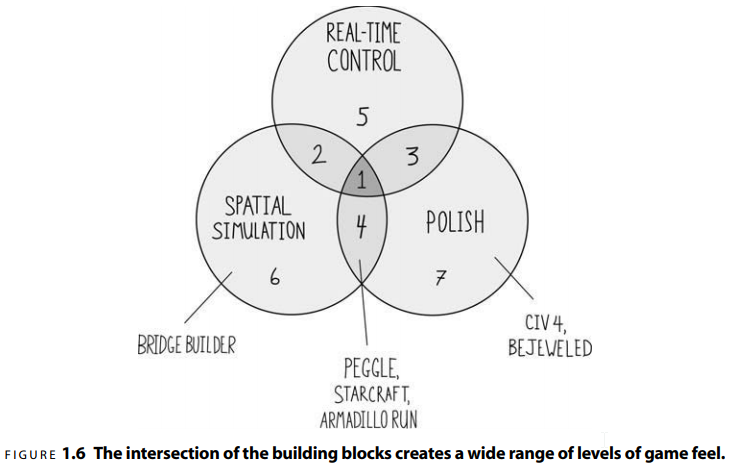
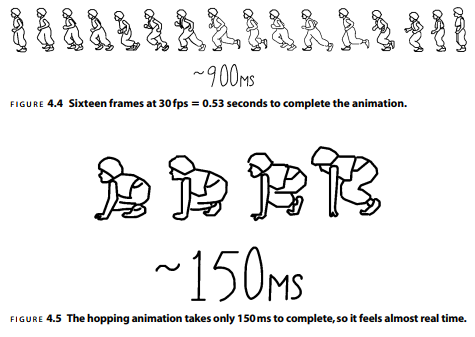
You don’t know what Game Feel is, read the damn book please!

FoxitReader_60DGUvMluH

This article is going to be me unapologetically shilling for Steve Swink, because Game Feel is Rocket Science Quantum Computing Laser Surgery handed to Cave Men who decided that nomadic pastoralism is a better pursuit than being agriculturalists or hunter gatherers, dooming future civilization forever.

GAME FEEL! It’s the way a game feels to play! It’s incredibly intuitive as a concept, people talk about it CONSTANTLY! Yet, if you look up GDC talks on the topic, or youtube videos, it becomes obvious that no one has read the fucking book, despite it going into WAY more detail than any of those talks do.

FoxitReader_oxgNi1aVHY
Continue reading

Are Fan Expectations More Important Than Quality? ft. Durandal

Editors note: This article was co-written by Durandal and I. We each contributed a number of paragraphs and edited back and forth to make the final product.

If you stick around gaming discussions long enough, you might hear the phrase: “it’s a good game, but it’s not a good [franchise/genre] game”. Meaning: while the game might be fun, it does not fit the identity or expectations of a particular franchise or genre. A game not matching expectations is a valid reason to dislike a game, but there’s a tendency amongst fans and reviewers to treat not meeting expectations as an objective flaw with the game’s design. So when there’s a new game which breaks the mold of its genre/franchise, many would criticize the game’s design for not meeting their preconceived notions of how a game in said genre/franchise should play.

This can happen when a game tries to take a classic genre in a new direction, such as Ikaruga. During location tests it got mixed reactions because it didn’t play like any other shmup at the time. Most arcade veterans liked shmups for their straightforward appeal of dodging bullets and blowing everything up. But here the polarity-switching mechanic gives you a shmup that makes you rely much more on strategy and routing over reflexes, making the game more puzzle-like than your average shmup.

Instead of judging Ikaruga in a neutral light from a fresh perspective, many people judged it purely through the lens of what they think a shmup should do. But being a “puzzle shooter” doesn’t make Ikaruga worse or better, just different. Instead of acknowledging that the game is not up their alley, they view the game’s design as objectively flawed. Only how objective can said flaws be to someone with no experience with the genre/franchise?
Continue reading